Reverse Osmosis Filter Replacement Frequency

Let’s talk about your reverse osmosis (RO) filter. It’s the unsung hero under your sink. It’s fighting a daily battle against microscopic invaders. But here’s the kicker: it...

Let’s talk about your reverse osmosis (RO) filter. It’s the unsung hero under your sink. It’s fighting a daily battle against microscopic invaders.
But here’s the kicker: it gets tired. Like a superhero after a long day, it needs a break. That break is called replacement.
So, when do you swap it out?
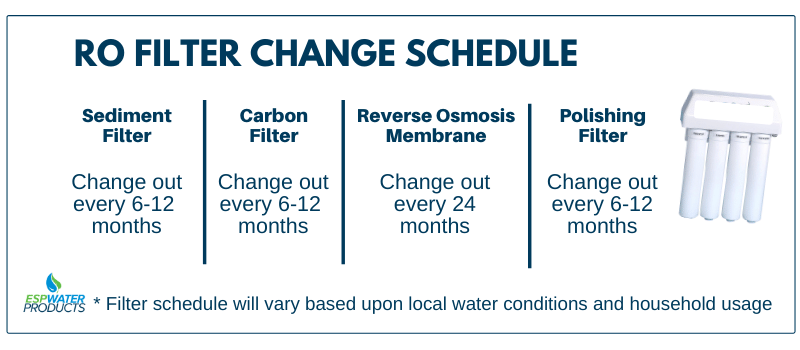
Most experts scream a simple number: every six to twelve months for the pre-filters and post-filter. The actual RO membrane? That’s a marathon runner. It lasts two to three years.
Must Read
Think of it this way: your pre-filters are the bouncers at a club. They catch the big troublemakers (sediment, chlorine). They wear out fast. The membrane is the VIP lounge guard. It catches the sneaky, tiny villains (lead, arsenic). It’s tougher, but still needs a break.
The “Yuck” Factor Quiz
Here’s a fun, gross test. Fill a glass with your filtered water. Now fill one with tap water. Sniff both. Does your filtered water smell a little… swampy? That’s bad news bears.
That smell is bacteria throwing a party inside your old filter. Your RO system is supposed to stop that party. A swampy smell means it’s time to immediately replace everything.
Quirky Facts That Will Blow Your Mind
Did you know your RO system is basically a newspaper factory? No, seriously. The inner membrane is made of a thin film composite—the same material used in photographic film and even some high-tech diapers. It’s a science diaper for your water!
And here’s a weird one: your RO filter doesn’t just filter water. It rejects it. For every gallon of clean water, you might waste three to four gallons down the drain. That’s why newer models have a “permeate pump.” It’s like a water-saving ninja.
Also, your filter’s life is a prisoner of temperature. Cold water flows slower. It pushes less water through the membrane. So if you live in a cold climate, your filters might last longer—but they work harder. Hot water? Bad idea. It wrecks the membrane fast. Don’t run hot water through your RO system. It’s a filter’s worst nightmare.
Signs It’s Time to Ditch It
You don’t need a calendar. Your system will yell at you. Listen for these clues:
 How To Change Reverse Osmosis Filters
Taste change. Your water suddenly tastes like a hotel swimming pool. That’s chlorine breaking through a dead carbon pre-filter.
Slower flow. Your faucet goes from a gentle stream to a sad trickle. That’s your pre-filters getting clogged. It’s like a coffee filter with too much ground.
Visible sediment. Look at the clear housing of your first filter. If it’s brown, orange, or slimy, eww. That’s a crying signal.
The “Don’t Be That Person” Rule
Here’s the most fun part: people ignore this. They think, “I’ll change it next month.” Next month becomes next year. Their water now tastes like dirty rain boots. Don’t be that person.
Mark your calendar. Set a phone reminder. Or use a smart monitor like those fancy ones that beep at you. Your future self will thank you when you drink crisp, clean water instead of “filter-flavored” water.
A Final, Ridiculous Analogy
Imagine you wear the same pair of socks for three years straight. You never wash them. You just keep walking. That’s what your RO membrane feels like. It gets grimy, stinky, and stops working. Replace those socks! I mean, replace your filters.
The bottom line? Don’t fear the chore. Embrace the science. Every time you swap a filter, you’re giving your water a spa day. And you’re keeping that microscopic party from turning into a bacteria rave.
Now go check your filter. Go on. I’ll wait. You can do it.
