Water Purification System For Laboratory Use

Let’s be honest: most of us don’t think twice about the water we drink. We fill a glass from the tap, chug it, and go about our day. But walk into a laboratory, and suddenly t...

Let’s be honest: most of us don’t think twice about the water we drink. We fill a glass from the tap, chug it, and go about our day. But walk into a laboratory, and suddenly that same water is treated like a suspicious stranger at a party. Lab water has to be scandalously clean—so pure that even the memory of a mineral is considered bad company.
The Tap Water Trap
Think about what’s in your tap water. You’ve got chlorine (which makes your pool smell like a vacation), calcium (which leaves those white spots on your dishes), and a whole parade of dissolved solids. In a lab, these party crashers are like putting ketchup on a gourmet steak—they completely ruin the experiment.
I once watched a friend spend six hours running a test, only to realize his tap water had added extra minerals to his sample. His face looked like a toddler who just dropped their ice cream cone. That’s when you learn: lab water is not a luxury; it’s a lifeline.
Must Read
The Superhero in a White Box
Enter the water purification system. It looks like a fridge’s nerdy cousin, but inside, it’s a covert operations unit for H2O. It uses reverse osmosis, deionization, and ultraviolet light to strip out everything that isn’t pure water. It’s like sending your water through a celebrity boot camp—no impurities, no drama, just pure, boring perfection.
The first time I used one, I filled a beaker and stared at it. The water was so clean it looked suspiciously empty. I half-expected it to whisper, “I have no personality, and I’m proud of it.”
How It Works (The Non-Nerd Version)
Imagine you’re making a smoothie, but you accidentally drop in a piece of lettuce. You’d fish it out, right? A purification system does that, but with invisible stuff. It pushes water through a membrane with holes so tiny that only water molecules fit—everything else gets the boot. Then it zaps any leftover bacteria with UV light, like a bouncer at a club. The result? Water so pure that even Einstein’s ghost would approve.
My labmate once joked that purified water is like a monastery: quiet, disciplined, and utterly devoid of fun. But when your experiment hinges on a single drop, you’ll be grateful for that monastery.
The Cringe-Worthy Alternative
Here’s the part that makes every lab veteran smile: the “oops” moment. Someone too lazy to use the purification system grabs a jug from the break room. They pour tap water into a delicate instrument. The machine wheezes, spits out a red error light, and essentially screams, “Why do you hate me?”
I did this once. The instrument cost more than my car. I spent the afternoon flushing it with purified water while imagining the machine was giving me the silent treatment. Spoiler: it was.
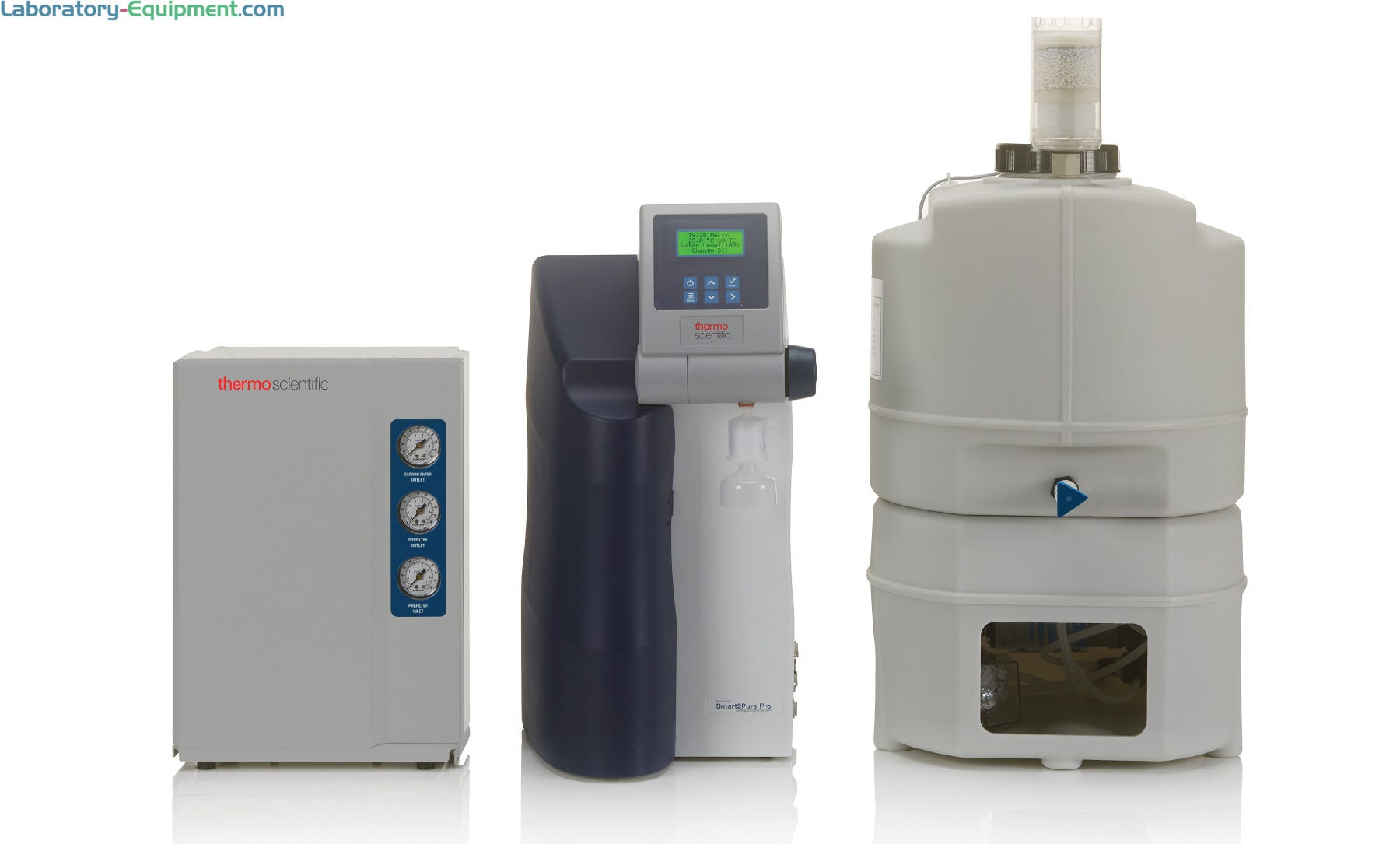 Water Purification Systems and Accessories | Laboratory Equipment
Why You Care (Even If You Don’t)
You might not run a lab, but you benefit from purified water every day. That vaccine you got? Made with ultrapure water. The plastic in your phone? Manufactured using it. Even the food you eat—if it’s tested for safety—owes a nod to these systems. It’s like the quiet hero who doesn’t brag but holds the whole universe together.
And let’s be real: we all appreciate a water source that doesn’t taste like a swimming pool. Life is hard enough without having to worry about rogue minerals in your DNA sequencing.
The Love-Hate Relationship
Let’s not pretend these systems are perfect. They beep at 3 a.m. to remind you to change a filter. They consume energy like a teenager eats snacks. And when they break down, the entire lab enters a state of panic that resembles a fire drill, but with more weeping.
Still, you learn to respect them. My old system had a little screen that displayed the water purity in real time. I once watched it climb to 18.2 megohm-cm, the holy grail of lab water. I felt like a parent watching their kid win a spelling bee. “That’s my water!”
The Bottom Line
A water purification system for laboratory use is an unsung hero with zero charisma. It doesn’t want your gratitude. It just wants you to stop pouring tap water into things that cost more than a vacation. If you ever see one in the wild, give it a quiet nod. And if you’re a lab rookie, remember: don’t be that person who ruins a month of work because you couldn’t wait three minutes for the system to finish.
Your experiments—and your wallet—will thank you. Now go have a glass of tap water. You’ve earned the extra calcium.
