Commercial Deionized Water Filtration System

Ever wonder what happens to water when it gets a serious makeover? Not the kind with a fancy filter pitcher in your fridge, but the industrial kind that makes scientists and e...
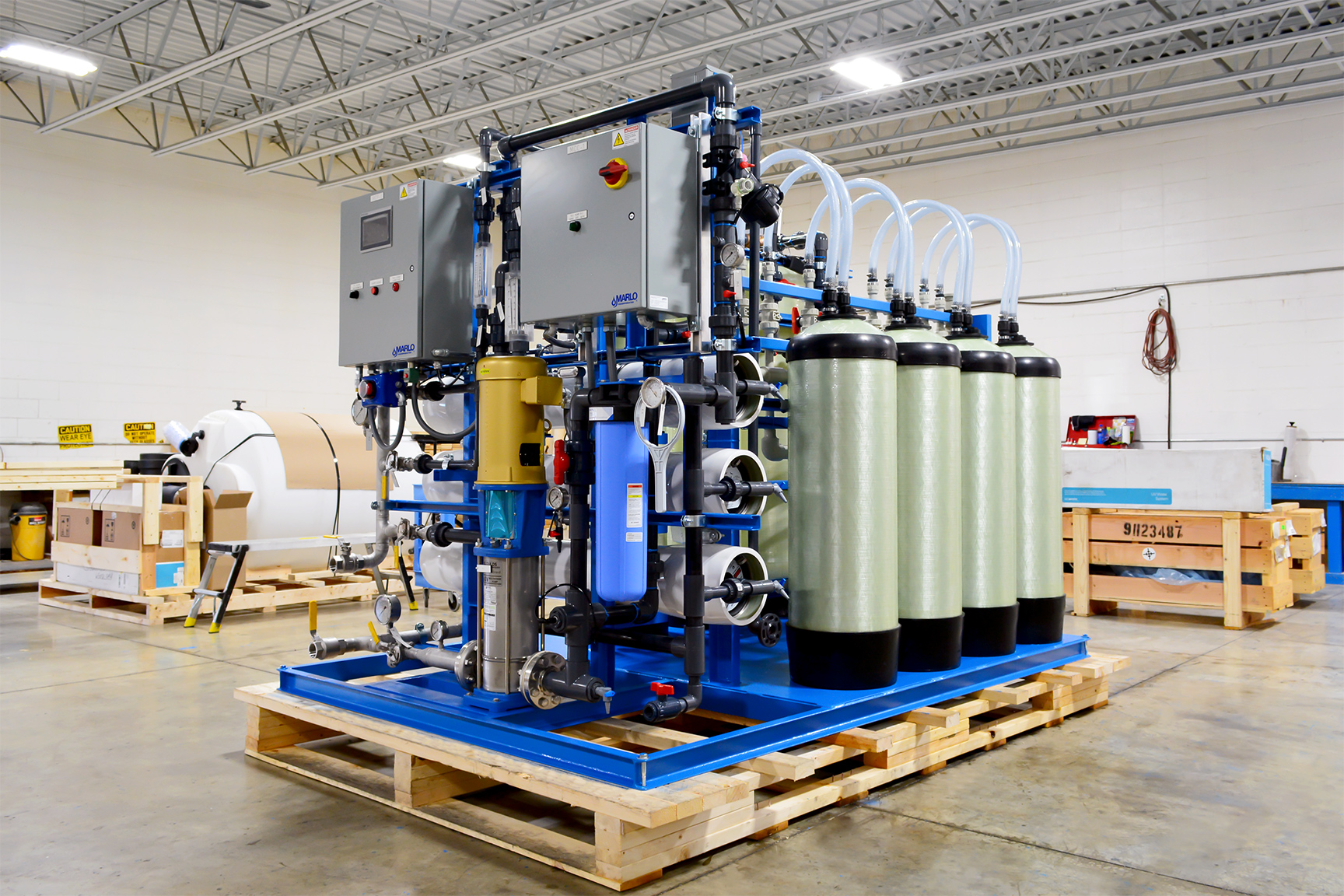
Ever wonder what happens to water when it gets a serious makeover? Not the kind with a fancy filter pitcher in your fridge, but the industrial kind that makes scientists and engineers do a happy dance. I’m talking about a commercial deionized water filtration system—the rockstar of the water world.
Let’s be real: tap water is fine for coffee, showers, and accidentally watering your succulent collection. But in labs, factories, and even some car washes, “fine” doesn’t cut it. They need water that’s been stripped of virtually everything—no minerals, no salts, no tiny hitchhikers.
That’s where deionization (or “DI” for short) comes in. Think of it as a bouncer at an exclusive club, but for ions. The system kicks out positively charged ions (like calcium) and negatively charged ones (like chloride) with ruthless efficiency.
Must Read
How Does This Magic Actually Work?
Picture two types of resin beads: one that’s a hugger for positive ions, and one that’s a hugger for negative ones. Water flows through them, and these little beads latch onto the dissolved solids like they’re the last slice of pizza at a party.
It’s a total transformation. By the time the water leaves, it’s so pure that it can actually pull minerals out of your skin if you touch it. (Don’t worry, you won’t turn into a raisin—but it’s a fun fact to impress your friends with.)
Commercial systems are built for big jobs—think thousands of gallons per hour. They’re the heavy lifters that keep things like semiconductor manufacturing, pharmaceutical mixing, and medical equipment running smoothly. No pressure, right?
Why Bother with Deionized Water?
Regular water has impurities that can ruin experiments or clog machinery. Imagine a scientist trying to create a new lifesaving drug, only for it to fizzle out because of some stray calcium ions. That’s a bummer on a galactic scale.
DI water is also a star in car detailing. Have you ever seen those flawless, spot-free finishes on luxury cars? That’s because the water used to rinse them doesn’t leave any mineral deposits. It’s like giving your car a spa day, but without the weird cucumbers on the wheels.
And here’s a little secret: some people use DI water for brewing coffee or tea. It gives a crisp, clean taste that makes your morning cup feel like a mic drop. Just don’t tell your barista—they might get jealous.
What’s Inside a Commercial System?
It’s not just a pipe and a bucket of beads. A proper system includes pre-filters to catch dirt, sometimes a reverse osmosis (RO) stage, and then the deionization tanks. The RO step is like the opening act—it removes a lot of the junk so the DI resins don’t get overwhelmed.
You’ll also see mixed-bed and dual-bed setups. Mixed-bed is the rockstar of purity, giving you water that’s almost perfect. Dual-bed is more like a workhorse, handling higher flow rates with a bit less perfection. Either way, your water ends up cleaner than your ex’s excuses.
Fun upside: these systems also reduce the need for buying bottled water for lab use. That’s good for your budget and the planet. Mother Earth gives you a thumbs-up.
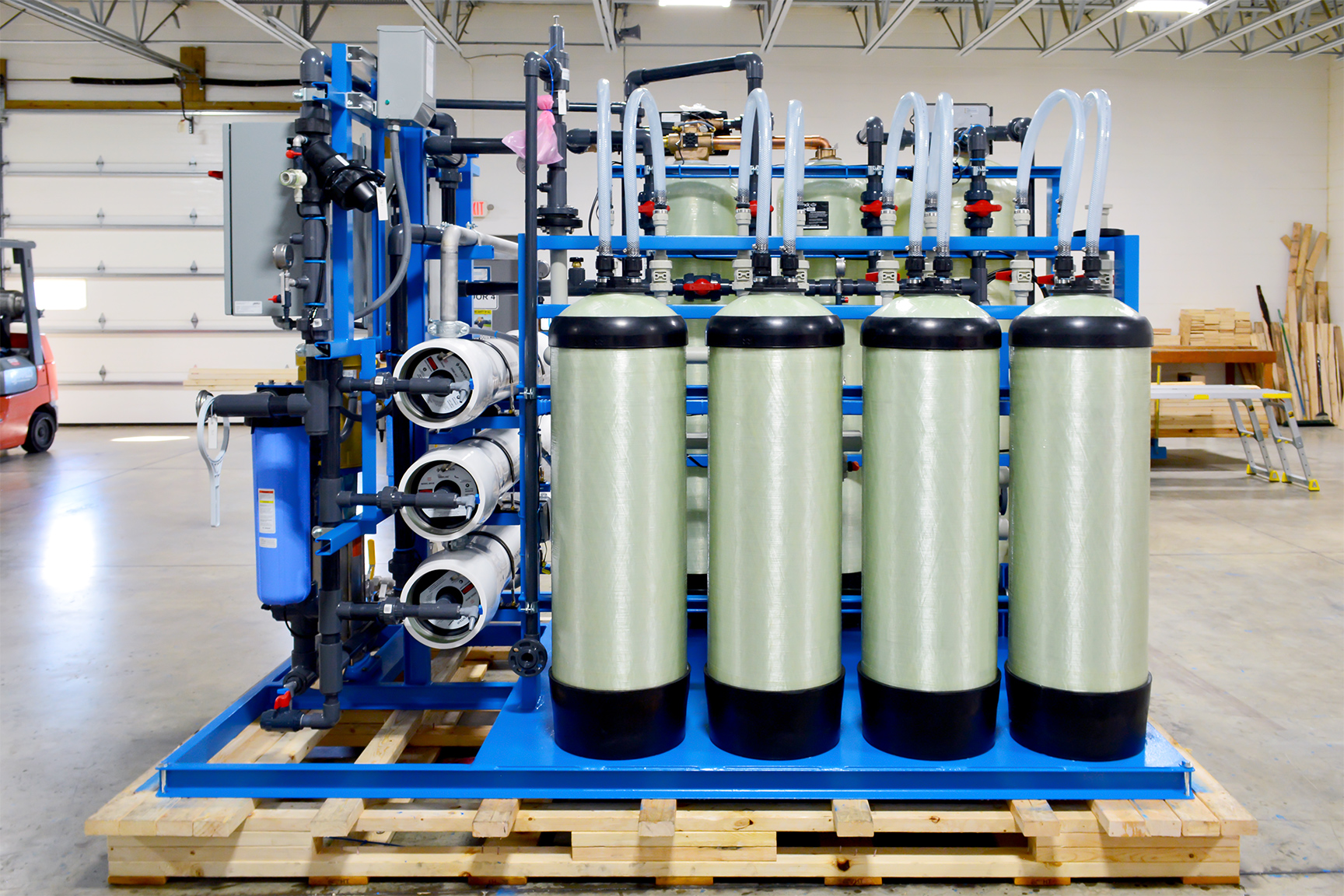 Deionized Water System | MARLO
Maintenance: Not as Scary as It Sounds
The resin beads eventually get full of ions—like a sponge that’s soaked up too much spill. That’s when you need to regenerate them (or swap out the tanks). Regeneration involves flushing with strong acids and bases, which sounds like a science project from your worst nightmares.
Luckily, most commercial systems have automatic regeneration cycles. They do the heavy lifting while you sip a coffee and pretend you’re working. Just remember to schedule maintenance checks—neglect a system, and it’ll start sending you passive-aggressive warning lights.
If you don’t want to deal with chemicals, you can go with a service exchange program. A company swaps your spent resin tanks for fresh ones. It’s like a subscription for pure water, but without the awkward renewal calls.
Is It Worth the Investment?
For a small home? Probably overkill—unless you’re a militant tea snob. For a business or lab, absolutely. The cost of equipment and resins pays itself back in fewer equipment repairs, better product quality, and less time troubleshooting.
Think of it this way: you wouldn’t go to a fancy dinner party wearing jeans with a hole in the knee. (Well, maybe you would, but that’s a different conversation.) Your water shouldn’t show up to a critical job looking messy either.
Commercial systems can range from a few thousand dollars to a small fortune, depending on flow rates and purity levels. But when you factor in the peace of mind and the fact that you’re basically drinking science’s finest, it’s a solid investment.
One Last Thing… The Smell
Okay, weird point: highly purified water has almost no taste or smell. It’s so neutral that some people say it tastes “flat.” But that’s a feature, not a bug. You’re not drinking water; you’re drinking absence of everything. It’s the “Zen monk” of H₂O.
So if you’re the type who likes your water to have a little personality, stick to bottled or tap. But if you’re into precision, performance, and a little bit of science theater, a commercial deionized system is your new best friend.
And here’s the uplifting conclusion: You deserve water that’s as pure as your intentions. Whether you’re brewing a world-changing drug, rinsing a vintage Mustang, or just geeking out over clean water, that system is working hard behind the scenes—quietly, tirelessly, and without ever asking for a raise. Now go pour yourself a glass, toast to clarity, and smile knowing you’ve got the cleanest water on the block. Cheers! 🥤
