Is Distilled Water And Sterile Water The Same

So, you’re standing in the grocery aisle, staring at a bottle of distilled water and another that says sterile water, and you’re wondering: “Aren’t these basically the same th...
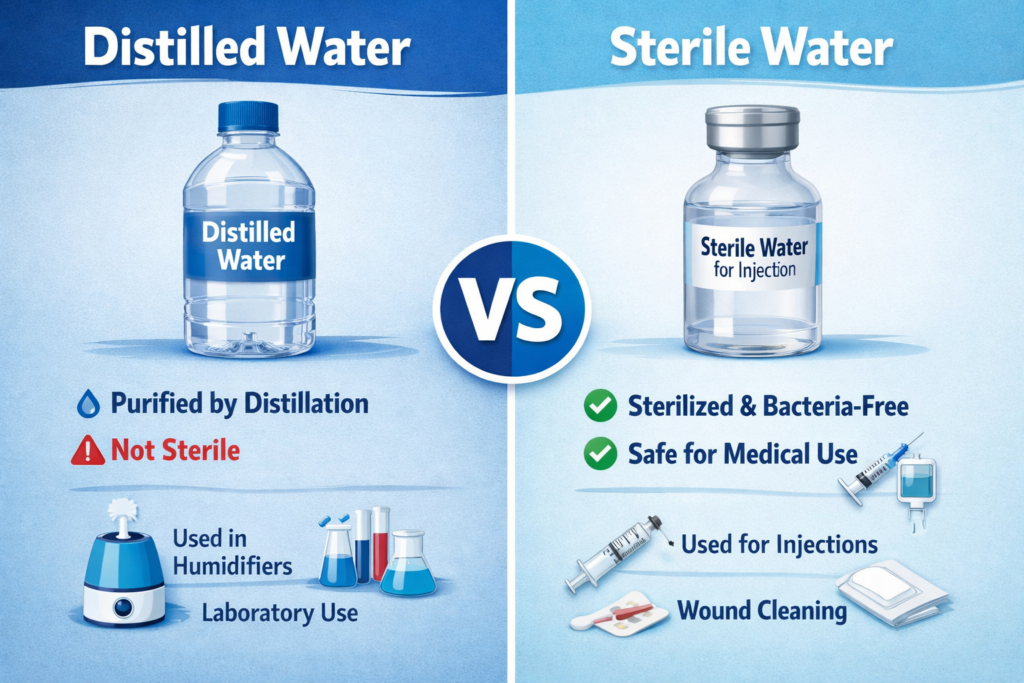
So, you’re standing in the grocery aisle, staring at a bottle of distilled water and another that says sterile water, and you’re wondering: “Aren’t these basically the same thing?” It’s a fair question, and honestly, it’s a little confusing — even for science nerds who’ve had too much coffee. Let’s clear up the confusion, shall we?
What’s the deal with distilled water?
Distilled water is the champion of purification. It starts as regular tap water, then gets boiled into steam. The steam rises, leaves all the minerals, germs, and “yuck” behind, and then condenses back into liquid. Think of it as a water spa that forces out all the impurities.
It’s like when you eat a bag of chips and leave the crumbly dust at the bottom — except here, the good water escapes as vapor, and the gross stuff stays in the pot. That’s why it’s perfect for things like irons, car batteries, and CPAP machines. No minerals means no scale buildup.
Must Read
You can drink it if you want, but let’s be honest — it tastes a little flat. It’s the NPC of water flavors. Totally safe, but zero personality.
And sterile water? Is it a fancy cousin?
Sterile water takes a different path to cleanliness. It doesn’t necessarily remove minerals — it just kills all the living things inside it. Bacteria, viruses, fungi, and any other microscopic party crashers get zapped, usually by heat, filtration, or chemicals.
The key word here is “sterile.” It means there are zero viable microorganisms. Not almost zero. Zero. Like that one friend who always cancels plans — no signs of life whatsoever.
Fun fact: sterile water can actually start as tap water, spring water, or even distilled water. The secret sauce is the sterilization process, not the original source. Mind blown yet?
So… are they the same? (Drumroll, please)
Nope! Distilled water and sterile water are not the same. They’re like two different superheroes—both fight impurities, but in totally different ways. Distilled water hunts down minerals and chemicals. Sterile water hunts down living bugs.
Imagine you’re hosting a party: distilled water kicks out the crumbly snacks and decorative rocks, while sterile water kicks out the uninvited guests who might bring the flu. Different jobs, same goal: a cleaner vibe.
Here’s the tricky part: sterile distilled water exists, and it’s the Superman of the water world. That’s when you take distilled water and nuke it to be sterile. But just because you have one doesn’t mean you have the other. Don’t let the packaging fool you!
When should you use which one?
Let’s get practical. Distilled water is your go-to for appliances, labs, and humidifiers. If you have a car battery or a fancy espresso machine, use distilled — you don’t want mineral deposits gumming up the works. It’s also great for rinsing out baby bottles (but not for drinking because, again, boring taste).
 Is Distilled Water Sterile? Distilled Water VS Sterile Water – Frizzlife
Sterile water is serious business. You’ll find it in hospitals, clinics, and pharmacies. It’s used to clean wounds, mix medications, and do medical procedures. If you’re flushing a cut or using a nebulizer, you need sterile, not just distilled. You don’t want a friendly bacteria giving your open wound a high-five.
Also, red alert: don’t use distilled water for contact lenses unless it’s also sterile. That “clean” distilled water can still grow bacteria if left sitting. Your eyes will not appreciate a live performance of “Bacteria: The Musical.”
Can you swap one for the other?
In everyday life? Maybe. If you’re filling a steam mop, distilled is fine. If you’re making baby formula, you might think distilled is okay—but check with your pediatrician. Most experts say sterile or boiled water is safer for infants under three months.
The golden rule? When in doubt, read the label. If it says “for medical use,” use sterile. If it says “for household use,” distilled is fine. Your blender won’t judge you, but your immune system will.
And please, please don’t drink water from the lab sink and call it “artisanal sterile water.” That’s how you become a science experiment yourself.
The final big difference (you’ve made it this far, you deserve a medal)
At the end of the day, think of it this way: distilled water is chemically pure — no minerals, no salts. Sterile water is biologically pure — no germs, no life. One is about chemistry; the other is about biology. They’re like peanut butter and jelly: different ingredients, but together they make a perfect sandwich.
But if you just need a glass of water? Honestly, tap water is usually fine and tastes way better. Don’t overthink it. You’re not a chemistry set; you’re a human who deserves joy and maybe a slice of lemon.
Uplifting conclusion (the part where you smile)
So next time you see a bottle of distilled or sterile water, give it a little nod of respect. They each have their own superpowers, and now you know the difference. You’re officially the smartest person in the water aisle — and honestly, that’s a pretty cool title.
Remember: Life is too short for boring water, but it’s also too short to worry about which bottle to grab. Distilled? Sterile? Pick the one that matches your mission. And if you accidentally buy the wrong one? Don’t sweat it — you’re hydrated, you learned something new, and the universe still thinks you’re awesome. Now go drink something delicious and laugh at how much you know about water.
