Osha Drinking Water Requirements Construction

Let’s be honest: when you think of construction sites, you probably picture hard hats, muddy boots, and the roar of machinery. Water probably isn’t the first thing that comes...

Let’s be honest: when you think of construction sites, you probably picture hard hats, muddy boots, and the roar of machinery. Water probably isn’t the first thing that comes to mind. But behind every safe worksite is a surprising amount of regulation about what workers drink—and the OSHA drinking water requirements are the unsung hero of job site health.
Think of it as the hydration version of a building code. It’s not glamorous, but without it, things get messy fast—literally and figuratively.
The Gist: Potable, Plentiful, and Placed Perfectly
OSHA’s standard, found in 29 CFR 1926.51, is refreshingly simple: employers must provide potable (drinkable) water. It has to be cool, clean, and free from any funny tastes or contaminants. No, a garden hose left baking in the sun doesn’t count—unless you want a revolt.
Must Read
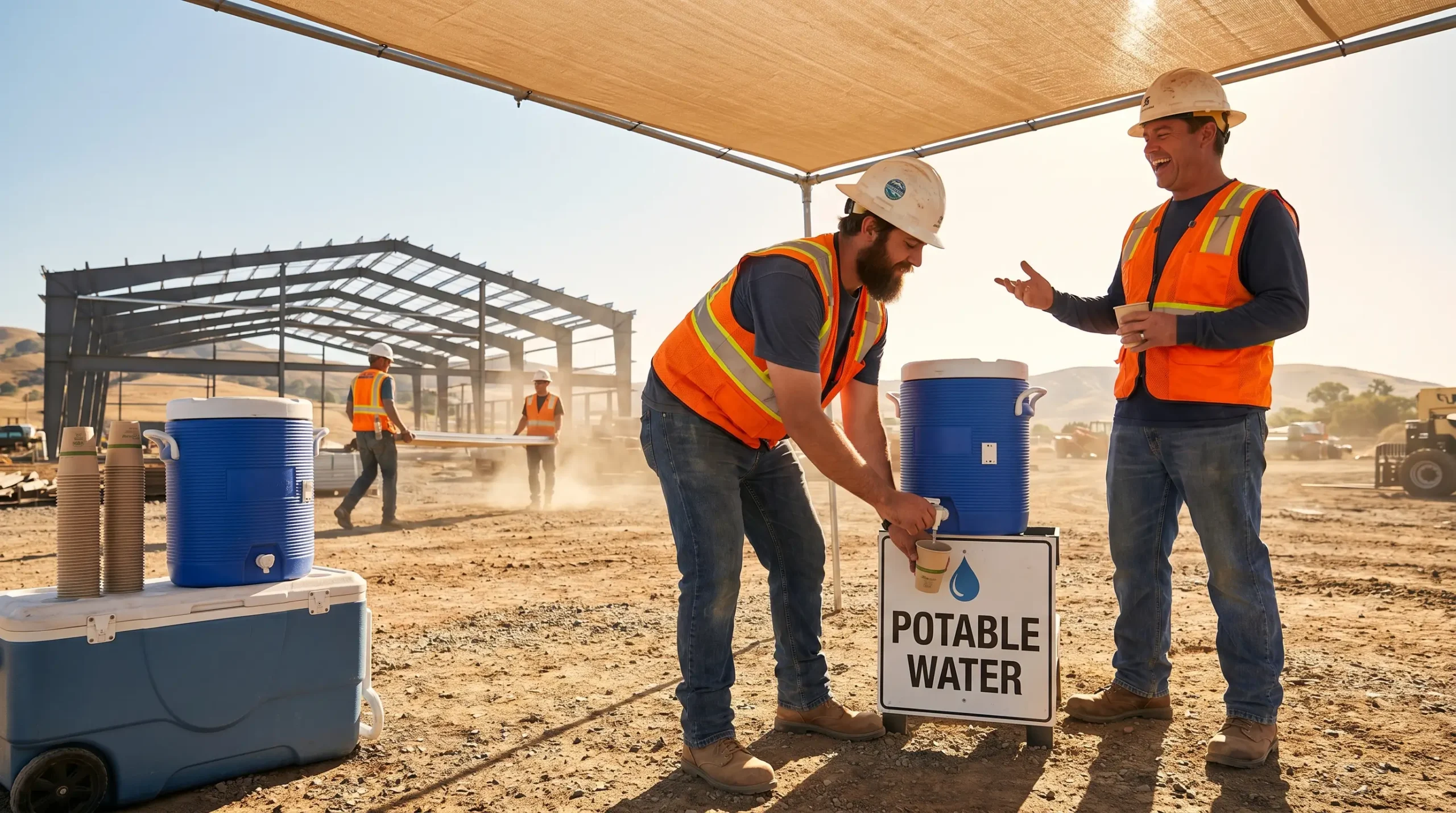
The water must also be readily accessible. That means workers shouldn’t have to hike across a ten-acre lot just to get a sip. In practice, this often means coolers, jugs, or a tapped supply placed within a reasonable distance of the work zone.
Fun fact: OSHA doesn’t specify an exact distance—but courts and industry guides often suggest within 200 feet or a short walk. If you’re debating whether a spot is too far, it probably is.
Don’t Share That Cup
Here’s a rule that feels like grade school, but with higher stakes: no common drinking cups. Unless you want to start a norovirus outbreak faster than a viral TikTok dance, you need disposable cups, a water fountain, or individual bottles. OSHA is very clear—shared cups are a big no-no.
Imagine finishing a hot shift and grabbing a cup someone else just used. Gross, right? That’s exactly why the rule exists. Practical tip: keep a stash of stackable paper cones near the cooler—they’re cheap and instant hygiene heroes.
If you’re the foreman, grab a permanent marker and label each worker’s bottle. It’s a tiny step that saves headaches and gut bugs.
The Ice Situation and the Heat Factor
Is ice considered drinking water? Technically, OSHA says water must be “cool” but doesn’t demand ice. That said, on a 95-degree day, lukewarm water is a morale killer. Most smart sites keep a cooler with ice or use insulated jugs. Your workers will thank you, and your productivity won’t tank.
Heat stress is a real danger. OSHA’s National Emphasis Program on heat hazards reminds us that hydration is the first line of defense. A thirsty worker is a distracted worker, and a distracted worker is a safety risk.
Practical tip: if you see someone’s water bottle sitting untouched for an hour, walk it over to them. A gentle “hey, drink up” is better than a heat exhaustion call.
The Portable Toilet Paradox
Here’s a weird crossover: OSHA drinking water rules are in the same section as toilet facilities. That’s right—section 1926.51 covers both. The idea is that workers need clean water to wash hands and stay hydrated, especially after using the porta-potty. It’s the circle of hygiene.
Fun fact: if a site has fewer than 20 workers, one toilet is enough. But you still need that clean water nearby. No water means no handwashing, and no handwashing means… well, you can guess. Don’t be that site.
 Drinking Water Standards Workplace: OSHA, UK & Global Requirements
Cultural reference alert: remember the Office episode where Michael Scott demands a “hydration station”? He was annoying, but he had a point. On a construction site, a hydration station isn’t a joke—it’s a legal requirement.
How to Check If You’re Compliant (Without a Lawyer)
Doing a quick audit doesn’t require a degree in industrial hygiene. Walk the site. Is there a cooler with clean water within a five-minute walk of every worker? Are there single-use cups? Is the water source protected from dust, debris, and direct sunlight?
If you answered “no” to any of those, you’ve got a fixable problem. It’s that straightforward.
A little pro tip: mark your water stations with bright signage. A blue flag or a placard that says “H2O Here” makes it obvious and cuts down on people wandering around looking for a drink.
The Water Cooler Diplomacy
In many ways, the water cooler (or cooler on a crate) is the center of social life on a site. It’s where gossip spreads, where coffee gets compared, and where new hires get the lay of the land. OSHA doesn’t mandate camaraderie, but the water cooler often provides it anyway.
Use that to your advantage. Place the cooler in a spot that’s safe but also slightly social—near the break area, not in the path of a reversing truck. You’ll encourage hydration and maybe even team bonding.
If you want to go full lifestyle guru, add a bottle of electrolyte mix to the station. It’s not required by regulation, but it’s a cheap move that signals you care.
Reflection: More Than a Regulation
So why does any of this matter beyond checkboxes and fines? Because the OSHA drinking water requirements are really about respect. They remind us that no matter how tough the job site looks, the people on it are human. They get thirsty. They get tired. They deserve clean water within reach.
In daily life, we often take a sip from a tap without thinking. On a roof in July, or in a trench under gray clouds, that sip is a lifeline. Following these rules isn’t just about avoiding a citation—it’s about honoring the simple dignity of staying hydrated.
Next time you grab a glass of water at home, think about the construction workers who have to fight for theirs. Then, maybe, go check on your own cooler. It might just make your day—and someone else’s.
