Reverse Osmosis Water Filter Change Frequency

Let’s be honest—changing your water filter isn’t exactly the highlight of your week. It’s right up there with cleaning out the fridge or figuring out why the remote disappeare...
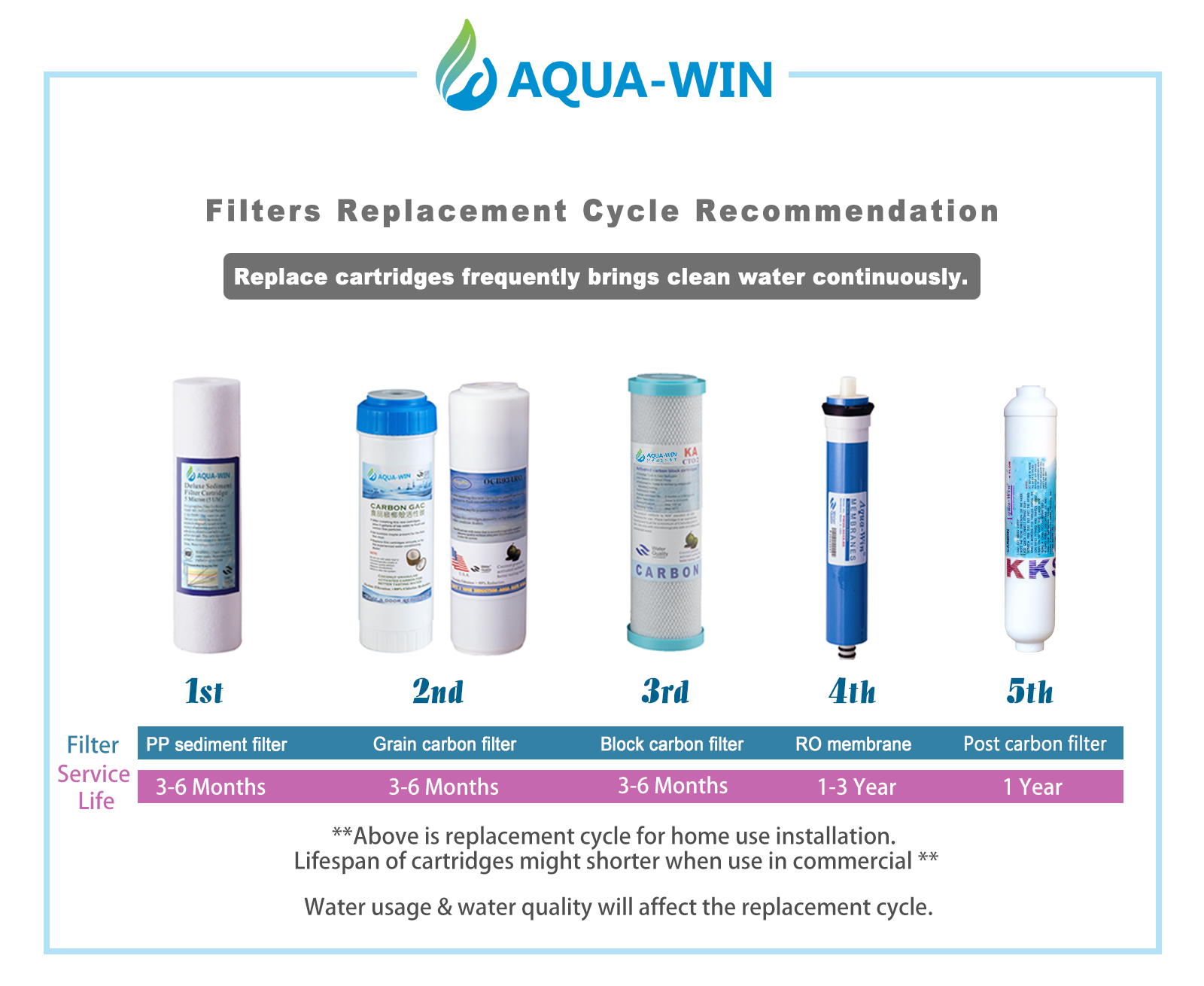
Let’s be honest—changing your water filter isn’t exactly the highlight of your week. It’s right up there with cleaning out the fridge or figuring out why the remote disappeared again. But if you’ve got a reverse osmosis system under your sink, keeping up with filter changes is the secret to water that tastes amazing, not like a science experiment gone wrong.
Think of your RO system like a hardworking little team. The filters are the heroes catching all the nasty stuff—chlorine, sediment, lead, even that weird taste from old pipes. Over time, they get tired and clogged, just like your coffee maker after a month of morning brews.
So, how often should you swap them out? The short answer: every 6 to 12 months for most pre-filters, and every 2 to 3 years for the main RO membrane. But real life is messier than a manual, so let’s break it down with stories you’ll actually remember.
Must Read
The Sediment and Carbon Pre-Filters
These are the front-line warriors. They catch dirt, rust, and chlorine before the water hits the fancy membrane. Imagine your water as a dusty puppy—these filters are the towel that wipes its paws before it gets on the couch.
Every 6 months, give or take, is the sweet spot. After a while, they get gunked up and stop working. If your glass of water starts tasting a little “flat” or like the tap at your grandma’s house, it’s a sign they’re done.
Set a calendar reminder right now. Call it “Water Pampering Day” or “Aqua Tune-Up.” You’ll thank yourself when your ice cubes don’t smell like last week’s salad.
The RO Membrane: The Star Player
This is the expensive part, the one that actually pushes water through a super-tiny filter to remove dissolved solids like fluoride and heavy metals. It’s like a bouncer at a club—it only lets the good stuff in, but it gets tired after thousands of gallons.
Most membranes last 2 to 3 years, depending on your water quality. If you’re on well water with lots of minerals, you might need to change it every 18 months. City water? You can coast a little longer.
The biggest hint? Your water tastes salty or metallic, or your TDS meter (that little gadget you probably forgot you had) shows numbers climbing. That’s the membrane waving a white flag.
Real-Life Stories That Hit Home
My friend Sarah once ignored her filter for 18 months. She said the water tasted “fine.” Until her visiting mom took a sip and asked, “Did you drop a sock in the pitcher?” That’s the sound of your taste buds lying to you.
Another buddy, Dave, changed his pre-filters religiously but forgot the post-filter (the one that polishes the water before it hits your glass). His water started smelling like a damp basement. A quick swap fixed it, but he learned the hard way that every filter matters.
Don’t be Dave. Be the person who changes the filters and brags about it like it’s a life hack. “Yeah, I swapped the carbon block last week. My water’s crisp.” You’ll sound like a pro.
 Reverse Osmosis Water System Filter Change at Charlie Gladys blog
Why Should You Care?
Because your reverse osmosis system isn’t cheap, and neither is the water it gives you. A clogged filter makes the system work harder, which can break it or waste water. It’s like driving a car with a dirty air filter—you’ll get worse mileage and a grumpy engine.
Also, let’s be real: you’re drinking this stuff. You use it for tea, coffee, baby bottles, and fancy cocktails. Old filters can grow bacteria or let particles sneak through. That’s not refreshing—that’s a germ party you didn’t invite.
Your morning ritual of chugging water from the tap should feel like a gift, not a gamble. Changing filters is the simplest way to keep that gift fresh.
How to Remember Without Losing Your Mind
Write the date on the filter with a marker. I use a sharpie and scribble “Replace by April 2025” right on the plastic. It’s ugly, but it works.
Link it to something you already do. Change filters when you rotate your tires, or when the daylight savings clock changes. Twice a year—spring and fall—is perfect for pre-filters. Your membrane will then need a swap every other year.
If you’re still unsure, buy a filter subscription service. They ship replacements right to your door. You open the box, swap out the dirty one, and feel like a responsible adult for exactly three minutes.
The Bottom Line (No Guilt)
Look, nobody expects you to be a water filtration wizard. Just pay attention. If your water takes longer to pour, or if it starts tasting like it came from a garden hose, it’s time.
Treating your RO system well is like watering a plant. A little effort now keeps the whole setup happy and hydrated. You’ll get crystal-clear water, a longer-lasting system, and the quiet satisfaction of knowing you aren’t drinking yesterday’s sediment.
So go ahead, check your filters. Your future self—and your taste buds—will send you a virtual high-five. Cheers to that.
