Difference Between Filtered And Purified Water

Ever stood in the water aisle, squinting at bottles labeled “filtered” versus “purified,” and felt your brain turn into a puddle? You’re not alone. It’s one of those grocery s...

Ever stood in the water aisle, squinting at bottles labeled “filtered” versus “purified,” and felt your brain turn into a puddle? You’re not alone. It’s one of those grocery store mysteries that seems way more complicated than it actually is.
But here’s the cool part: understanding the difference is like learning the secret language of water. It’s actually pretty fascinating once you peek behind the label. Let’s grab a glass and dive in, shall we?
So, What’s the Big Deal? It’s All Water, Right?
Well, yes and no. Think of it like coffee. A filtered cup might just strain out the big grounds, but purified water is like that triple-distilled, lab-grade espresso shot. The main difference isn’t taste alone—it’s about what gets removed and how much gets taken out.
Must Read
At its heart, filtered water runs through a physical barrier (like carbon) to trap sediment, chlorine, and some bad tastes. Purified water, however, goes through a more intense process to zap virtually everything that isn’t H2O. It's a whole other level of clean.
Filtered Water: The Everyday Hero
You probably drink filtered water more than you realize. That Brita pitcher in your fridge? That’s filtering. It’s the friendly, approachable cousin who shows up and solves the easy problems.
Filters use activated carbon to catch bigger particles and improve taste. They are amazing at removing that swimming pool flavor of chlorine. Seriously, if your tap water tastes a bit “meh,” a filter is your best friend.
But here’s the honest truth: filters are not superheroes. They don’t remove everything. Most basic filters leave behind dissolved minerals (which can be good!) and smaller contaminants like some heavy metals or pesticides. It’s a great first step, but not the final boss.
Purified Water: The Overachiever
Now we’re talking about the serious stuff. Purified water has been treated to hit a super-high standard—usually 99.9% of dissolved solids are removed. That’s not just clean; that’s squeaky-clean.
How do they do it? Usually through reverse osmosis (RO) or distillation. RO forces water through a super-fine membrane that even tiny viruses and most minerals can’t sneak past. Distillation boils the water and collects the steam, leaving all the bad stuff (and the good stuff) behind like dirty laundry.
The result? Water so pure it’s almost sterile. It’s the kind of water labs use or people rely on when their local supply is sketchy. It’s impressive, but is it always what you want at home?
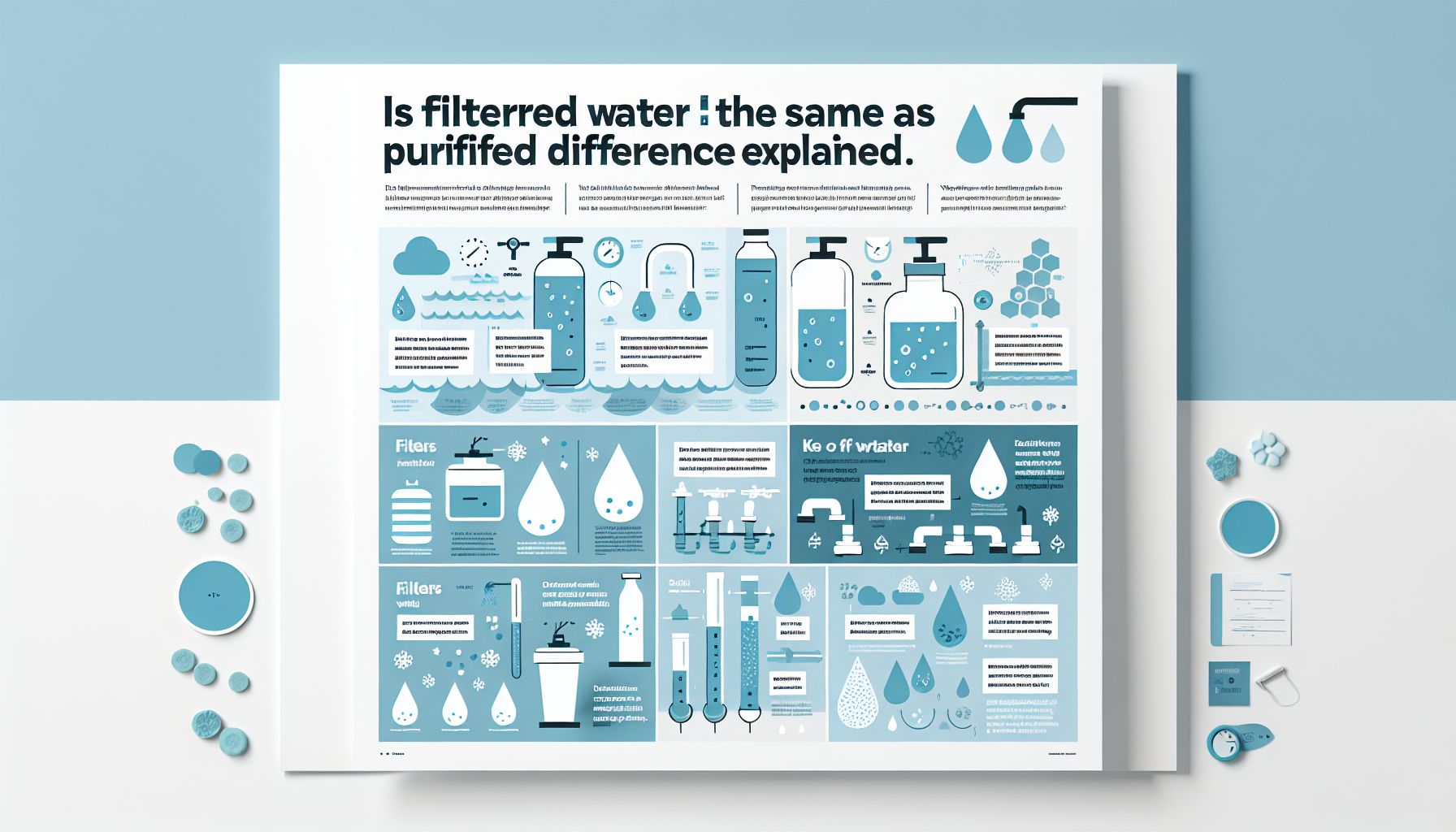 Filtered vs Purified Water: Key Differences
The Trade-Off That’s Kind of Fun
Here’s where it gets interesting. Because purified water removes everything, it also strips out healthy minerals like calcium and magnesium. Filtered water often keeps those in. So, is “pure” actually “better”? It depends on what you’re after.
Imagine a celebrity chef vs. a factory kitchen. Filtered water is the chef—it keeps the tasty minerals for a smooth mouthfeel. Purified water is the factory—perfectly consistent and completely stripped down. Both serve a purpose, just in different places.
Another fun comparison: filtered water is a great raincoat. It keeps you dry from the big splashes. Purified water is a hazmat suit. It protects you from everything, but it’s a bit overkill for a stroll to the mailbox.
Which One Should You Actually Drink?
Honestly? For most of us, filtered water is perfect. It’s affordable, removes the icky chlorine taste, and leaves those nice minerals in. Your body actually likes those little bits of calcium and fluoride.
Go for purified water if you have specific health concerns, a compromised immune system, or if your tap water is genuinely sketchy. It’s also fantastic for baby formula or coffee, where you want a truly neutral flavor.
But don’t overthink it. Water is life, and both options are miles better than sugary soda. The real enemy isn't filtered vs. purified—it's dehydration. So drink up, whatever you choose.
Here’s a final thought: If you’re into the science of it, purified water is a marvel of modern engineering. If you’re into taste and convenience, filtered water is the champion. Your glass, your rules.
So next time you’re in that aisle, you can smile, grab your pick, and actually know what you’re doing. Feels good, right? 🚰
