Is Reverse Osmosis Water The Same As Distilled

So, you’re staring at two bottles of fancy water—one labeled Reverse Osmosis (RO) and the other Distilled. Do they taste the same? Are they the same thing? Let’s dive in, shal...
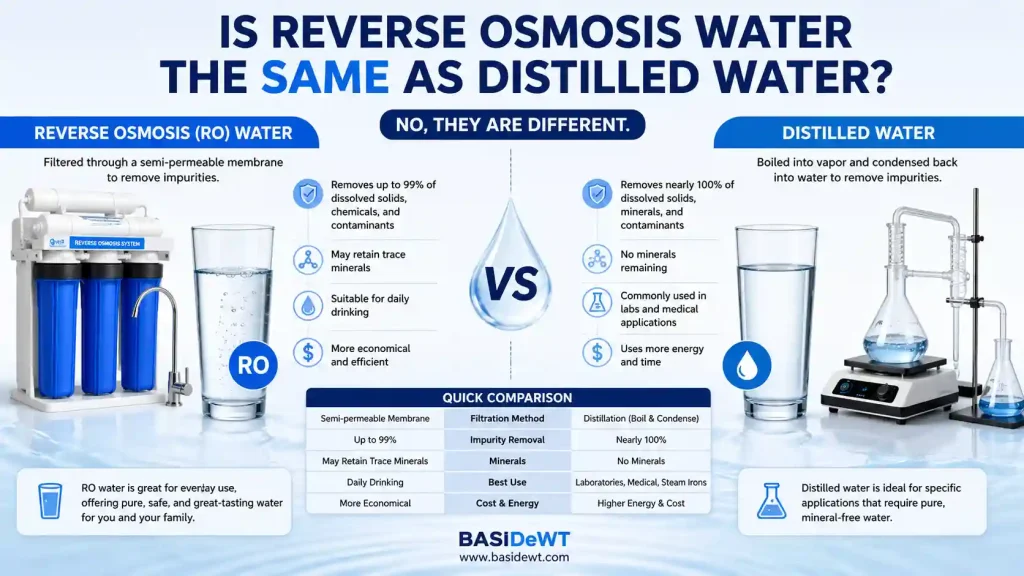
So, you’re staring at two bottles of fancy water—one labeled Reverse Osmosis (RO) and the other Distilled. Do they taste the same? Are they the same thing? Let’s dive in, shall we? Spoiler alert: they are not identical twins, but they are definitely close cousins.
The Quick & Cheerful Chemistry Lesson
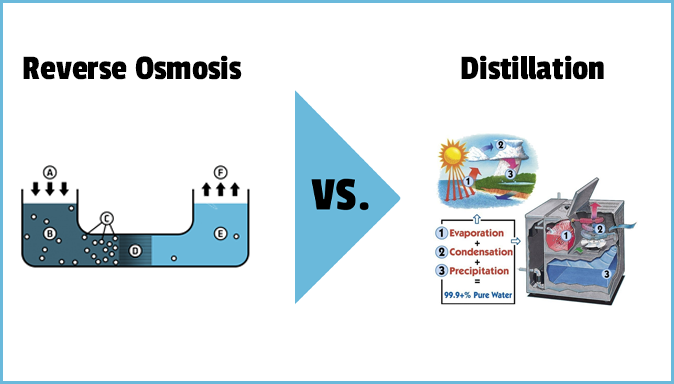
Think of Reverse Osmosis as a super-fussy bouncer at a nightclub. It uses pressure to push water through a membrane that only lets pure H₂O pass, kicking out most contaminants like lead, chlorine, and bacteria. Meanwhile, Distilled water is like a dramatic scientist who boils water into steam, then collects the condensed vapor—leaving the minerals and gunk behind in the pot.
Both methods produce water that’s fantastically pure, but they don’t work the same way. RO is a filtration process; distillation is a physical separation via boiling. The result? Distilled water is often more pure, because boiling kills even the toughest microbes, but both are far cleaner than your tap water.
Must Read
The Taste Test (Yes, You Can Do This at Home!)
Ever noticed that distilled water can taste a little flat or lifeless? That’s because it’s stripped of minerals like calcium and magnesium—the same ones that give natural spring water its zing. RO water, on the other hand, often retains a tiny bit of those minerals, so it can taste smoother and more natural to your palate.
Go ahead! Fill two glasses—one from an RO system and one from a store-bought distilled jug. Sip, swish, and compare. I bet you’ll notice the RO version has a subtle, pleasant roundness, while the distilled one might whisper, “I’m really, really empty.”
Why This Matters for Your Everyday Fun
Let’s be real: you’re not just drinking this water—you’re using it for awesome stuff. Visit your local coffee shop? RO water makes a silky, bitterness-free espresso because it doesn’t mess with the coffee’s natural oils. Distilled water? Perfect for your car battery, a steam iron, or a humidifier—since it leaves zero mineral buildup. Fun fact: You can even use distilled water to make crystal-clear ice cubes for your fancy cocktails!
But wait—there’s more! For plant parents out there, both are safer than tap water (no chlorine or heavy metals), but RO water gives your ferns a gentle mineral nudge. Distilled water is the “clean slate” choice for sensitive carnivorous plants like Venus flytraps. See? Pure water = happy plants = more jungle vibes in your living room.
 ro system Archives - My Pure Water
The Health & Safety Hype
Here’s the uplifting truth: both RO and distilled water are safe for daily drinking (unless your doctor says otherwise). Some worry about missing minerals, but honestly, you get loads from food like spinach, nuts, and dairy. So unless you’re only drinking water for a month straight, you’re fine. Really, you’re fine!
What about the “plastic bottle guilt”? If you’re using a home RO system or distiller, you’re saving the planet one reusable bottle at a time. That’s eco-friendly and budget-friendly—a win-win that makes you feel like a green superhero.
The Bottom Line (With a Wink)
So, is Reverse Osmosis water the same as distilled? No, but they’re best friends. One is a talented filter, the other a devoted purist. Choose RO for your daily drinking and brews; save distilled for your appliances and special projects. And if you’re curious, try both for a week—your taste buds will become a mini science lab!
Here’s the inspiring part: Understanding this little difference means you can now make better choices about what you put in your body and how you use resources. That’s not just smart—it’s empowering. Every sip becomes a tiny act of self-care, every cup a celebration of curiosity. So go ahead, fill your glass with confidence, and let the pure, playful adventure of water knowledge splash into your life. Cheers to learning something new today! 🥤
