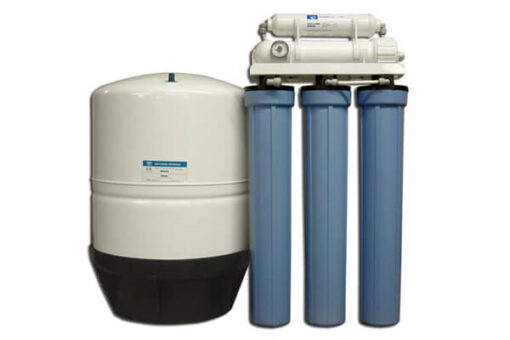
Tier1 300 Gallon Capacity Reverse Osmosis Tank

So, picture this: it’s 2 AM, and you’re suddenly parched. You stumble to the kitchen, open the fridge, and—nothing. The water dispenser sputters like a dying lawnmower before...
So, picture this: it’s 2 AM, and you’re suddenly parched. You stumble to the kitchen, open the fridge, and—nothing. The water dispenser sputters like a dying lawnmower before giving up entirely. You’re left staring at a half-empty Brita pitcher, wondering where it all went wrong.
That, my friend, is the moment you realize your reverse osmosis system is more of a trickle than a flow. It’s a classic case of “great filtration, but no guts” when it comes to storage. Enter the hero: the Tier1 300 Gallon Capacity Reverse Osmosis Tank.
The Elephant in the Kitchen (But Make It Sleek)
I know what you’re thinking: “300 gallons? That sounds like a water park for my houseplants.” Actually, that rating refers to how much water the tank can refill and dispense over time—not its physical size. The actual tank is about the size of a small propane cylinder, which is surprisingly compact for what it promises.
Must Read
You get steady pressure and enough volume to fill a large pot for pasta without waiting 10 minutes. It’s like the difference between sipping through a straw and drinking from a fire hose—minus the mess.
Why 300 Gallons Feels Like Overkill (Until It Isn’t)
Let’s be real: most households don’t need 300 gallons of filtered water a day. That’s enough to bathe a small elephant or host a hydration station for a marathon. But here’s the thing—the capacity isn’t about daily use; it’s about recovery speed.
This tank refills itself faster than a basic 14-gallon unit because it’s designed for higher flow rates. So when you drain it for a big water bottle fill-up, it’s ready to go again in minutes, not hours. It’s the “always full” feeling, which, in a house with thirsty kids or a coffee addict (hi, it’s me), is pure gold.
The “Set It and Forget It” Vibe
Here’s a side note you’ll appreciate: installation is stupidly easy. You don’t need a plumber or a degree in hydraulics. The tank connects with a standard 1/4-inch quick-connect fitting—just twist, push, and you’re done. It even comes with a stand to keep it upright, so it won’t roll around like a rogue bowling ball under your sink.
And the best part? No more air bladder issues. Some cheap tanks lose pressure over time, giving you that sad dribble. This one uses a butyl rubber bladder that holds its air charge for years. It’s the kind of reliability that makes you forget your water setup even exists—until you need it, and it’s there.
But Is It Really “Tier 1”?
The name isn’t just marketing fluff. Tier1 is a brand known for commercial-grade membranes and tanks that meet NSF/ANSI standards. That means no funky chemical leaching into your water, and no rust from cheap steel. The tank is made of heavy-gauge carbon steel with a corrosion-resistant lining—so it’s built to outlast your kitchen remodel.
 Commercial and Industrial Water Filtration & Softening Systems
One ironic twist? The tank is so well-insulated that it can feel a bit too warm in a hot climate. But hey, that’s what an ice cube is for, right? (Or you can wrap it in a reflective sleeve—your call.)
When You Realize You’ve Become a Water Snob
I’ll admit: after installing one of these, I started testing tap water at friends’ houses. “Does that taste like chlorine to you?” I’d ask, suddenly the annoying water critic. The pure, crisp output from a 300-gallon tank makes everything else taste like a swimming pool.
You also stop buying bottled water entirely—which is great for the planet and your wallet. That’s roughly $20–$30 a month saved, depending on how hydrated you are. (I used to buy three cases of water weekly. Oof.)
Bottom Line: Should You Buy One?
If you have a reverse osmosis system that’s currently gaslighting you with slow flow, yes. This tank upgrades your system from “okay” to “legit workhorse.” It’s especially great for large families, avid cooks, or anyone who likes to fill a 5-gallon bucket for fermenting—looking at you, kombucha brewers.
The only downside? It’s a bit heavier (about 15 pounds empty) than smaller tanks. But seriously, that’s like complaining a steak is too juicy. You’ll get over it.
So next time you wake up at 2 AM craving a tall glass of water, don’t let your sink betray you. Let the Tier1 300 have your back. You deserve water that flows without a motivational speech.
