Is Reverse Osmosis The Same As Distilled Water

So, you’re standing in the water aisle at the grocery store, staring at two bottles that look exactly the same. One says “Reverse Osmosis,” and the other brags “Distilled.” Yo...
So, you’re standing in the water aisle at the grocery store, staring at two bottles that look exactly the same. One says “Reverse Osmosis,” and the other brags “Distilled.” You grab both, squint, and wonder: Are these actually the same thing? Spoiler alert: nope. It’s like comparing a fancy boxed wine to a bottle of water that’s been through a car wash—both get the job done, but the journey is wildly different.
The Short Answer: No, But They’re Cousins
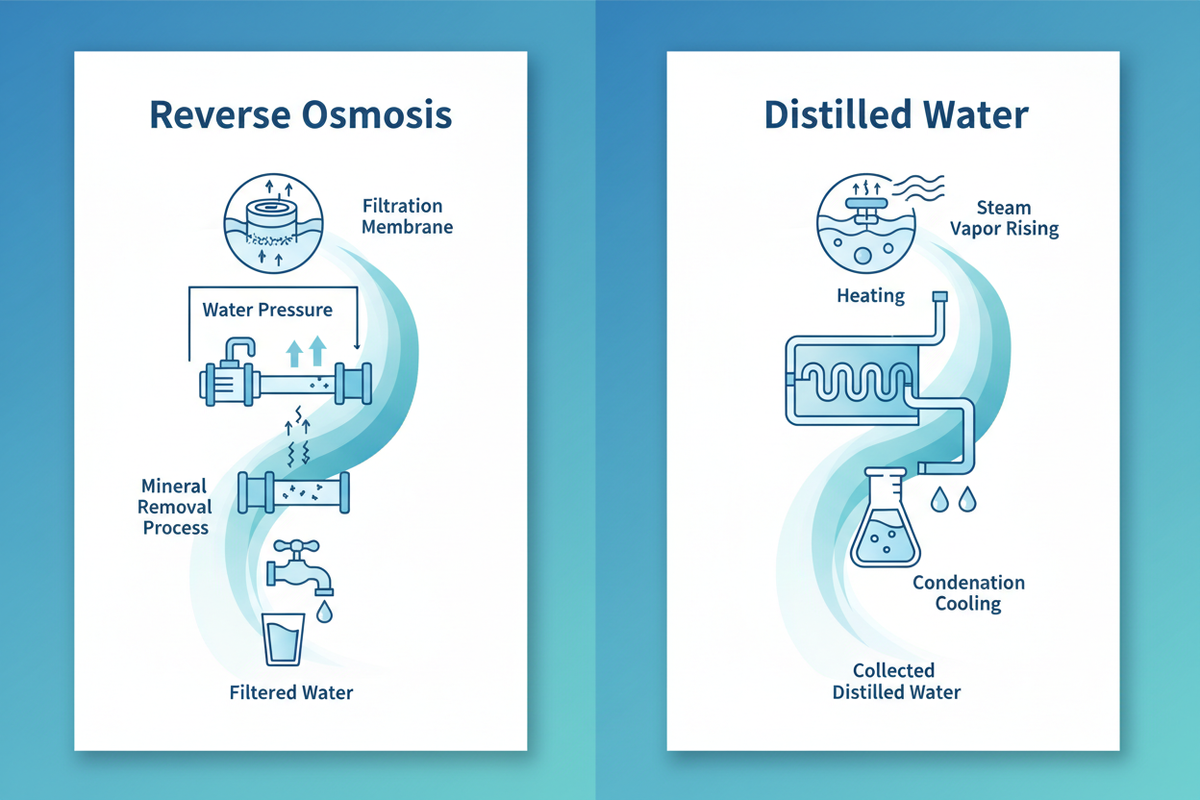
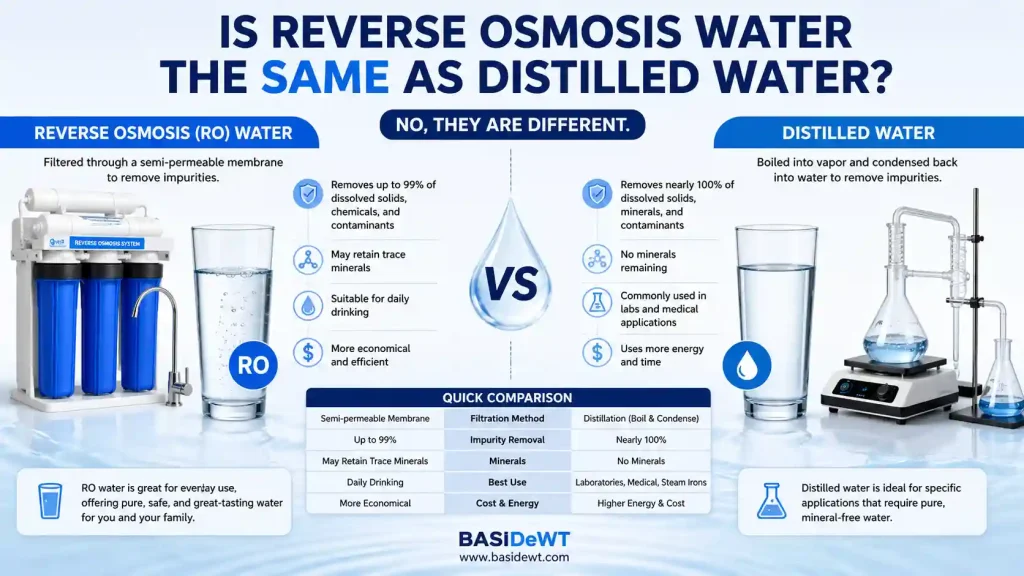
Think of distilled water as the overachiever of the water family. It’s made by boiling water into steam, then catching that steam as pure liquid. It’s like sending your water on a steam bath spa retreat—everything nasty stays behind, and only the good, pure vapor comes home.
Reverse osmosis, or RO, is more like a super-fussy bouncer at a club. Water gets pushed through a special membrane that’s so tight, only water molecules slip through—everything else, from minerals to that weird tap-taste, gets kicked out. So, both methods remove impurities, but they do it in totally different ways.
Must Read
Picture This: Your Kitchen Sink
Imagine you’re making spaghetti. Distilled water is like boiling the pasta, then saving only the steam from the pot—no salt, no starch, just ghost-water. It’s so pure it actually tastes flat, like someone stole the flavor. That’s why astronauts drink it, but your grandma would complain it’s “too boring.”
Now, reverse osmosis water is like running your tap water through a teenager’s food filter—every particle bigger than a water molecule is refused entry. It still has a tiny bit of minerals, maybe a whisper of flavor, but it’s clean enough to sip without making a face. Both are pure, but one is “clean-desk policy” and the other is “lunar purity.”
What Got Left Behind?
Here’s where it gets funny. Distilled water is so pure it actually wants to steal minerals from your body—or your coffee maker. I once used distilled water in my espresso machine, and the coffee tasted like a sad, empty apology. It’s like eating a salad with no dressing—technically healthy, but nobody’s happy.
Reverse osmosis water, on the other hand, keeps a few friendly minerals like calcium and magnesium. It’s the Goldilocks of purified water: not too stripped, not too wild. You can drink it and feel like you’re being healthy without feeling punished.
Do You Taste the Difference?
Unless you’re a professional water sommelier (yes, that’s a thing), you probably won’t notice a huge difference in a blind taste test. But your mouth might. Distilled water can taste metallic or flat because it’s so aggressive at absorbing carbon dioxide from the air—it gets a tiny bit acidic. RO water? It’s just… nice. Like a friendly tap water that went to charm school.
I once tried making iced tea with distilled water. It looked clear, but the taste was like drinking a memory of tea—no depth, just sadness. With RO water, the tea actually tasted like tea. So if you’re cooking, go RO; if you’re cleaning or filling a humidifier, distilled is your best buddy.
 Is Reverse Osmosis Water the Same as Distilled Water? - Basidewt-Best
The Real-World Test: Your Fish Tank & Your Kettle
Let’s get real. Distilled water is great for your iron, your car battery, and your CPAP machine—because you don’t want mineral buildup anywhere near your snoring face. But if you drink it daily, you might miss out on minerals and actually get dehydrated faster. Yes, it’s a thing: too clean can be a problem.
Reverse osmosis is what most fancy home filtration systems use—the ones under your sink or in those expensive pitchers. It’s perfect for drinking, making coffee, and even watering your finicky houseplants. My fern, Gerald, once got a shot of distilled water and threw a fit—dropped leaves like it was autumn. RO water? He’s thriving, the drama queen.
So, Which One Should You Use?
Think of it like this: distilled water is the sterile lab coat—useful for science fairs and medical stuff. Reverse osmosis is the comfy weekend hoodie—great for everyday life. If you’re making baby formula or mixing with orange juice, go RO every time. If you’re topping off a battery or cleaning a telescope, distilled is your hero.
And whatever you do, don’t try watering your orchids with distilled water unless you want them to file a complaint. They’ll look at you with those smug petals and judge your choice. Trust me, I’ve been there.
The Bottom Line
Reverse osmosis is not the same as distilled water—they’re like a dad-joke and a pun: both clean, but one has more personality. Distilled water goes through a boiling and condensing marathon, while RO water slides through a tight membrane like a secret agent.
Both are excellent for different jobs, and neither is a wrong choice—unless you’re pouring distilled into your morning coffee. Then you’ve made a mistake, and your taste buds will let you know. So next time you grab a bottle, just ask yourself: Am I drinking this, or am I cleaning something that hates me? That’s your answer. Cheers, you beautiful water snob.
