Is Deionised Water The Same As Distilled Water

Ever stared at two bottles of water in the store, one labeled deionised and the other distilled, and wondered if your life was about to get very complicated? You’re not alone....
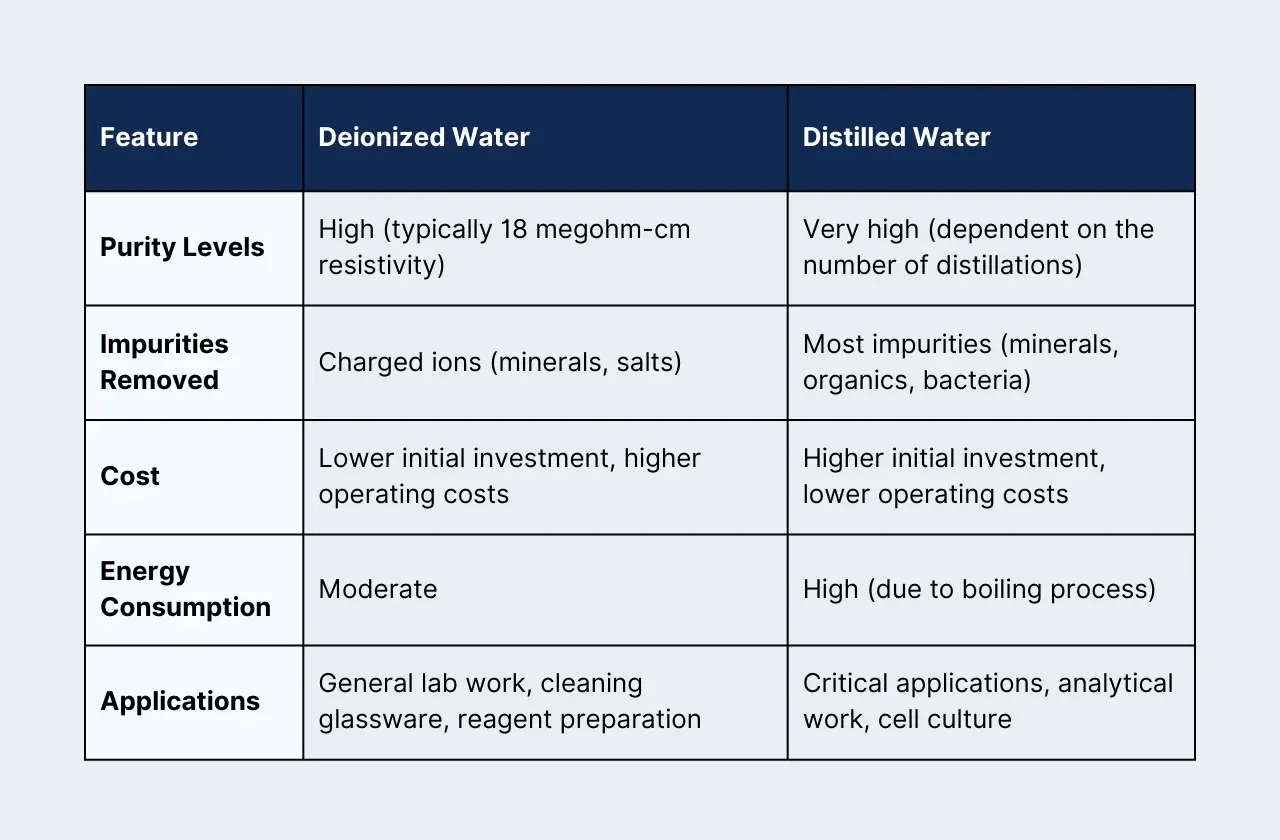
Ever stared at two bottles of water in the store, one labeled deionised and the other distilled, and wondered if your life was about to get very complicated? You’re not alone. It’s one of those everyday science questions that feels like it should have a simple, one-word answer—but doesn’t quite.
So, are they the same? No, not exactly. But they are very close cousins. Think of them like twins who dress differently: same goal, different journey. Let’s break down the vibe of each one.
Distilled Water: The Old-School Boil
Distilled water is the grandma of pure waters. You boil the heck out of it, catch the steam, and let it cool into a clean liquid. The minerals, bacteria, and other stuff stay behind in the pot.
Must Read
It’s like making a perfect cup of tea, but instead of keeping the flavour, you ditch everything except the pure water vapour. Distillation is ancient—people have been doing it for centuries. It’s reliable, simple, and feels a bit like a science fair project.
But here’s the catch:
Distillation takes energy—lots of it. Boiling water for a long time isn’t exactly eco-chill. Plus, it can strip out good minerals along with the bad, leaving water that tastes a little flat.
Deionised Water: The Ion Magnet
Deionised water is the cool, modern cousin. Instead of heat, it uses special resins that act like tiny magnets to pull out charged particles—called ions. These ions are things like calcium, magnesium, and sodium.
Imagine a bouncer at a club who only lets neutral molecules through. The ions? They get kicked to the curb. The result is water that’s incredibly pure—sometimes even purer than distilled water. And it happens at room temperature, so no boiling required.
But wait—does it remove everything? Not quite. Deionisation doesn’t touch non-charged contaminants like bacteria, viruses, or organic chemicals. So a sample of deionised water could still have tiny germs floating around. Weird, right?
So, Which One Is “Better”?
That’s like asking if a skateboard or a bicycle is better. Depends on where you’re going. For most home uses—like filling a steam iron, cleaning car batteries, or topping up a fish tank—both work fine. Distilled is often safer for medical devices, while deionised is favoured in labs where every last ion matters.
 Distilled Water Vs. Deionized Water — Microbe Online
But here’s a fun fact: if you drink either one regularly, you might miss out on essential minerals. Your body actually likes a little bit of calcium and magnesium in its water. So don’t swap your tap water for the lab stuff unless you’re making coffee or a fancy aquarium.
The Cool Part: They’re Not Magic, But Almost
What’s genuinely interesting is that both methods achieve something astonishing: they remove the invisible stuff. Think about it—you can’t see the minerals in tap water, but they’re there. Distillation and deionisation are like tiny vacuum cleaners for the microscopic world.
Ever accidentally left a glass of tap water out and noticed white residue later? That’s scale. Neither distilled nor deionised water leaves that mark because they’ve kicked out the party crashers.
A Quick Comparison (Because Your Brain Wants It)
Distilled water: Boil and condense. Removes almost everything, including bacteria. Tastes flat. Energy-hungry.
Deionised water: Ion exchange. Removes charged minerals very well. Might still have bacteria. Energy-efficient.
See? They’re like two different superheroes with the same mission: purity. One uses brute force (heat), the other uses clever chemistry (magnets).
So, Should You Care?
Honestly, unless you’re a chemist, a fish keeper, or a coffee snob, you probably don’t need to stress. Both will keep your batteries alive and your steam iron happy. But if you want to sound smart at a dinner party, just say: “Distilled is boiled clean; deionised is magnetically scrubbed.”
And if someone asks which one is better, smile and say, “Neither—unless you’re a hyper-specific nerd about it.” Then take a sip of your regular tap water. Because guess what? It’s probably perfect for you.
