Is Deionized Water The Same As Distilled Water

Let’s be honest: standing in the water aisle at the grocery store can feel like a chemistry pop quiz you never studied for. You see "Distilled" on one jug and "Deionized" on a...
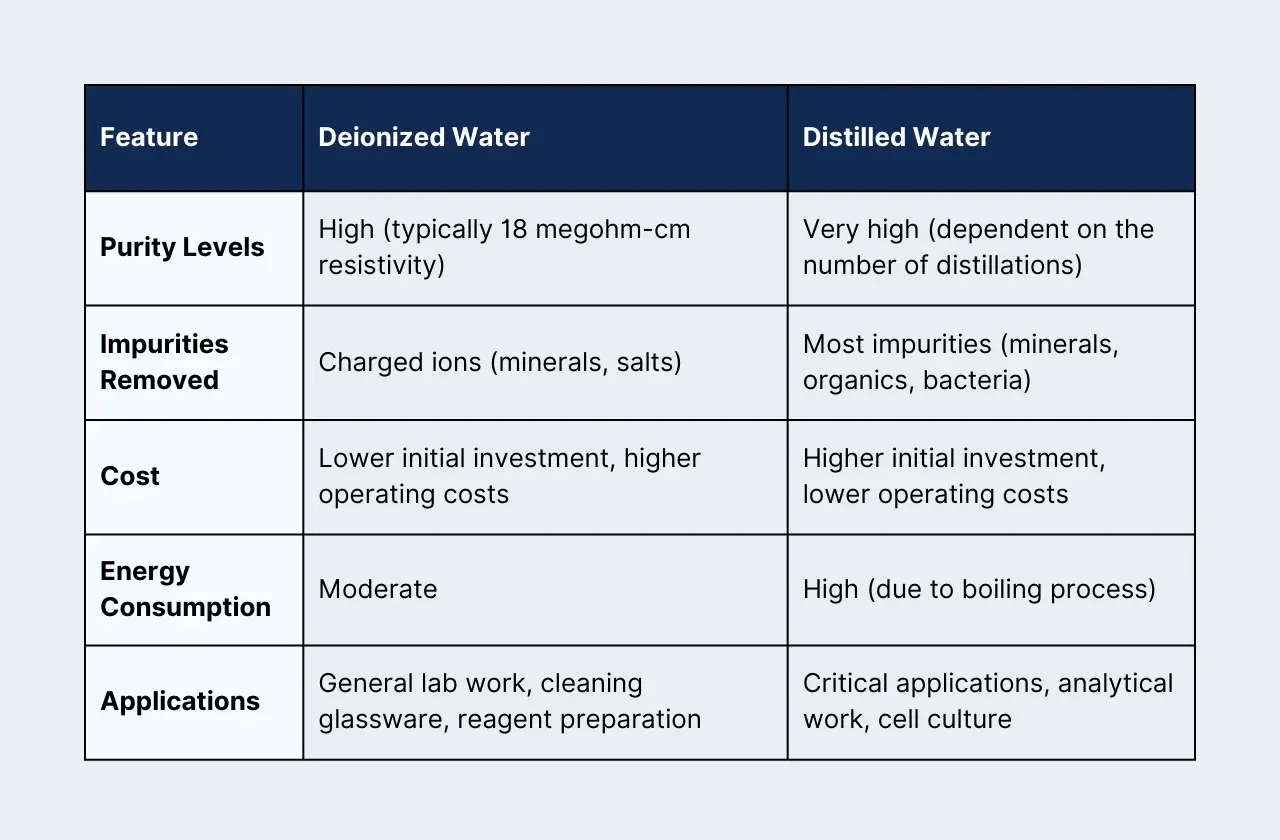
Let’s be honest: standing in the water aisle at the grocery store can feel like a chemistry pop quiz you never studied for. You see "Distilled" on one jug and "Deionized" on another, and your brain just yawns. But here’s the fun secret: understanding the difference is actually a tiny, brilliant superpower.
So, is deionized water the same as distilled water? The short answer is no, but they’re both incredibly clean first cousins. Think of them as the two best friends who both hate impurities, they just use different methods to kick them out.
How They Kick Impurities Out
Distilled water is the old-school, patient method. You boil water until it becomes steam, then cool that steam back into a liquid. It’s like a magical cleansing journey—the steam leaves all the dirt, minerals, and germs behind. It’s thorough, but it takes time and energy.
Must Read
Deionized water is the slick, modern, very fancy cousin that uses magnets. Well, not exactly magnets, but special resin beads that act like super-charged sponges. These beads grab onto charged mineral ions—calcium, magnesium, sodium—and swap them for hydrogen and hydroxide. The result? Water that is 99.9% mineral-free.
Here’s where it gets really interesting: distilled water is free of pathogens because boiling kills bacteria and viruses. Deionized water doesn’t necessarily kill germs unless it’s also filtered. That’s the big difference. One is a sterile warrior, the other is a purity perfectionist.
When You’d Use Which (And Why It Matters)
If you’re topping off your car battery or a steam iron, you want distilled water. Why? Because the boiling killed any minerals that could leave crusty white deposits (or explode, yikes). It’s the safe choice for your car, your humidifier, and your peace of mind.
Deionized water, however, is the rockstar of labs and fish tanks. Scientists use it because it doesn’t interfere with delicate experiments. Aquarium owners use it because it won’t mess with the precise water chemistry that your exotic fish need. It’s the water that plays well with others.
And here’s a little life hack: you can drink both! But honestly? Most people find distilled water tasteless (because it is), and deionized water can taste a bit flat. Your tap water, with its natural minerals, usually tastes better. So save the super-purified stuff for your gadgets and hobbies.
 Distilled Water Vs. Deionized Water — Microbe Online
The Flash-Flirty Truth
Let’s bust a big myth right now: deionized water is not the same as distilled water, but they’re often confused because they both achieve very high purity. Distillation removes almost everything by physical change (boiling). Deionization removes almost everything by chemical attraction (ion swapping). They’re two different superheroes with the same cape color.
Another fun fact: you can actually distill water at home with a pot and a lid, but deionizing requires special resin filters. That makes distilled water the DIY champ and deionized water the techy upgrade. Which one do you want to be? Probably the techy upgrade, right?
So next time you see those two jugs, you’ll smile. You’ll know that distilled is the sterile, boiled, old-fashioned hero for your appliances. Deionized is the ultra-pure, mineral-snatching ninja for your lab or aquarium. They’re not the same, and that’s what makes them both awesome.
An Uplifting Note To Take Home
Learning the tiny differences in the world doesn’t just make you smarter—it makes life more fun. You start seeing how everything around you has a clever little purpose, from the water in your iron to the air in your tires. The more you know, the more you can play with the world instead of just letting it happen to you.
So go ahead: impress your friends at the next cookout with your water wisdom. Say, “Actually, deionized water is not the same as distilled water,” and watch their eyes light up. You’ll be the person who makes science feel like a friendly treasure hunt instead of a homework assignment. And that’s the most inspiring thing of all.
Every drop of knowledge you chase, even about something as simple as water, clears a path for more curiosity. Keep asking questions. Keep poking at the ordinary. Because the most magical discoveries hide in plain sight—waiting for someone like you to take a sip and say, “Wait, I want to know more.”
