Difference Between Purified Water And Distilled

You’re standing in the water aisle, and suddenly it feels like a chemistry exam. Bottled options scream “pure,” “spring,” “alkaline,” and “distilled,” but you just want a glas...
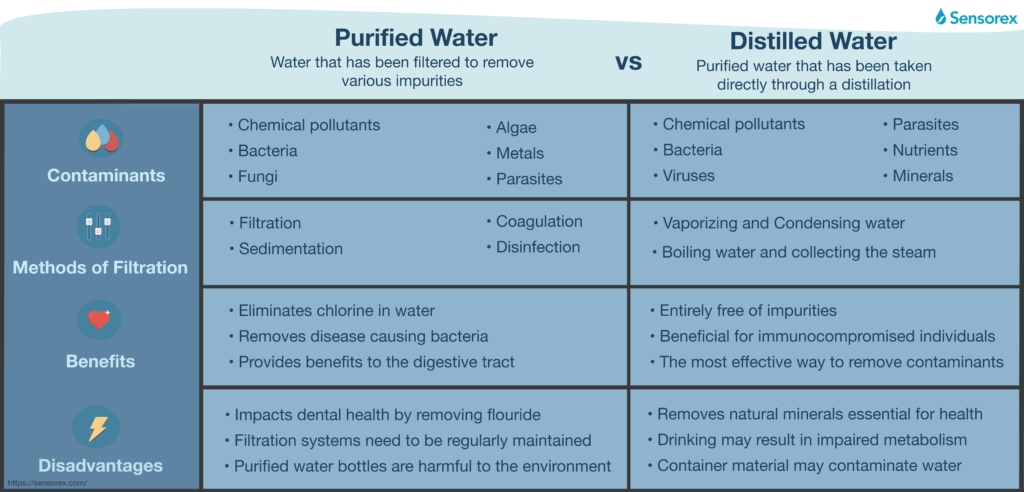
You’re standing in the water aisle, and suddenly it feels like a chemistry exam. Bottled options scream “pure,” “spring,” “alkaline,” and “distilled,” but you just want a glass of water that won’t judge your life choices. Let’s cut through the noise.
The real showdown is between purified water and distilled water. They sound like siblings, but they’re really more like cousins who went to different parties. Here’s the smooth, no-science-degree-required breakdown.
Purified Water: The Friendly Filter
Think of purified water as your water’s basic training. It’s been sent through a process—like reverse osmosis, deionization, or carbon filtration—to remove chemicals, bacteria, and that weird tap-water taste. It’s the everyday hero.
Must Read
Fun fact: Most bottled “drinking water” is purified, even if the label says “spring.” About 64% of bottled water in the U.S. is just treated tap water. So yes, you might be paying for fancy packaging on something that started in a municipal pipe.
Purified water keeps your natural minerals—like calcium and magnesium—mostly intact. That’s why it tastes crisp without feeling hollow. It’s the water you grab for your morning smoothie, your cat’s bowl, and your office desk without a second thought.
Distilled Water: The Intense Purist
Now, distilled water is the overachiever. It’s boiled into steam, then condensed back into liquid, leaving behind literally everything else—minerals, impurities, even your hopes for a flavorful cup of coffee. It’s almost too pure.
This process removes 99.9% of dissolved solids. That’s great for science labs and car batteries, but maybe not for your afternoon tea. Without minerals, distilled water can taste flat—like drinking silence.
Cultural reference time: In Japan, distilled water is sometimes used in high-end whisky dilution because it doesn’t alter flavor. But for everyday hydration? Most experts agree you’re better off with something that has a little mineral personality.
When to Choose Which
Use purified water for: drinking daily, making coffee (it doesn’t scale up your machine), humidifiers, and keeping houseplants alive. Your monstera will thank you.
Use distilled water for: steam irons, CPAP machines, car cooling systems, or making baby formula (the CDC recommends it). It’s also clutch for picky tea drinkers who want zero mineral interference—but don’t blame the water for a weak brew.
Practical tip: If you’re buying water, check the label. “Purified” often means it’s been treated by reverse osmosis, while “distilled” will say exactly that. Your tap water is technically “purified” in most cities, so you might already have the winner at home.
 Distilled vs. Purified Water: What’s the Difference? – Waterdrop Europe
The Fun Science Bit (Painless, Promise)
Here’s a wild fact: Pure water doesn’t conduct electricity well. It’s the minerals in regular water that make it a conductor. So distilled water is basically electricity’s worst friend—great for safety, boring for science experiments.
Also, distilled water can be slightly acidic (pH around 5.8) because it absorbs carbon dioxide from the air. Purified water usually sits closer to neutral pH 7. Your stomach doesn’t care, but your taste buds might side with the purer option.
Pop culture nerd alert: In the movie The Martian, Matt Damon’s character produces water by burning rocket fuel. That’s technically distillation. So if you ever get stranded on Mars, you’ll know what to do—but for now, save yourself the hassle and buy a filter.
Health Hype vs. Reality
Some wellness trends claim distilled water “detoxifies” your cells. Let’s be real: your liver and kidneys are the real heroes. Drinking distilled water won’t flush out anything they can’t handle—and it might actually leach minerals from your body over time. Moderation is key.
Purified water, on the other hand, is a balanced choice for most people. It removes contaminants like lead, chlorine, and pesticides while keeping the good stuff. That’s why it’s the gold standard for home filters like Brita or PUR.
Final reality check: Neither water will make you live forever. But choosing purified over tap water can reduce your exposure to heavy metals, especially in older homes with lead pipes. That’s a win.
The Reflection
At the end of the day, water is about connection. It’s the first thing you reach for when you’re tired, the thing that fuels your run, the companion to your 2 PM snack. In a world full of complexity, water should be simple.
So whether you reach for a sleek bottle of purified or a jug of distilled for your iron, remember: you’re not just hydrating—you’re making a choice about what you invite into your day. Be kind to your taste buds, and practical about your appliances.
Now go drink some water. You’re probably a little dehydrated. Your brain, your skin, and your weekend self will thank you.
