5 Stage Reverse Osmosis Water Filtration System

Let’s be honest: tap water is a gamble. One day it’s crisp and refreshing; the next, it tastes like a swimming pool that a plumber’s toolbox fell into. You’ve probably heard o...
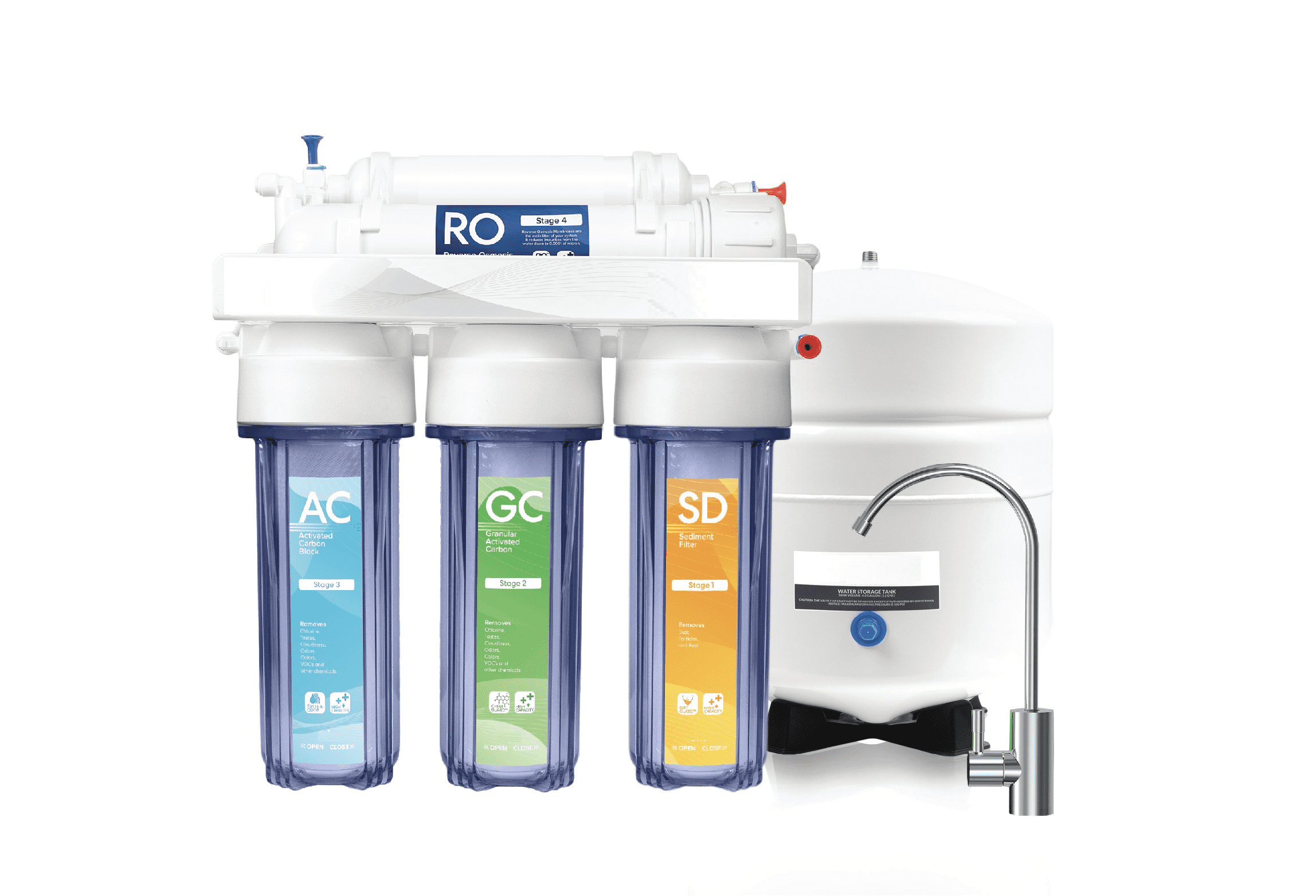
Let’s be honest: tap water is a gamble. One day it’s crisp and refreshing; the next, it tastes like a swimming pool that a plumber’s toolbox fell into. You’ve probably heard of that kitchen counter hero known as the 5 Stage Reverse Osmosis system. It sounds like something you’d need a PhD to assemble, but I promise it’s less “rocket science” and more “glorified plumbing with a superiority complex.”
Stage 1: The Bouncer (Sediment Filter)
First up is the sediment filter, which is basically the doorman of your water party. It stops dirt, rust, and sand from crashing the event. Think of it as the security guard who really hates mud. Without it, your water would be cloudy enough to double as a questionable artisan latte.
Fun fact: a single sediment filter can catch particles 5 microns wide—that’s smaller than a human red blood cell. I’m not saying your water had tiny boulders in it, but let’s just say this filter saves your taste buds from a road trip to Grit City.
Must Read
Stage 2: The Chemistry Nerd (Carbon Filter)
Next comes the carbon filter, which is like that friend who’s great at absorbing gossip—except it absorbs chlorine, bad smells, and weird tastes. Your tap water likely has enough chlorine to double as a pool cleaning agent. I won’t tell you to stop drinking pool water, but this stage turns “swimming lesson” into “garden-fresh hydration.”
Carbon filters also trap volatile organic compounds, which is a fancy way of saying “things that make your water smell like a Sharpie factory.” Goodbye, chemical musk; hello, flavor purity.
Stage 3: The Overachiever (Reverse Osmosis Membrane)
Now we enter the main event: the Reverse Osmosis membrane. This is the brain of the operation—a semi-permeable sheet so thin and finicky that it rejects 99% of contaminants. It’s like a bouncer on steroids who checks IDs not just for age, but for bathroom habits, marital status, and molecular weight.
Here’s the crazy truth: this membrane is so tight that only water molecules can squeeze through. It blocks bacteria, viruses, lead, arsenic, and even dissolved salt. You could run ocean water through it and get fresh water—which is why sailors used to dream about this thing. (Spoiler: they didn’t have it, so they drank rum instead. Coincidence? I think not.)
Surprising fact: the pressure needed to push water through this membrane is about 50 to 80 pounds per square inch. That’s like your faucet doing daily pushups so you can have a drink that’s purer than a Himalayan monk’s conscience.
Stage 4: The Polish Artist (Second Carbon Filter)
By now, your water is pretty pure, but it might have a slight “I just came off a spaceship” taste. Enter Stage 4: another carbon filter, but fancier. This one polishes off any leftover odors or molecules that snuck past the membrane. It’s like having a detail guy buff your car after you already washed it—except the car is your glass of water.
 Reverse Osmosis Water Filter System
This stage is often called a “post-filter,” and it’s the reason your water doesn’t taste like it lives in a sterile lab. Water snobs adore this step. Without it, you’d be sipping molecule-grade H2O, which is fine for chemistry class but boring for your tongue.
Stage 5: The High-Five (Remineralization Cartridge)
Here’s the twist: RO water can be too pure. It’s so clean that it’s a little aggressive—like a motivational speaker who never stops smiling. Stage 5 adds back healthy minerals like calcium and magnesium. It’s the water’s redemption arc: “I was pure, but now I’m helpful!”
Without this step, your water might leach minerals from your pipes or your body in a “maybe I shouldn’t drink distilled water forever” kind of way. With it, you get crisp, balanced hydration that tastes bottled-bought. Plus, you can tell your friends, “My water has a personal growth journey.”
Why You’d Love Having a 5-Stage System
Beyond the showboating, a reverse osmosis system actually saves pennies and the planet. A single system can produce hundreds of gallons before needing a filter change. Compare that to buying plastic water bottles that sit in a landfill longer than your grandma’s fruitcake—and that fruitcake is legendary (not in a good way).
But here’s the catch: the process wastes some water. For every gallon of purified water, about 3 gallons go down the drain as “reject water.” That sounds terrible until you realize your toilet probably uses 3 gallons per flush anyway. So just flush twice and call it a day.
The Final Sip
So yes, a 5-stage RO system is a bit of a kitchen show-off—a Frankenstein of filters, tubes, and cold, purified vengeance. But once you taste that first glass of water that doesn’t taste like a chemistry set, you’ll grin. You’ll pour another glass and whisper, “I have bested the pipes.”
And if anyone asks why your water is so good, just say, “It’s five stages of denial—of impurities.” Then wink. They’ll be impressed, or scared. Either way, you’ll stay hydrated.
