Whole House Well Water Filtration System Diagram

Okay, let’s talk well water. You know, that magic stuff that comes straight from the ground under your house? It’s free, it’s yours, and sometimes… it tastes like a rock licke...
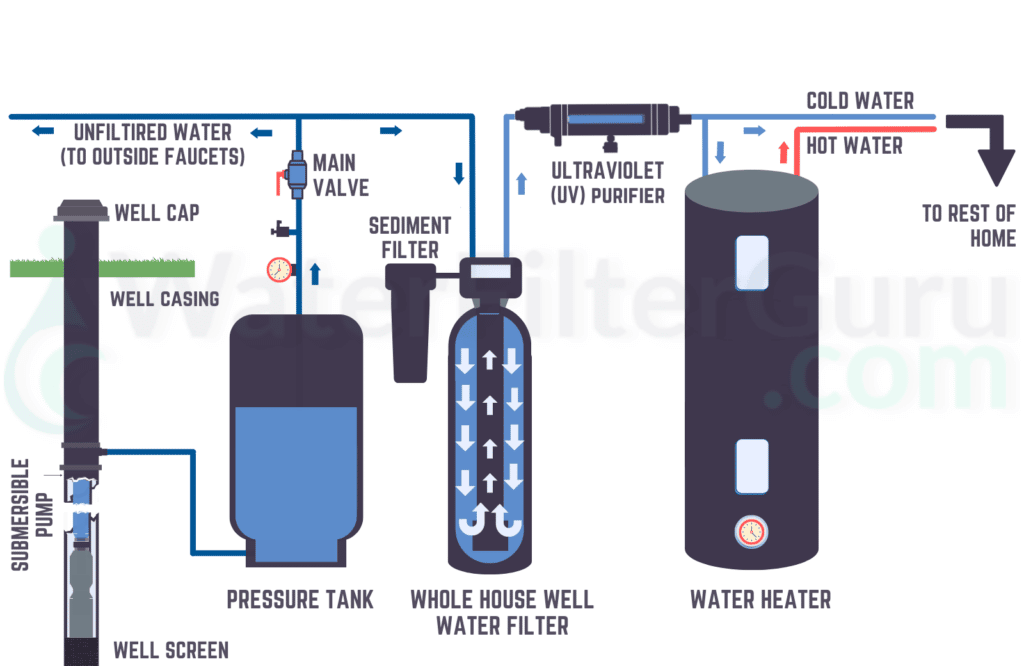
Okay, let’s talk well water. You know, that magic stuff that comes straight from the ground under your house? It’s free, it’s yours, and sometimes… it tastes like a rock licked a garden hose. I’ve been there.
You finally decide to get a whole house filtration system, but then you see the diagram. It looks like a conspiracy theory drawn by a plumber on espresso. Don’t panic. I’m here to be your translator.
The Big Picture (Or: Why Your Water Smells Like a Sulfur Fart)
First, a reality check. Your well isn’t a magic spring from a fairy tale. It’s a hole in the ground that collects dirt, minerals, and the occasional confused bug. That’s where the diagram comes in.
Must Read
It’s a map for your water’s journey from “eww” to “ahh.” Think of it as a spa day, but for every single drop that touches your dishes, your skin, and your coffee maker.
Step One: The Sediment Filter (The Bouncer)
Right at the start, your water meets its first boss: the sediment filter. This guy is the bouncer at a club. He doesn’t care about your vibe.
He just stops the big, chunky party crashers like sand, rust, and silt. If you skip this step, your pipes get a gritty exfoliation, and nobody wants that. Especially not your water heater.
Step Two: The Water Softener (The Fairy Godmother)
Next up, the water softener. This is the real celebrity of the diagram. Hard water is basically water with a mineral attitude—calcium and magnesium that leave white spots on your glasses and make your soap cry.
It uses a process called ion exchange. Fancy words, right? It just trades those annoying minerals for nice, friendly sodium. Your hair will thank you. Your laundry will throw a parade.
The Filtration Orchestra (Where It Gets Juicy)
Now we hit the fun part. After the softener, the water is soft but might still smell like a swamp or taste like a penny. That’s where the specialist filters come in, and the diagram gets a little crowded.
You’ll usually see carbon filters here. They’re like a sponge with a PhD. They grab chlorine (if you have it), bad tastes, and weird smells. Ever had water that smells like rotten eggs? That’s sulfur. Carbon is your hero.
Sometimes, you’ll see a neutralizer filter in the diagram, too. If your water is acidic (pH below 7), it will eat your copper pipes like candy. The neutralizer adds a little calcium to calm things down. It’s like giving your water a chill pill.
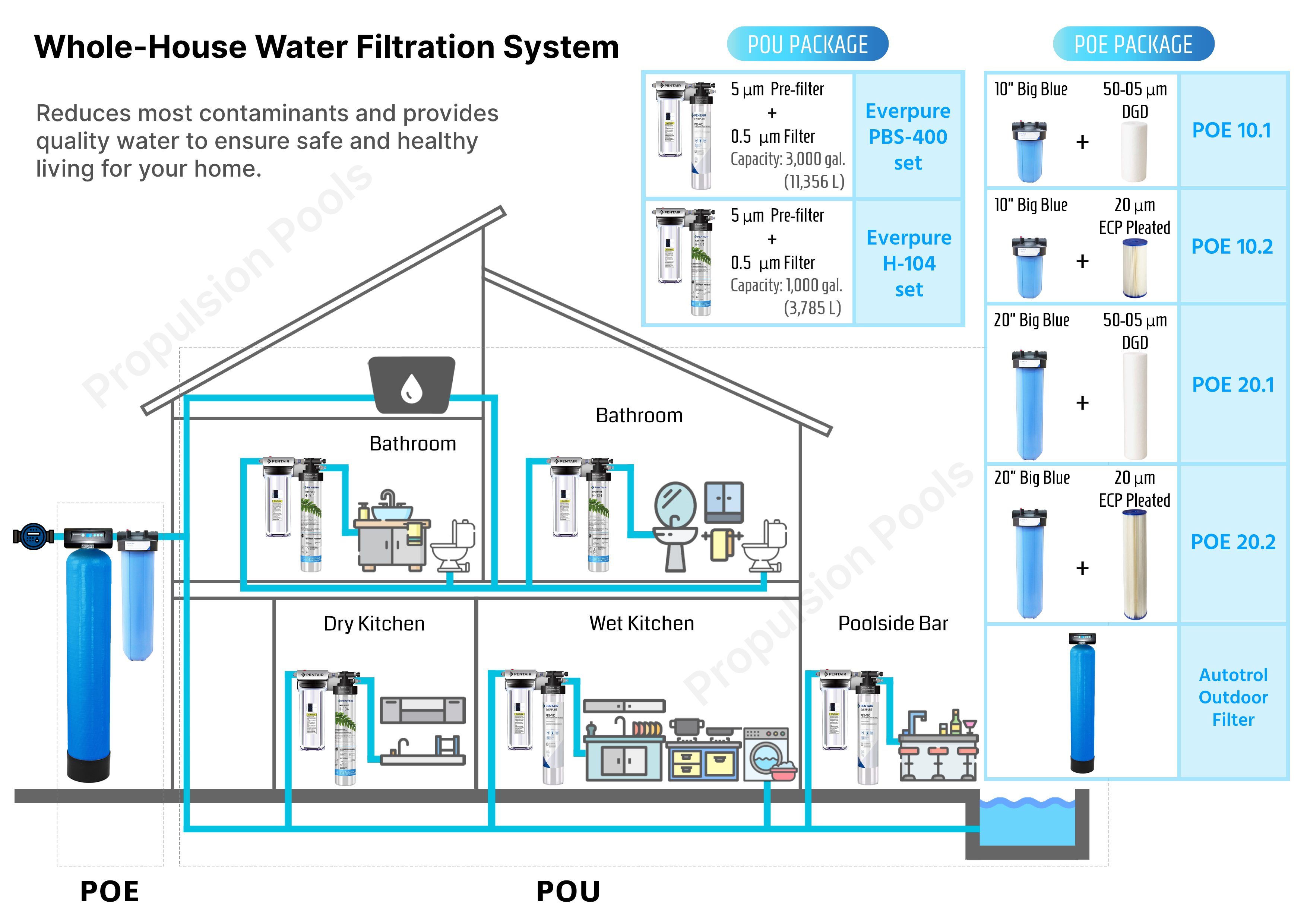 Best Water Filtration System Whole House at Cory Gonzalez blog
The UV Light (The Secret Agent)
Do you see a little box with a glowing line? That’s the UV light system. This isn’t for looks. It’s a secret agent that zaps bacteria, viruses, and cysts without using any chemicals.
It’s basically a tanning bed for micro-organisms. But it’s not a good tan. It’s a lethal one. Poof. Gone. If you have a shallow well, you absolutely need this friend in your diagram.
The End of the Line (And Your Faucet)
After all that—the bouncer, the fairy godmother, the sponge with a PhD, and the secret agent—the water finally heads to your house. It travels through a pipe labeled “To House” on the diagram.
This is the moment. The water that comes out of your showerhead? It’s been through boot camp. It’s clean, it’s soft, and it doesn’t taste like dirt. You can finally make a glass of ice water without wrinkling your nose.
And here’s the kicker: that diagram you were scared of? It’s really just a flow chart. The water comes in from the well (usually at the top of the diagram), then it goes down through each box, and then it goes to your house. It’s a one-way street to happiness.
One Last Coffee Chat (Don't Skip This)
So, what’s the takeaway here? Don’t let the whole house well water filtration system diagram intimidate you. It’s just a bunch of tanks and arrows having a serious conversation about your health.
If you’re looking at one right now, find the sediment filter first. Then find the softener. Then find the last filter before “To House.” If you can spot those three things, you’ve cracked the code. You’re basically a water engineer now. Go ahead, put that on your resume. I won’t tell.
And hey, if you still get confused? Just remember: the diagram is your friend. It’s the only map you’ll ever own that, if followed correctly, ends with you drinking a glass of truly excellent water. Cheers to that.
