How Often Should A Water Softener Be Regenerated

My friend Dave, a man who treats his lawn like a prized poodle, once called me in a panic. His water softener was dumping salt into the brine tank like a teenager raiding the...
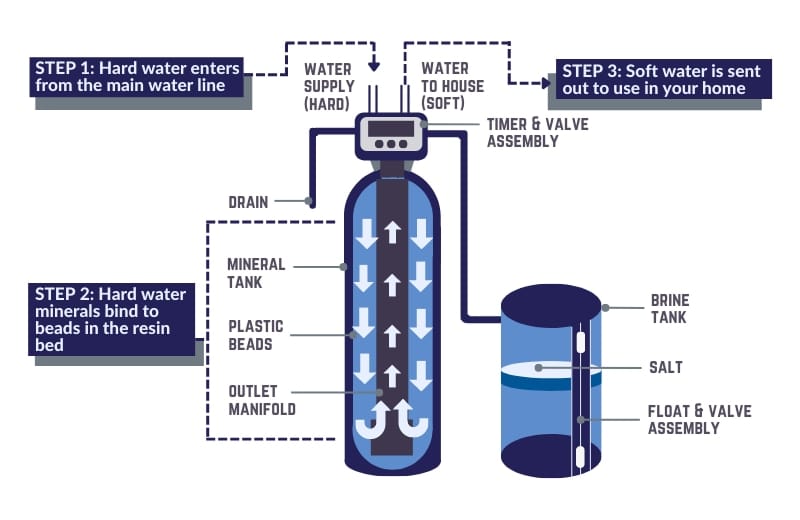
My friend Dave, a man who treats his lawn like a prized poodle, once called me in a panic. His water softener was dumping salt into the brine tank like a teenager raiding the fridge. He was convinced the thing was broken, and his precious grass would wither from “hard water revenge.”
It wasn’t broken. He had just committed the classic sin of over-regeneration. Dave thought “more salt” equaled “softer water,” when really, he was just flushing money down the drain. If you’ve ever stared at your water softener’s control panel and felt a knot of confusion, welcome to the club.
Here’s the blunt truth: there is no universal “once a week” answer. I know, that’s annoying. You want a shiny number, like 4. But your water softener is a diva—it regenerates based on your specific water usage, hardness level, and tank size. Ignore that, and you’re either wasting salt or bathing in hard water chalk.
Must Read
The Golden Rule: Let Your Softener’s Brain Do the Math
Modern water softeners (especially the fancier ones with a computer chip) have a feature called “demand-initiated regeneration.” This is your best friend. The system tracks how much water you actually use—every shower, every load of laundry—and calculates exactly when the resin beads are exhausted.
Instead of regenerating on a fixed timer (say, every 3 days), it waits until the tank’s capacity is truly depleted. This is efficient, economical, and saves you from the “mid-shower soap scum tragedy.” If you have a demand unit, just set it, forget it, and let the robot do the work.
But what if you have an older, cheaper model with a simple dial? That twisty timer is like an analog watch—it goes off regardless of your actual need. You have to become the water detective.
The “Old School” Timer: You’re the Boss Now
For 7-day or 12-day clocks, you need to calculate your average daily water use. A typical family of four uses about 300-400 gallons a day. Most softeners can soften between 30,000 and 60,000 grains of hardness before they choke. (See where I’m going?)
Here’s a quick example: if your water has 20 grains per gallon, and you use 400 gallons a day, that’s 8,000 grains consumed daily. A 40,000-grain tank would theoretically last 5 days. So set the regeneration to happen every 5 days. Easy, right? Just don’t do what Dave did and set it to every 3 days “for good luck.”
If you want to be really precise, you can buy a water meter. It’s a small device that screws onto a pipe and tells you exactly how many gallons you’ve used. Yes, I’m that person. And it’s surprisingly satisfying to see the numbers tick up.
The “Once a Week” Myth & The Salt Bridge Lie
You’ve heard someone say, “Oh, I just regenerate mine every Saturday morning.” That works, but only if your water hardness and usage perfectly align with a 7-day cycle. It’s a shot in the dark. A family that hosts a pool party every Friday will run out of soft water by Sunday if they stick to that schedule.
 How Often Should Your Water Softener Regenerate? Key Tips for Optimal
And here’s a dirty secret: over-regenerating doesn’t just waste salt; it damages your resin. The resin beads don’t like being flooded with brine solution every day. They crack, lose efficiency, and suddenly you’re buying a whole new unit. So yes, you can love your water softener to death.
Conversely, under-regenerating means hard water minerals sneak through. You’ll feel it in your hair (that weird sticky residue) and see it on your dishes (spot city, population: you). It’s a delicate balance.
The “Salt Tank Check” You Can’t Skip
Even with perfect timing, your softener can fake you out. A “salt bridge”—where salt hardens into a crust above the water—makes the system think it’s out of salt. The resin won’t regenerate, and you get hard water. I’ve personally poked holes in my salt tank with a broom handle. It’s messy but satisfying.
Also, check your brine tank’s water level after a regeneration cycle. If it’s too high or too low, the “how often” question becomes irrelevant because the machine isn’t even working properly. Think of it like a car: if the fuel lines are clogged, it doesn’t matter how often you drive.
The Seasonal Shuffle & The Final Rule
Don’t forget—your water usage changes with the seasons. In summer, you water your lawn, fill up kiddie pools, and take extra showers from 80-degree sweat. You might need to regenerate every 4 days instead of 6. In winter, when everyone is hibernating, you can stretch it to a full week.
So here’s my final, ironic, friendly advice: stop guessing. Either buy a softener with a demand meter (thank me later), or calculate your personal grain consumption. If you’re too lazy for that, just watch your glassware. When it starts looking cloudy after a wash, that’s your signal.
Dave? He finally listened. He set his softener to regenerate every 5 days, and his lawn is now a masterpiece of mediocrity. But hey, at least he’s not wasting salt. And his water? It’s soft as a whisper. Now go check your own settings—and maybe give that brine tank a friendly tap.
