Reverse Osmosis Water Filtration System For Home

Let’s talk about water. The stuff you drink. The stuff that makes up 60% of you. It’s pretty important, right? But here’s the kicker: your tap water might be hiding secrets. A...
Let’s talk about water. The stuff you drink. The stuff that makes up 60% of you. It’s pretty important, right? But here’s the kicker: your tap water might be hiding secrets. And not the fun kind.
Enter the Reverse Osmosis (RO) system. It sounds like a science experiment from a mad lab. And honestly? It kind of is. But it lives under your sink, not in a volcano lair. Let’s dive into this weird, wonderful world of water wizardry.
What Even IS Reverse Osmosis?
Imagine you’re a bouncer at a super exclusive club. The club is your glass of water. The bouncer? A fancy membrane. Only the coolest, tiniest molecules—like pure H₂O—get past. Everything else? Banned for life.
Must Read
Osmosis is nature’s way of balancing things. Water moves from low-salt to high-salt areas. Reverse osmosis pushes water the other way. It forces water through a semi-permeable membrane, using pressure. This traps all the weird stuff: lead, chlorine, fluoride, and even microscopic ninjas.
Fun fact: the process was first used to desalinate seawater. For submarines. So basically, you’re drinking water from a sub’s secret recipe. How cool is that?
The Good, The Bad, and The Slime-Free
Here’s the gross part: your tap water might contain pharmaceuticals. Yes, leftover pills people flush down toilets. And microplastics. Tiny, invisible shreds of coffee lids and water bottles. RO systems kick those out like a karate master.
But wait! There’s a downside. RO strips out good minerals too. Calcium and magnesium? Gone. That’s why some people add a remineralizer. Think of it as giving your water a vitamin shot after its spa day.
Another quirk: RO systems are thirsty. For every gallon of clean water, they waste 3–4 gallons. That’s a lot of H₂O down the drain. But newer models are getting better. Like a clingy friend learning to share.
The “Is It Worth It?” Debate
Your city adds chlorine to kill bacteria. Good for public health. Bad for taste. RO removes that chlorine smell. Your water will taste like a mountain spring. Or at least like something that didn’t come from a pipe.
Funny detail: some people say RO water tastes “flat.” Why? Because it’s so pure, your tongue has nothing to latch onto. It’s the boring friend at the party. But you can jazz it up with a lemon slice or a fancy pitcher.
And here’s a wild fact: RO water can actually dry out your skin if you only wash with it. The lack of minerals makes it “aggressive.” It wants to grab stuff—like your natural oils. So maybe don’t shower in it. Stick to drinking.
Installation: A Comedy of Errors
Setting up an RO system is like assembling IKEA furniture. But for water. You’ll have tubes. Tiny wrenches. A mysterious blue O-ring you’ll forget to install. You will curse. Loudly. But you’ll feel like a plumbing god when it works.
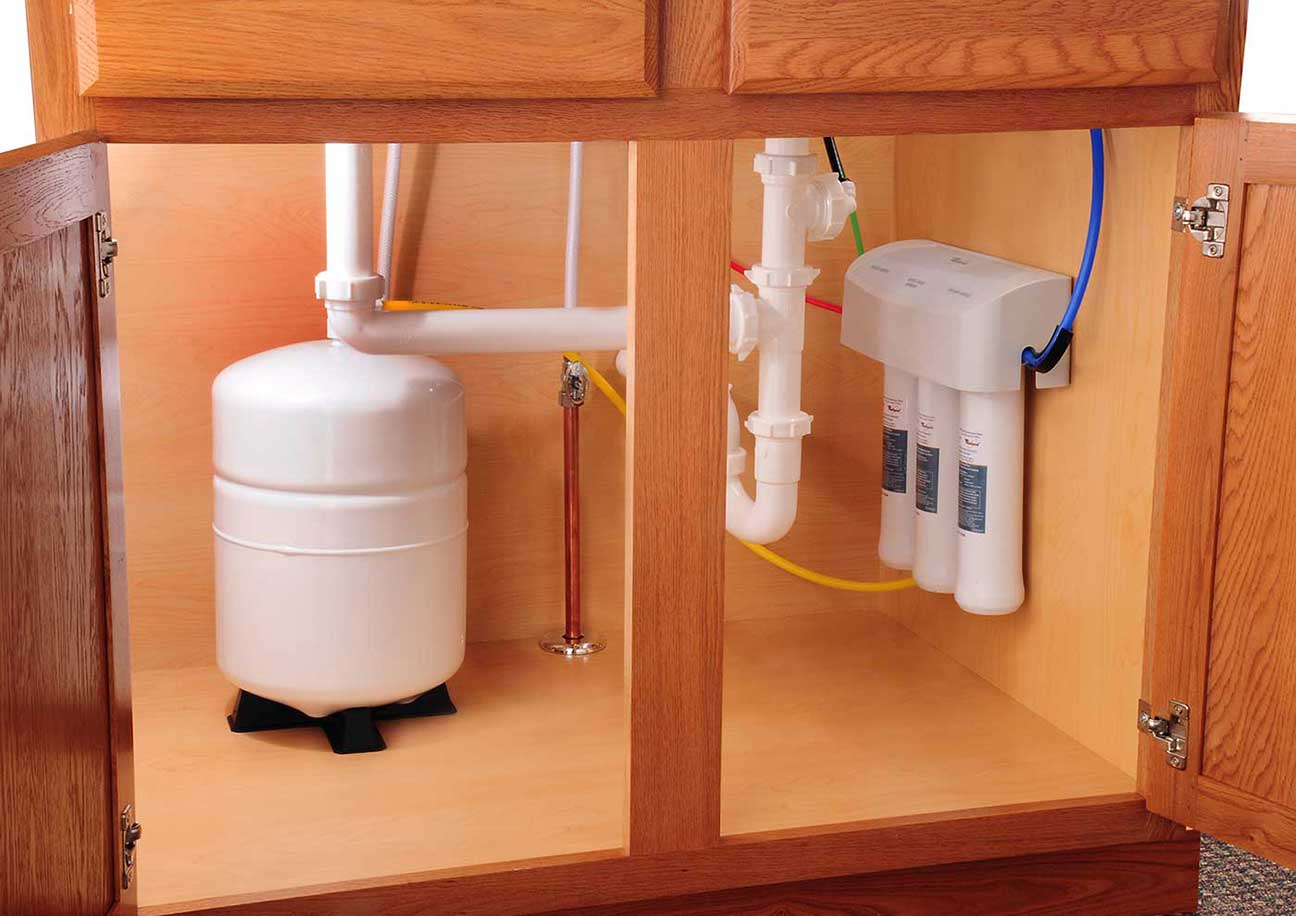 Reverse Osmosis Home Water Filtration System | Whirlpool
Most systems sit under your kitchen sink. They’re about the size of a small cat. Or a loaf of bread. But a bread that saves you from drinking lead. That’s a superhero loaf.
The worst part? The drip. The little faucet that comes with the system. It’s usually plastic and looks like a toy. But it’s your new best friend. Until you bump it and get water in your shoes. Rite of passage.
The Four-Stage Tango
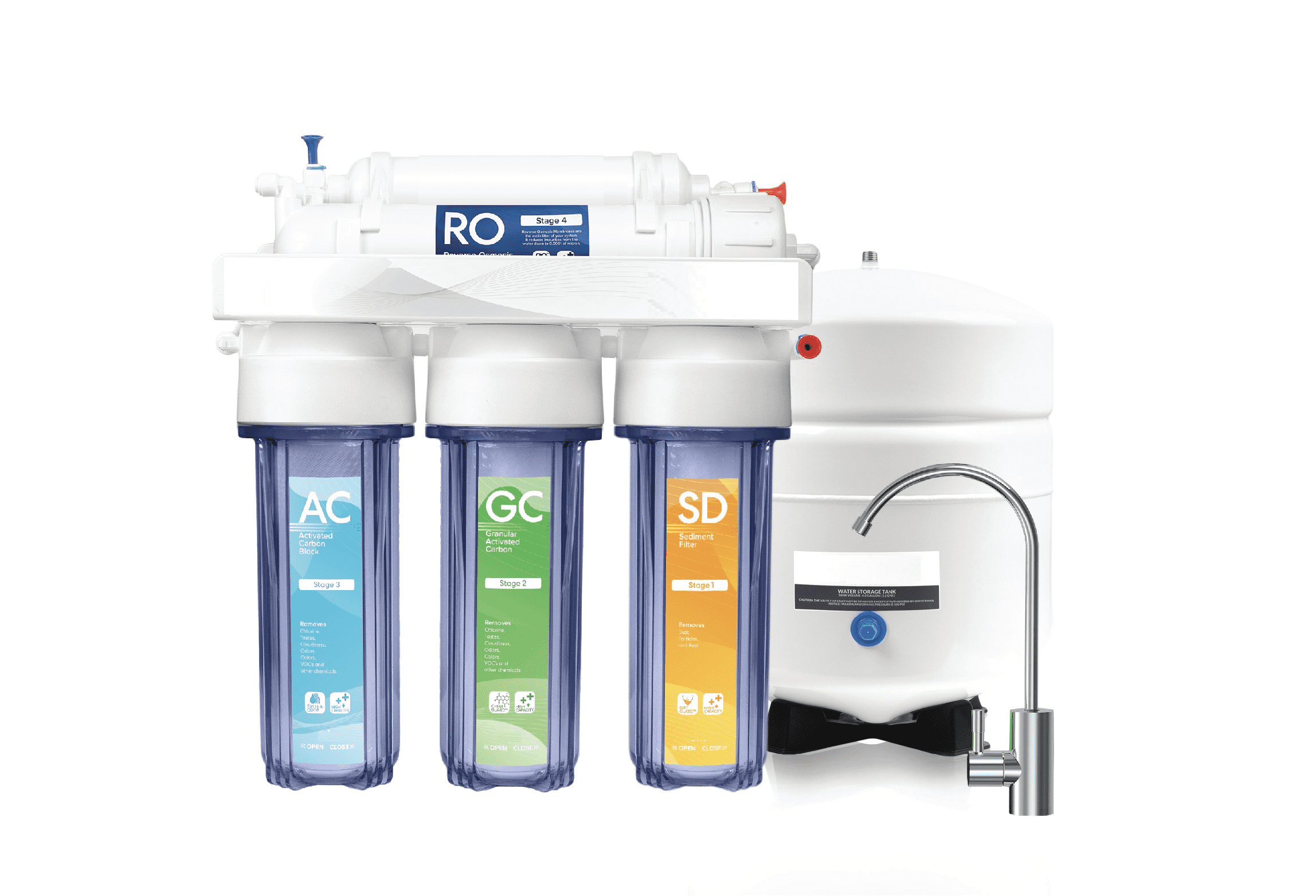
Your water goes on a journey. Stage one: a sediment filter catches dirt and rust. Stage two: a carbon filter removes chlorine and smells. Stage three: the RO membrane does the heavy lifting. Stage four: a post-filter polishes the taste.
Some systems have five stages. Because why not? It’s like adding an extra dessert to a meal. You don’t need it, but you’ll brag about it. “Mine has a UV light. Kills viruses. Beat that.”
Pro tip: change your filters every 6–12 months. Forgetting is like driving a car with no oil. Your water quality tanks. Literally. And your wallet cries when you buy new filters.
The Verdict: Do You Need One?
If you live in a place with old pipes? Yes. Lead is no joke. If you hate the taste of chlorine? Double yes. If you’re a competitive water taster? You’ve found your soulmate.
But if your tap water is already great? Maybe skip it. It’s like buying a race car to drive to the mailbox. Overkill. But a fun overkill.
One last weird bit: RO systems are popular in Nepal. And in hidden bunkers. And on yachts. Basically, anywhere water is sketchy or scarce. You’re now part of that club.
So, go ahead. Get an RO system. Become the water snob you were born to be. Your taste buds will thank you. Your plumbing will judge you. But hey, at least you’re not drinking microplastic soup anymore. Cheers to that.
