Most Efficient Ro Water Systems For Food Service

Let’s be honest: the unsung hero of any restaurant isn’t the chef—it’s the water. You don’t realize it until you’re three hours into a Friday night rush, and the ice machine s...
Let’s be honest: the unsung hero of any restaurant isn’t the chef—it’s the water. You don’t realize it until you’re three hours into a Friday night rush, and the ice machine spits out a cube that tastes like yesterday’s dishwasher. Suddenly, you’re not serving a crafted cocktail; you’re serving regret in a glass. That’s where a good RO system—reverse osmosis for the fancy folks—comes in, saving your sanity and your soda syrup.
The Water Problem You Didn't Know You Had
Think about it: your coffee is 98% water, your soup is mostly water, and your steam table? All water. If that base ingredient tastes like a rusty pipe, you’re basically seasoning your clam chowder with “eau de basement.” It’s the silent killer of good food, like a ninja who only fights flavor.
I once worked at a diner where the water was so hard, it left limescale on the toast. Not joking. The owner blamed the bread, but we all knew. The steam table looked like a geode had exploded inside it.
Must Read
What Makes an RO System "Efficient" in Food Service?
Efficiency in the food world doesn’t mean “fancy science experiment.” It means speed and flow. You can’t have a system that takes a nap every time you need to fill a 5-gallon bucket for the tea urn. That’s like using a teaspoon to bail out a sinking boat—it just doesn’t work when the ship is busy.
Look for systems that boast a high recovery rate—that’s the percentage of water that actually makes it through the filter instead of going down the drain. A lazy system wastes water like it’s raining money. You want a system that works hard and plays hard, but mostly just works hard while the line cooks are screaming.
The "Goldilocks" of Filtration
You don’t need a $10,000 lab-grade system for a burger joint, and you don’t need a Brita pitcher for a high-volume coffee shop. The sweet spot is a commercial RO system that produces 500 to 1,000 gallons per day. It’s like finding a pair of jeans that fit perfectly—not too tight on the budget, not too loose on the performance.
I watched a buddy install a residential unit in his food truck. The first time he hit the rinse cycle on his espresso machine, the whole truck sighed. The water trickled out like a polite apology. He spent more time waiting for water than serving tacos. Don’t be that guy.
Key Features That Make You Smile (Instead of Cry)
First, get a system with a booster pump. Water pressure in a busy kitchen is like a teenager’s mood—unreliable. A booster pump ensures your RO system doesn’t throw a tantrum when the dishwasher suddenly guzzles all the pressure. It’s the bouncer that keeps the water line moving.
Second, look for easy filter changes. If you need a degree in plumbing and a blood sacrifice to swap out a membrane, you’ll hate your life three months in. Quick-change cartridges are a godsend. They’re the “no-muss, no-fuss” of the water world, like using a garlic press instead of mincing with a butter knife.
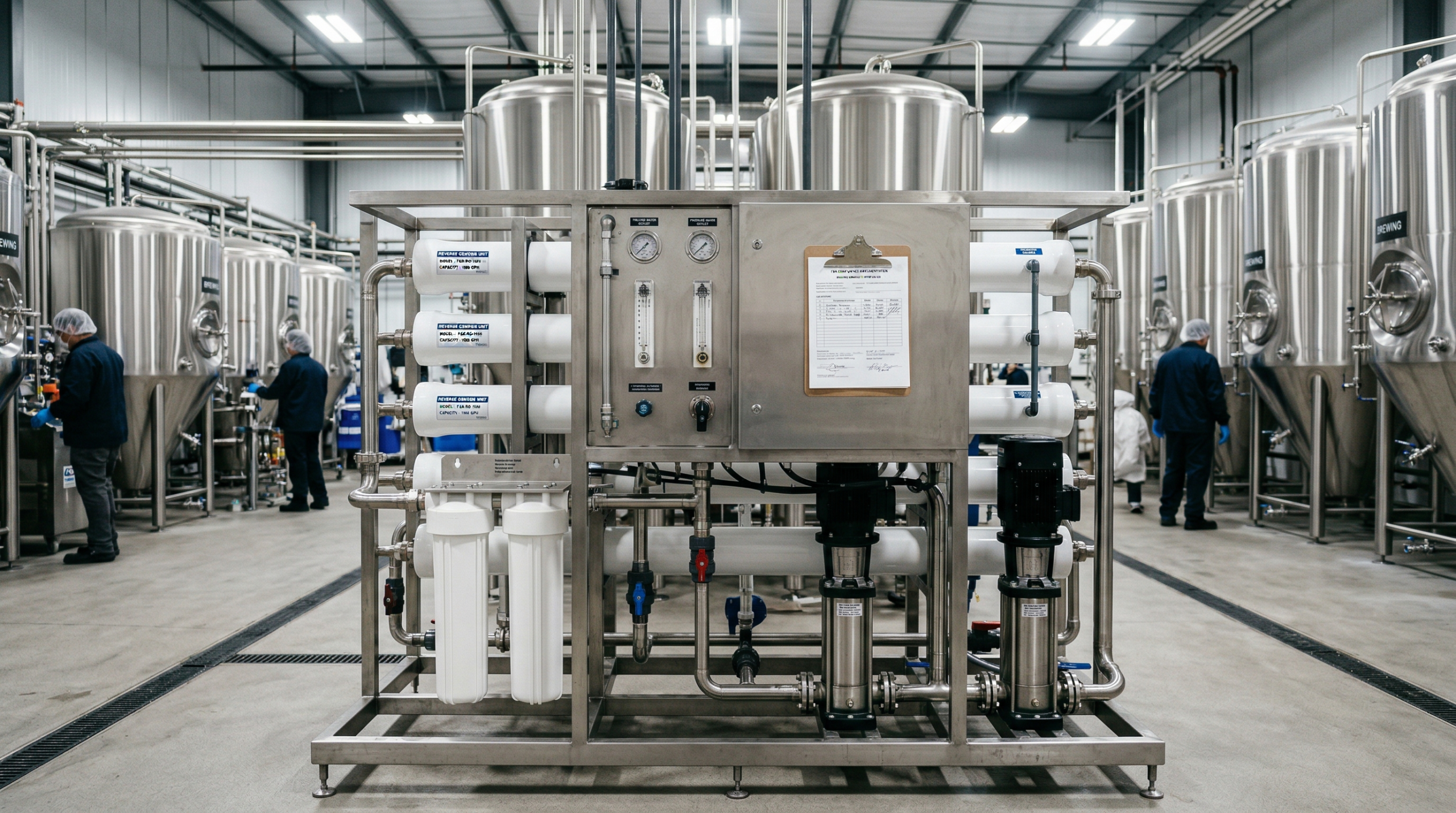
 500 LPH RO System On Skid - Water Purification Systems
Your Ice Will Finally Taste Like Nothing
The ultimate flex of a good RO system is neutral-tasting ice. That weird, dusty flavor you sometimes get from cube ice? Gone. It’s replaced by a crisp, clean blankness that doesn’t fight your whiskey or make your iced tea taste like a petri dish. It’s the culinary equivalent of a silent, perfect fart—no one knows it happened, but everyone is happier.
A smart owner once told me, “If your water is good, your mistakes taste less bad.” He wasn’t wrong. A soggy French fry is still a tragedy, but at least it’s a tragedy with good mineral balance.
Don't Forget the "Nitty-Gritty" Details
Maintenance is your friend, even if it’s a boring friend. Most efficient systems come with a flush valve to clean the membrane. You hit it once a week, it costs pennies, and your filters last twice as long. It’s like flossing for your water—you don’t see the benefit immediately, but future-you will thank you.
Also, think about where you put the unit. Heat is the enemy of reverse osmosis. If you mount it next to the fryer, you’re basically asking for disappointment. Give it a cool, dry spot, like a lonely corner near the walk-in cooler. It’s a shy piece of equipment that does its best work when left alone.
The Bottom Line (and the Bottom of the Glass)
Investing in the most efficient RO system is like buying good tires for your car. You don’t see it, you don’t flex about it, but you feel the difference every single day. Your coffee will be brighter, your sauces will be smoother, and your customers will stop asking, “Does your water have… a personality?”
So go ahead. Stop letting your tap water troll your menu. Get a reliable RO system, pour yourself a glass of clean, crisp nothingness, and toast to the silent workhorse that keeps your kitchen running. Cheers to not tasting the pipes.
