Are Distilled Water And Deionized Water The Same

So, you’re staring at two bottles of water in the lab—or maybe just the grocery store—and wondering, “Are distilled water and deionized water the same?” I’ve been there, frien...
So, you’re staring at two bottles of water in the lab—or maybe just the grocery store—and wondering, “Are distilled water and deionized water the same?” I’ve been there, friend. It’s like trying to decide between twins who dress alike but have totally different personalities. Spoiler alert: they are not the same, though they’re both very pure. Let’s chat about it over our imaginary coffee, shall we?
What makes them “pure”?
First up, distilled water. It’s the old-school badass of purity. You boil water into steam, then let that steam condense back into liquid. Boom—you’ve left behind all the minerals, bacteria, and dust bunnies. It’s like a spa day for H₂O, but steamier. The result? Water so clean it almost feels naked.
Now, deionized water? That’s a different beast. It uses special resins that yank out ions—those charged particles like calcium, sodium, or chlorine. Think of it as a bouncer at a club, only letting neutral water molecules through. No boiling, no drama. Just a chemical handshake that says, “You’re out, buddy.”
Must Read
So, what’s the big difference?
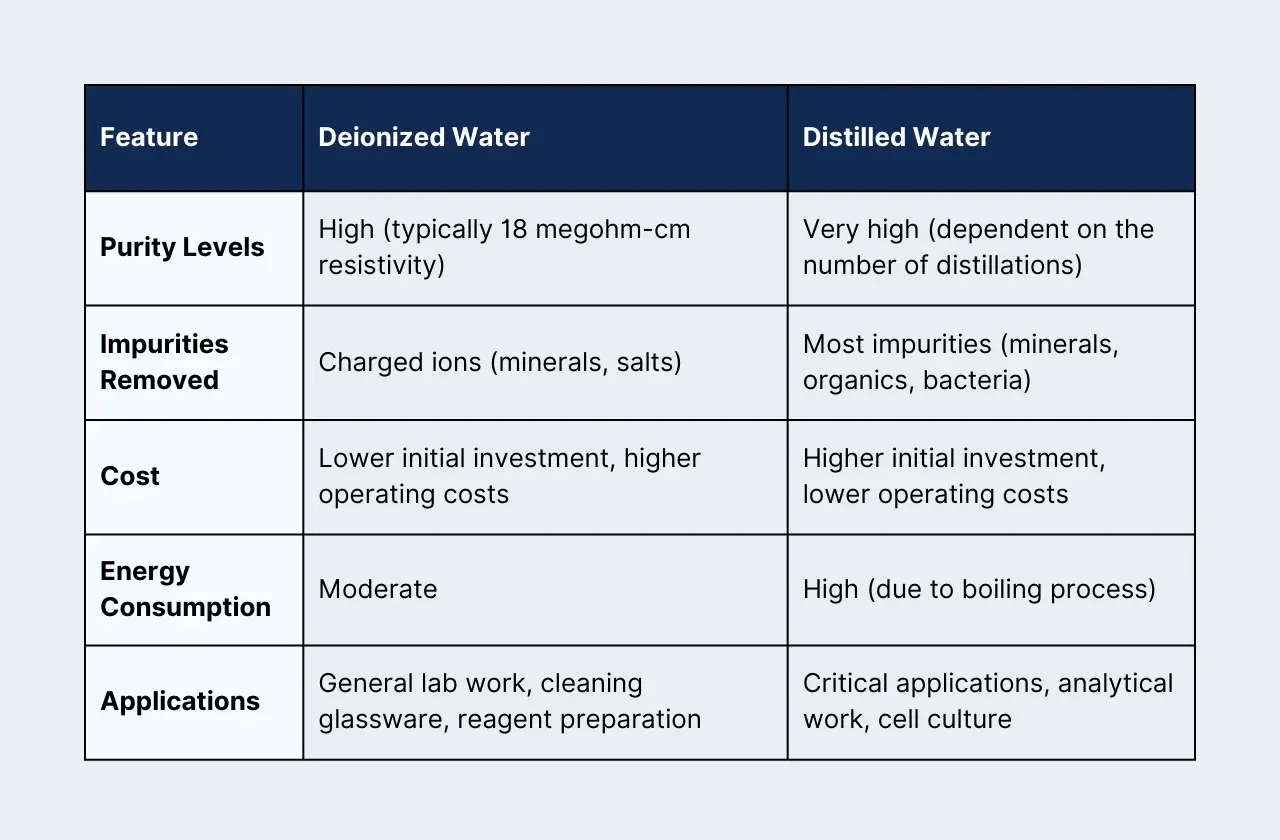
Here’s the kicker: distilled water removes everything—gunk, microbes, and ions. Deionized water is laser-focused on ions only. That means deionized water might still have some non-ionized yuck, like organic molecules or tiny bits of sediment. Distilled water is the overachiever, while deionized is the specialist. Which one wins? It depends on your job, my friend.
Oh, and taste? Distilled water can taste flat because it’s so pure—like drinking a cloud with zero personality. Deionized water might taste weird too, but for different reasons. Honestly, neither is great for your morning coffee. Stick to tap, unless you’re trying to impress a pH meter.
When would you use them?
Let’s get practical, because nobody wants to read a chemistry textbook (yawn). Distilled water is your go-to for stuff like steam irons or car batteries. Why? Because those minerals in tap water can clog or corrode your gear. It’s also the choice for drinking during a total water emergency—though you’ll miss your electrolytes.
Deionized water? That’s the lab rat’s bestie. It’s perfect for scientific experiments, rinsing glassware, or topping off a fish tank that has very picky fish. Want to avoid weird chemical reactions? Deionized water is your wingman. But don’t drink it for fun, okay? It’s so aggressive at grabbing ions that it might leach minerals from your body. Yikes.
 Distilled Water Vs. Deionized Water — Microbe Online
Can you swap them?
In a pinch? Maybe. But it’s like using a screwdriver as a hammer—it works until it doesn’t. For example, if you need distilled water for a lab experiment, deionized water might still have a few organic hitchhikers that mess with your results. And vice versa: deionized water can pick up carbon dioxide from the air, making it slightly acidic. Distilled water doesn’t have that party trick.
Here’s a fun fact: both are usually safe to drink in small amounts, but they’ll suck the joy out of your taste buds. Plus, long-term consumption? Not great. You need those trace minerals for your bones and sass. So, don’t go on a distilled-water-only cleanse, unless you’re trying to become a human sponge.
The final verdict (with a wink)
Are they the same? Nope. Distilled water is the boiled-for-your-sins pure type. Deionized water is the ion-snatching specialist. They’re like cousins who met once at a family reunion—related in purity but with very different talents. Next time someone asks, you can say, “Oh, it’s simple: one uses heat, the other uses resin. Let me explain over coffee.”
So, go forth with your new knowledge, water wizard. Choose your weapon wisely. And maybe just drink tap water while you’re at it. You monster.
