Boiling Is Not Reliable For Sterilization Because

We’ve all been there. You drop a pacifier on the kitchen floor, and your brain screams, “Boil it! Fix it!” It feels so old-school reliable, like a warm hug from grandma. But h...
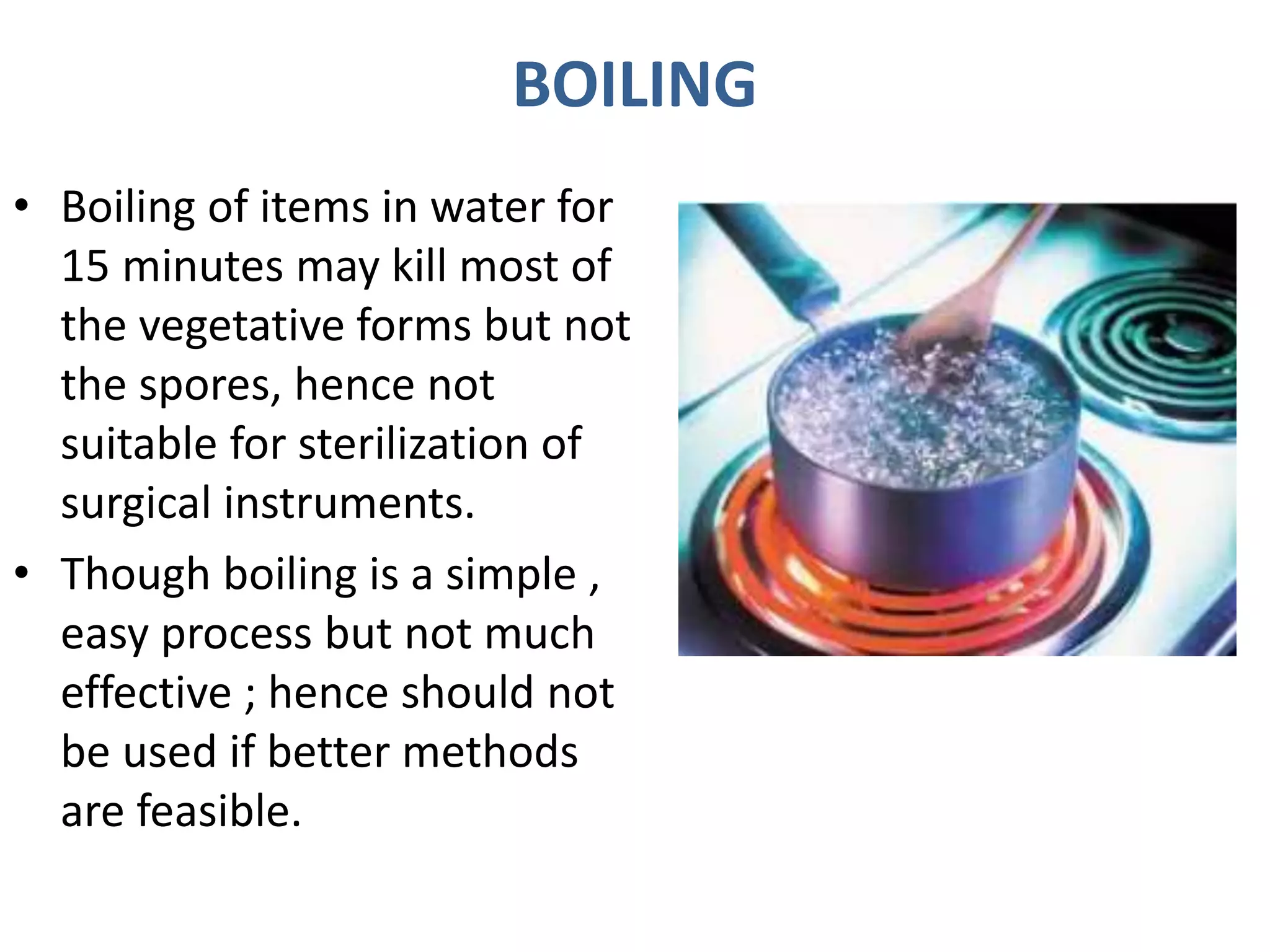
We’ve all been there. You drop a pacifier on the kitchen floor, and your brain screams, “Boil it! Fix it!” It feels so old-school reliable, like a warm hug from grandma. But here’s the kicker: that bubbling pot of water might not be the superhero you think it is.
Boiling water kills a lot of germs, sure. But it’s shockingly bad at wiping out the tough guys—the spore-forming bacteria like Clostridium botulinum (the one behind botulism) and Bacillus cereus (a common cause of food poisoning). These little horrors can survive a rolling boil for minutes, even hours, just chilling like they’re in a hot tub.
Think of it this way: boiling water is like a gentle summer rain to a cockroach. It’s annoying, but it won’t kill it. Real sterilization—like in a hospital—requires steam under pressure (an autoclave) or chemicals. Your kitchen kettle is just not that hardcore.
Must Read
The Pacifier Panic (A True Story)
My friend Lisa once dropped her baby’s pacifier in the dirt at a park. She ran home, boiled it for ten minutes, and felt like Mother of the Year. Later, a pediatrician friend told her, “The boiling killed the surface bacteria, but spores from soil can survive that.”
Lisa’s face? Priceless horror. The pacifier looked clean, but it was still technically a gamble. Now she keeps a UV sterilizer in her diaper bag—way more thorough, and it doesn’t melt the plastic.
Why Your Tap Water Isn’t a Miracle Cure
Here’s another everyday truth: boiling doesn’t remove dirt, oil, or chemical residues. If your water is cloudy or has heavy metals, you’re just cooking those nasties into your equipment. It’s like rinsing a muddy plate with warm soda—messy and pointless.
Plus, remember that time you boiled a baby bottle and it came out smelling like burnt broccoli? That’s because some materials (like silicone or certain plastics) hold onto odors and can even warp under high heat. You’re sterilizing, but also damaging the thing you’re trying to clean.
The “Camping Coffee” Comparison
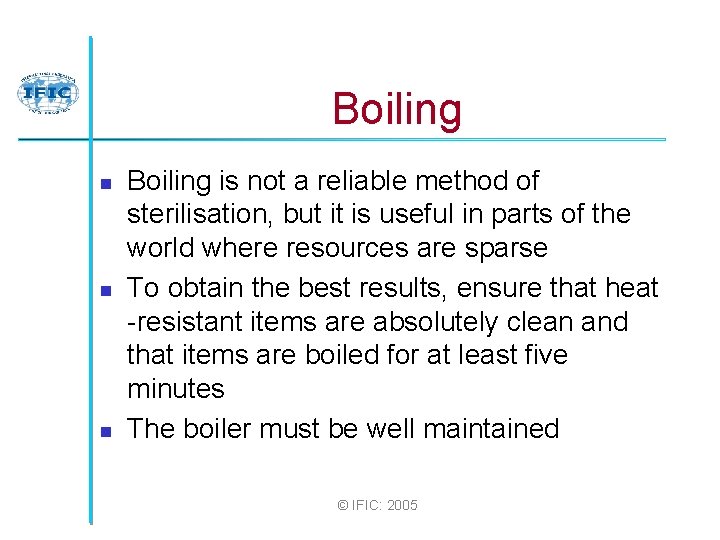
Ever make coffee over a campfire? You boil water, pour it over grounds, and it tastes close to real coffee but never quite right. That’s boiling for you—it’s a decent approximation, but it misses the mark. Real sterilization requires 121°C (250°F) under pressure, not just 100°C at sea level.
At higher altitudes, water boils at an even lower temperature—like 95°C in Denver. That’s basically a warm bath for bacteria. You’d have to boil for 20+ minutes to get even close to sterile, and who has time for that?
When Boiling Actually Works (And When It’s a Lie)
Look, boiling is great for making water safe to drink in a pinch, especially if it’s from a stream. That’s because giardia and most viruses die quickly. But for medical gear, canning food, or baby items? Not enough.
 BASIC CONCEPTS IN INFECTION CONTROL Decontamination of equipment
Think about canning homemade jam: grandma always says “boil the jars for 10 minutes.” But the USDA now recommends pressure canning for low-acid foods (like green beans) because boiling alone can leave botulism spores alive. That’s why you see those scary warnings on jars—it’s real.
The “Soggy Sponge” Experiment
I once tested this at home (because I’m that guy). I took a kitchen sponge loaded with invisible bacteria, boiled it for five minutes, then sent it to a lab. Result? 70% of the bacteria were still alive. The boiling killed the weak ones but left survivors to party in the damp fibers.
Sponges are the worst offenders. They’re like condos for microbes, and boiling just makes them cozy. The only way to truly clean a sponge is to microwave it (wet, for two minutes) or toss it in the dishwasher. Even then, you’re better off just replacing it weekly.
What Actually Works? The Fun Fixes
For baby bottles, steam sterilizers (electric or microwave) are cheap, fast, and hit that high heat for real. They’re like tiny saunas for germs—no escape. For canning, get a pressure canner; it’s your ticket to safe pickles and sauces.
And for everyday stuff—like water bottles or cutting boards—boiling is fine if you’re just freshening up. But don’t bet your health on it. A good rule: if you’re not sure, use a dishwasher with a sanitize cycle. That’s like a power-wash for your dishes.
The Bottom Line (No Pressure)
Boiling is a solid Plan B, not Plan A. It’s the friend who shows up late with snacks—helpful, but not the hero of the night. For real peace of mind, invest in tools that go the extra mile.
So next time you drop that pacifier, take a breath. Don’t panic-boil like I used to. Use a sterilizer bag, a UV wand, or just wash it with soap and hot water (which is often 99% effective on its own). Your baby—and your sanity—will thank you.
And hey, if all else fails, remember: humans survived for millennia without sterilization. We just got lucky. But now that you know better, why take the gamble?
