Difference Between Distilled Water And Pure Water

Last week, my friend Sarah proudly announced she’d switched to “pure water” for her houseplants, pointing to a $3 bottle she bought at the grocery store. I nodded, but then sh...
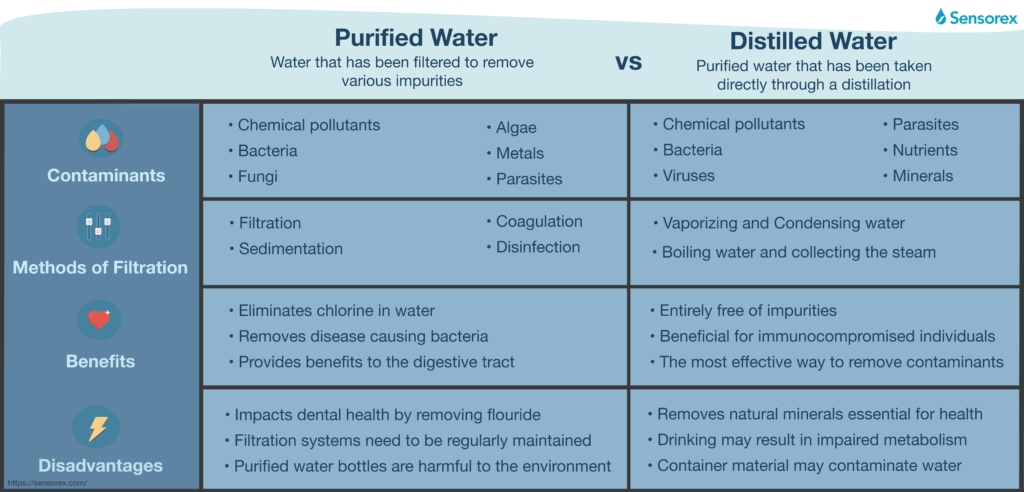
Last week, my friend Sarah proudly announced she’d switched to “pure water” for her houseplants, pointing to a $3 bottle she bought at the grocery store. I nodded, but then she frowned and asked, “Wait, is that the same as distilled water, or did I just waste my money?” Oh, Sarah. You have no idea the rabbit hole you just opened. Let’s dig into this, because the confusion is real—and honestly, kind of hilarious once you see the difference.
The Quick and Dirty Breakdown
First, a truth bomb: all distilled water is pure water, but not all pure water is distilled water. Think of it like squares and rectangles—every square is a rectangle, but not every rectangle is a square. Pure water is a broad category, while distilled water is a specific process of making it pure.
Pure water simply means H₂O without any dissolved solids, bacteria, or chemicals. It’s the theoretical “perfect” water—no minerals, no salt, nothing but hydrogen and oxygen hugging it out. Distilled water is one way to get there, but it’s not the only way. (Spoiler: there’s also deionized and reverse osmosis water, but we’ll keep this simple for your sanity.)
Must Read
So, What’s the Big Deal with Distilled Water?
Distilled water is made by boiling water into steam, then condensing that steam back into a liquid. This process physically leaves behind all the impurities—hard minerals like calcium, heavy metals, and even most bacteria—because they don’t evaporate with the water. It’s like the water version of Marie Kondo: it thanks the impurities and sends them packing.
The result is water that’s about as close to chemically pure as you’ll get from a kitchen stove. But here’s the kicker: it’s aggressively empty. It has no taste, no minerals, and it will actually leach tiny amounts of minerals from anything it touches—including your pipes, if you let it sit too long. (Don’t be that person who drinks only distilled water for a month; you’ll end up with weird electrolyte issues and a very confused doctor.)
And What About “Pure Water” from the Store?
When you grab a bottle labeled “pure water” or “drinking water,” it’s usually filtered or treated in some way, but rarely distilled. Most brands use reverse osmosis, carbon filtration, or even simple municipal tap water that’s been stripped of chlorine. It’s “pure” enough to not kill you, but it still contains trace minerals that affect taste and conductivity.
For example, Dasani and Aquafina are technically “purified water,” but they’re not distilled—they’ve been filtered and sometimes had minerals added back for flavor. (Yes, they ADD minerals. Mind blown, right?) So “pure” is a marketing word, not a chemistry term. It’s like calling a salad “health food” when it’s really just iceberg lettuce and ranch dressing.
 Water Showdown: Purified vs. Distilled - Mr Water Distiller
When Should You Care About the Difference?
If you’re filling a lead-acid battery, using a steam iron, or making kombucha at home, distilled water is non-negotiable. Those minerals in tap or “pure” water will gum up your devices or mess with your fermentation. Houseplants? Depends on the plant; some hate the minerals in tap water, but others don’t mind filtered water at all.
But for everyday drinking? Honestly, distilled water is overkill. Your body needs some of those minerals you’re filtering out. Plus, it tastes flat and weird—kind of like licking a clean spoon. Stick to filtered or spring water for your mouth, and save the distilled stuff for your car battery or your humidifier. (Trust me, your taste buds will thank you.)
The Irony of the Whole Thing
Here’s the beautiful, ironic truth: there’s no such thing as 100% pure water in nature. Even rainwater, often called “nature’s distilled water,” picks up dust, gases, and pollutants as it falls. So the most “pure” water we can make is actually a human invention—boiling and condensing—which is kind of poetic if you think about it.
And yet, we spend billions of dollars chasing it. Sarah’s $3 bottle of “pure water” was probably just filtered tap water in a fancy label. Distilled? Nope. But she’ll never know, because after reading this, you’ll be the one gently breaking the news to her over coffee. (You’re welcome for the awkward conversation starter.)
So next time you see a bottle screaming “PURE,” remember: it’s just marketing trying to sell you a rectangle when what you really wanted was a square. Now go hydrate with whatever you’ve got—just don’t drink distilled water for a week unless you’re training for a chemistry exam. Your body knows the difference. And so do your plants.
