How Often Should You Add Salt To A Water Softener

Let’s be honest: the only thing less exciting than maintaining a water softener is checking your home insurance policy. But here we are, talking about salt. Specifically, how...

Let’s be honest: the only thing less exciting than maintaining a water softener is checking your home insurance policy. But here we are, talking about salt. Specifically, how often should you dump a bag of it into that magical brine tank so your water stops feeling like you’re showering in a chalkboard?
The short, disappointing answer is: it depends. Not on your mood, your star sign, or the phase of the moon—but on how much water you actually use. A family of four with a leaky toilet and a teenager who takes forty-minute showers? You’ll be refilling that salt bucket way more often than a single person who drinks tap water like it’s a sport.
The Goldilocks Zone of Salt
Most manufacturers recommend checking your salt level once a month. Think of it like checking your car’s oil, but without the grease and with a higher chance of landing on a YouTube rabbit hole about why your dishwasher hates you. If you wait until your water turns into hard little icicles of calcium, you’ve waited too long.
Must Read
Here’s a shocking fact: you shouldn’t let the salt level drop below the water level in the tank. Why? Because that exposes the brine valve to air, and the valve gets pissy. It’s like leaving your pet hamster in an empty cage—technically fine for a day, but the hamster will judge you.
Signs You’re Running on Fumes (Or Salt)
Your water softener has a phenomenal passive-aggressive way of telling you it’s empty. Your glassware starts looking like it went through a winter storm—spots. Your skin feels like you’ve been exfoliating with sandpaper and loving it? That’s hard water reclaiming its throne. And your faucets? They’ll develop a white, crusty beard that makes hipsters jealous.
If you see these signs, don’t panic. Just grab a bag of salt—preferably the pellet kind, not the cheap rock salt that turns your tank into a swamp. Rock salt is fine for driveways; pellet salt is fine for your plumbing. Do not mix them up. I learned this the hard way after a dinner party where the ice cubes tasted like a garage floor.
The “Don’t Overdo It” Rule
You’d think that more salt equals softer water, right? Wrong. Overfilling your brine tank is like giving a toddler unlimited candy—chaos follows. Excess salt can clump into a giant, stubborn mass called a “salt bridge.” That bridge does exactly nothing except mock you as you chisel at it with a broom handle. Keep the salt level about 4–6 inches below the top of the tank. This is the sweet spot, the Nirvana, the “just right” of water softening.
 How Often to Add Salt to Your Water Softener | Team Austin
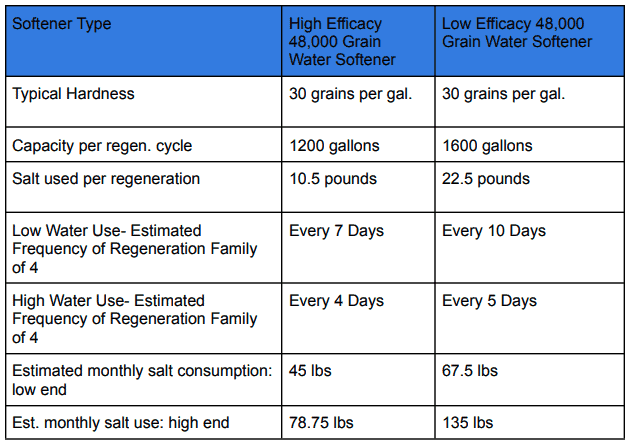
Surprise: you might not even need to add salt every month. A family of two with a modern, high-efficiency unit might go six to eight weeks between refills. That’s basically a luxury vacation in water-softener time. But a large household with an older unit? You could be loading salt every three weeks, like you’re running a tiny, salty canteen for your pipes.
The “Check the Calendar” Trick
Here’s a hack: sync your salt check with something you already do. For me, it’s the first of the month—the same day I fake-resolve to go to the gym. When you open that brine tank, you’re looking for one thing: is the salt dry and below the water line? If yes, you’re fine. If the salt looks like wet concrete after a flood, you’ve probably got a salt bridge.
Remember: a salt bridge doesn’t mean you’re out of salt—it means the salt is pretending to be there. It’s like a roommate who’s technically alive but never does dishes. Break the bridge with a long, sturdy object (not a fork, not a smile, a wooden stick). Then add salt.
The Final, Exhausting Truth
So, how often? Monthly checks, refill when it’s low. For most households, that’s once every four to six weeks. For the forgetful (which is 90% of us), buy a bag of salt when you buy your groceries, and toss it in the garage. That way, when you finally remember, you’ll feel like a responsible adult who has their life together, even if your socks don’t match.
And if you accidentally go two months without salt? Your water won’t immediately turn into lava. It’ll just be hard. And you’ll notice every single spot on every single glass. But hey, now you know. You’re welcome, and I’m sorry about your dishes.
