Inexpensive Easy Way To Filter Arsenic From Water

So, you’re worried about arsenic in your water, huh? That’s totally fair—the word sounds like something from a sci-fi movie where aliens turn your tap into a poison fountain....

So, you’re worried about arsenic in your water, huh? That’s totally fair—the word sounds like something from a sci-fi movie where aliens turn your tap into a poison fountain. But guess what? You don’t need a lab coat or a thousand-dollar filter to kick that unwanted guest out of your glass.
The Sneaky Villain in Your Sink
Arsenic is naturally occurring, which sounds nice, like wildflowers, but it’s not the good kind of nature. It can sneak into well water or even municipal supplies, and long-term exposure is bad news for your health. The good news? There’s a ridiculously simple, cheap fix that’s been hiding in plain sight.
Meet the homemade bucket filter—it’s so easy, even your most “I can’t even boil water” friend can pull it off. All you need is a food-grade bucket, some sand, gravel, and a funnel. Oh, and a secret weapon: rusty iron nails. Yes, rusty nails.
Must Read
Why Rusty Nails? (No, This Isn’t a Dad Joke)
Arsenic loves to cling to iron oxide—aka rust—like a clingy ex at a party. When water passes through rusty nails, the arsenic molecules stick to the iron, and the other layers of sand and gravel trap the whole mess. It’s science, but the lazy, “I’m on a budget” version.
You don’t need new, shiny nails either. Old, rusty nails from that jar in your garage work perfectly. Just make sure they’re not coated in paint or oil—your water isn’t a canvas for a masterpiece.
How to Build Your Arsenic-Slaying Machine
Step one: Grab a five-gallon bucket from a hardware store (about $5). Drill a small hole in the bottom, line the inside with a coffee filter or fine mesh, and start layering. First, add a two-inch layer of pebbles for drainage—think tiny river rocks, not fist-sized boulders.
Next, dump in a two-inch layer of coarse sand, then a handful of those rusty nails. Repeat the sand and nail layers until the bucket is two-thirds full. Finish with a final layer of fine sand on top, cover it with another coffee filter, and boom—you’ve got a filter.
Pour your questionable water through the top, and collect the clean stuff from the hole below. It’s like making a very ugly, but very heroic, sand castle.
The “But Does It Actually Work?” Test
Short answer: Yes, it absolutely does. Studies from places like MIT and Bangladesh (where arsenic is a big problem) show this method can remove up to 90% of arsenic. Is it perfect? No. It’s not a magic wand—your water might still need boiling for bacteria, but for arsenic alone, this is a rockstar.
For extra credit, use uncoated iron filings instead of nails—they have more surface area for the arsenic to glom onto. But rusty nails are the “I’m too lazy to go to the store” perfect solution.
Pro Tips So You Don’t Drink Rust Soup
First, make sure your nails are actually rusty—if they’re shiny, let them sit outside in a saucer of water for a week. Second, change the sand/nail mix every few months, or when the water starts tasting “metallic.” That taste is your filter saying, “I’m tired, boss.”
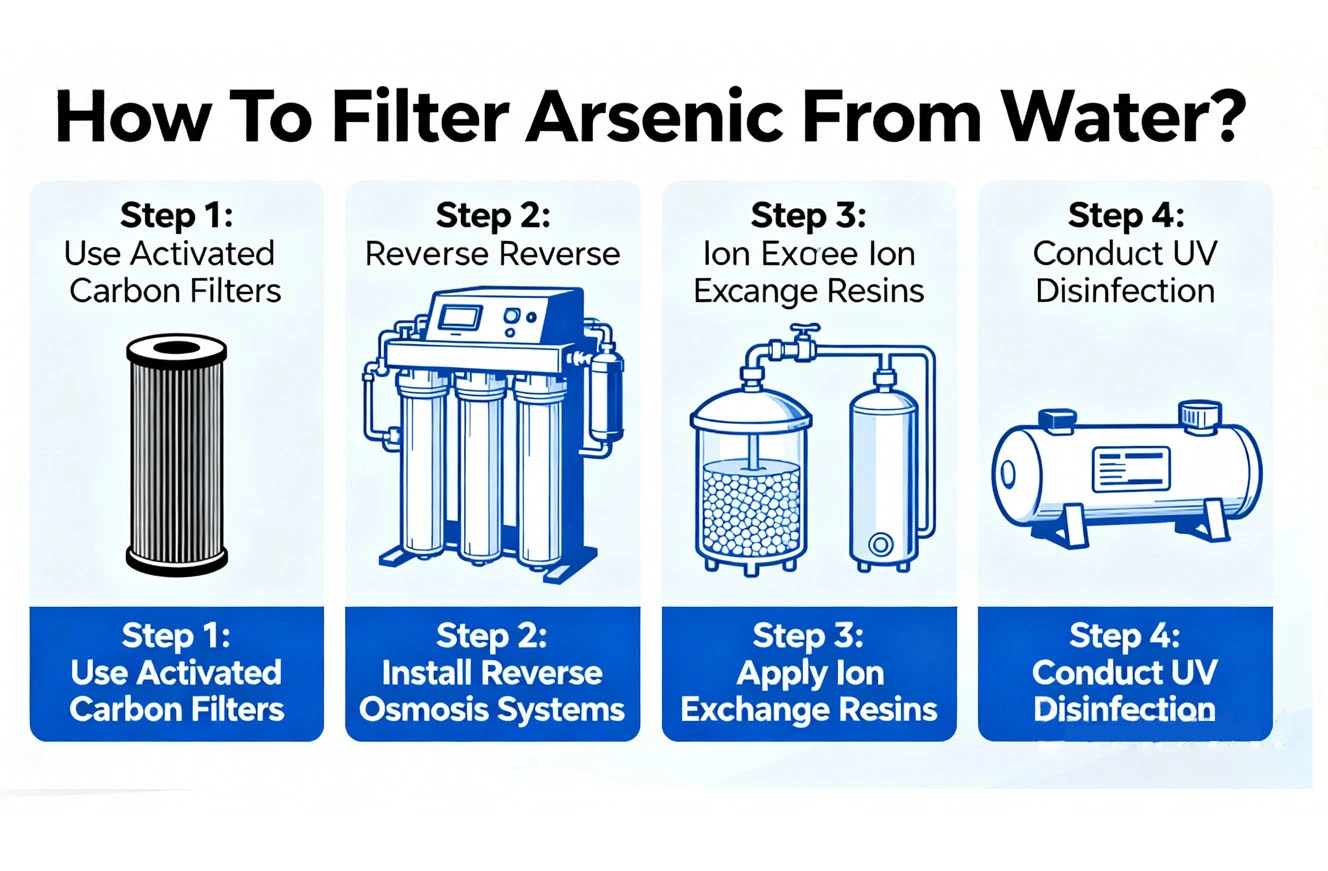 How To Filter Arsenic From Water? - Basidewt-Best Whole Home Water
Also, test your water before and after if you can. Home test kits cost about $20 and will save you from guessing. Trust me, guessing is for lottery tickets, not your kidney health.
One more thing: This setup works best for clear water. If your water looks like swamp juice, pre-filter it through a cloth to remove mud first. We’re filtering arsenic, not making a mud pie.
Why This Beats Fancy Store-Bought Filters
Store-bought arsenic filters can cost hundreds of dollars and need replacement cartridges that cost a small fortune. Meanwhile, your bucket filter costs about $10 total and uses materials you might already have. Plus, you get to feel like a wizard every time you pour water through it.
It’s also incredibly safe—no electricity, no chemicals, no complicated gadgets. Just gravity, patience, and a little bit of rust. It’s the kind of low-tech solution that makes you realize humans are actually kind of brilliant.
The “But I’m No Handyman” Excuse
Look, if you can make a sandwich, you can make this filter. No power tools required, no glue, no swearing at instructions. It’s literally: drill one hole, pour in stuff, pour water in, drink clean water. I believe in you.
And if you mess up? Worst case, you’ve got a bucket full of wet sand and rust. That’s still useful as a doorstop or a toy for your cat. No judgment.
Uplifting Conclusion: You’ve Got This
So there you have it: an easy, cheap, and oddly satisfying way to tell arsenic, “Not today, pal.” You’ve just turned your kitchen into a mini water treatment plant, and you barely broke a sweat. You’re a hero—a slightly dusty, sand-covered hero with a bucket of rusty nails.
And here’s the best part: Every glass of filtered water you drink is a tiny victory. A little “ha!” to geology and a high-five to your own cleverness. So go ahead, take a sip. Smile. You’ve earned it. Water you waiting for? 😊
