Water Well Drilling Cost Per Foot East Texas Lufkin

Ever wondered what it costs to punch a hole into the earth in East Texas? Specifically, we’re talking about water well drilling cost per foot in the Lufkin area. It’s one of t...
Ever wondered what it costs to punch a hole into the earth in East Texas? Specifically, we’re talking about water well drilling cost per foot in the Lufkin area. It’s one of those questions that feels a bit like asking how much a custom suit costs—it depends on the fabric, the tailor, and whether you want gold buttons.
But don’t worry. We’re going to dig into this (pun totally intended) in a way that’s easy, friendly, and maybe even a little bit fun. Because let’s be honest, drilling for water is kind of a fascinating mix of old-school grit and modern science.
The Big Number: What’s the Going Rate?
Right now, in the piney woods around Lufkin, you’re looking at roughly $30 to $60 per foot. That’s the sweet spot for a standard residential well, drilled through the soft sandy clay that Mother Nature put under your boots.
Must Read
But here’s the kicker: that’s just the drilling part. It’s like paying for the pizza dough before you’ve ordered the toppings. The final cost per foot can change based on what’s hiding underground. And oh, East Texas has some secrets down there.
Why the Price Wiggles (Geology is a Drama Queen)
Think of the ground under Lufkin like a giant layer cake. The top is that lovely, soft sandy loam that your garden loves. But as you go deeper, you might hit the Carrizo-Wilcox Aquifer—a massive, famous underground water source. Drilling through that can be smooth, or it can be a party with unexpected boulders.
If you hit a lot of clay and gravel, the drill bit goes through it like butter. But add hard rock layers—like that stubborn limestone from the ancient sea—and the price per foot jumps. Suddenly, you’re paying for diamond-tipped tools that sound like a rock concert underground.
It’s a bit like buying a ticket for a roller coaster. The base price is the ride, but if you want the express lane through the biggest loops, you pay a little extra.
The “Well” vs. The “Deep Well” Dilemma
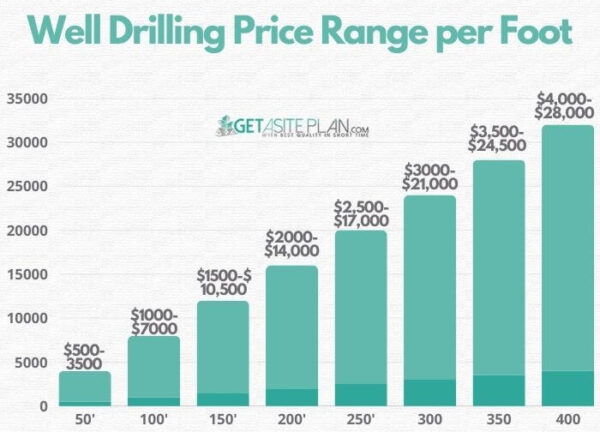
Most folks in the Piney Woods need a well between 150 and 400 feet. That’s the sweet spot for getting clean, reliable water without overkill. But here’s the trade-off: a shallow well (say, 100 feet) might be cheaper per foot, but the water could be a bit gritty or have more iron.
A deeper well (300+ feet) is more expensive upfront, but often gives you colder, clearer, and more consistent water. It’s the difference between buying a used car that needs tweaks and a new one that just runs. Which do you prefer?
And don’t forget: every foot deeper adds a little more to the pump installation cost. So that $40 per foot suddenly becomes part of a bigger story—like adding sprinkles to a cupcake. The cupcake is still good, but those sprinkles taste nice.
The Hidden Costs That Surprise Everyone
Here’s a fun fact: drilling the hole is only half the adventure. After the drill rig leaves, you need casing (the metal pipe that keeps the hole from caving in), a well screen (to keep sand out of your faucet), and grouting (a seal to stop surface gunk from getting in).
![How Much Does It Cost to Drill a Well? [2025 Data] - Get A Site Plan](https://getasiteplan.com/wp-content/uploads/2024/12/water-well-system-installation-price-per-diameter-of-casing-pipes.jpg) How Much Does It Cost to Drill a Well? [2025 Data] - Get A Site Plan
How Much Does It Cost to Drill a Well? [2025 Data] - Get A Site Plan
In East Texas, casing alone can add $10 to $15 per foot if the ground is unstable. Think of it as building a straw inside your well—a very expensive, very important straw. If you skip a good casing, your neighbor’s muddy runoff might end up in your morning coffee. Yikes.
Then there’s the pump. A basic submersible pump for a 200-foot well might cost you $800 to $1,500, plus installation. It’s like buying the engine for your water. A cheap one might hum along for a while, but a good one? It’ll sing for decades.
Why Lufkin is Actually a Cool Place to Drill
Here’s the secret that makes East Texas special: the Carrizo-Wilcox Aquifer. It’s like nature’s giant, clean water bottle buried under the ground. Unlike some parts of Texas that have to drill through solid rock or salty brine, Lufkin sits in a spot where the water is often sweet and plentiful.
That means you’re not playing a high-stakes lottery. You’re drilling in a spot where water is likely to be found. It’s the difference between gold panning in a known river and panning in your driveway. This lowers your risk, which is a huge comfort when you’re talking about thousands of dollars.
Plus, having your own well means you control your water bill—heck, you have no water bill! Just a little electricity for the pump. Over ten years, that savings can feel like finding a $20 in an old jacket, but every month.
So, Is It Worth It?
Let’s do the math, casually. A 250-foot well at $45 per foot is roughly $11,250. Add casing, pump, and permits, and you’re looking at maybe $15,000 to $18,000. That’s about the cost of a used sedan—except this sedan brings you free water for life.
Drilling a well in East Texas is an investment in self-reliance. It’s the difference between being hooked up to a municipal system (subject to rate hikes and droughts) and owning your own source. It’s like planting a peach tree versus buying peaches at the store. It takes a little work upfront, but the fruit is yours.
So, if you’re in Lufkin and dreaming of a backyard oasis, don’t fear the per-foot cost. Embrace it. You’re paying for access to a hidden river that’s been flowing for millennia. And honestly? That’s pretty darn cool.
