Can I Use Filtered Water Instead Of Distilled Water

So, you’re standing in your kitchen, staring at a jug of filtered water and a bottle of distilled water, wondering if you can swap one for the other without your coffee machin...

So, you’re standing in your kitchen, staring at a jug of filtered water and a bottle of distilled water, wondering if you can swap one for the other without your coffee machine staging a rebellion. Welcome to the club. It’s the hydraulic equivalent of asking if you can put diesel in a gasoline car—except nobody’s told you why it matters, and the internet is full of terrifying diagrams about mineral buildup.
The Short, Slightly Deflating Answer
Technically, yes—you can use filtered water instead of distilled water for some things, but not all. Think of it like using a flip-flop as a snowshoe: it’ll work until it very painfully doesn’t. The core difference is that distilled water is the platinum blonde of H₂O—every mineral, salt, and impurity has been ruthlessly boiled away. Filtered water is more like a well-groomed labradoodle: still has some hair (minerals) and a bit of mud (trace contaminants) clinging to its paws.
Why Distilled Water is the Drama Queen of the Aqua World
Distillation is basically water’s version of a spa day—it gets steamed into vapor, leaving behind everything from calcium to that weird metallic taste. The result? Pure H₂O with zero dissolved solids. That’s why your iron, CPAP machine, and car battery demand it: any leftover minerals will crust up their insides faster than a teenager’s forgotten cereal bowl. A surprising fact? Distilled water can actually leach minerals from metal pipes over time because it’s so pure it gets “hungry.” Yes, your water is a tiny, starving predator.
Must Read
Filtered Water: The Chill Cousin Who Tries Too Hard
Your trusty Brita or fridge filter is great for removing chlorine, lead, and the taste of last week’s broccoli, but it leaves behind most dissolved minerals. Think of it as a bouncer at a club who only kicks out the really rowdy guys (sediment, large particles) but lets the professional dancers (calcium, magnesium) stay inside. That’s fantastic for your drinking glass—those minerals actually taste good and are good for you—but terrible for your humidifier. Pour filtered water into a humidifier and you’ll soon have a fine white dust coating your furniture that looks like a crime scene investigation.
When You Can Get Away With the Swap (and When the Police Will Be Called)
Yes, go ahead:
For drinking and cooking, filtered water is often better than distilled because it has minerals that make it taste less like a wet sock. For houseplants? Filtered water is usually fine, though some picky ferns prefer distilled to avoid salt buildup in the soil. Washing your face? Filtered water is actually gentler than hard tap water, and distilled can be too stripping for your skin’s natural oils.
No, for the love of all that is electric:
NEVER use filtered water in a steam iron, a CPAP machine, or a car battery. I’m not being dramatic—I’m being a friend who doesn’t want you to cry over a $400 repair bill. The minerals in filtered water will clog the tiny steam holes in your iron, turning your favorite shirt into a permanent wrinkly mess. In a CPAP machine, filtered water can breed bacteria faster than a petri dish in a science lab because the leftover minerals create a cozy biofilm paradise. Car batteries? Distilled water is required because any impurities can short out the lead plates. You wouldn’t pour orange juice into a toaster, right? Same principle.
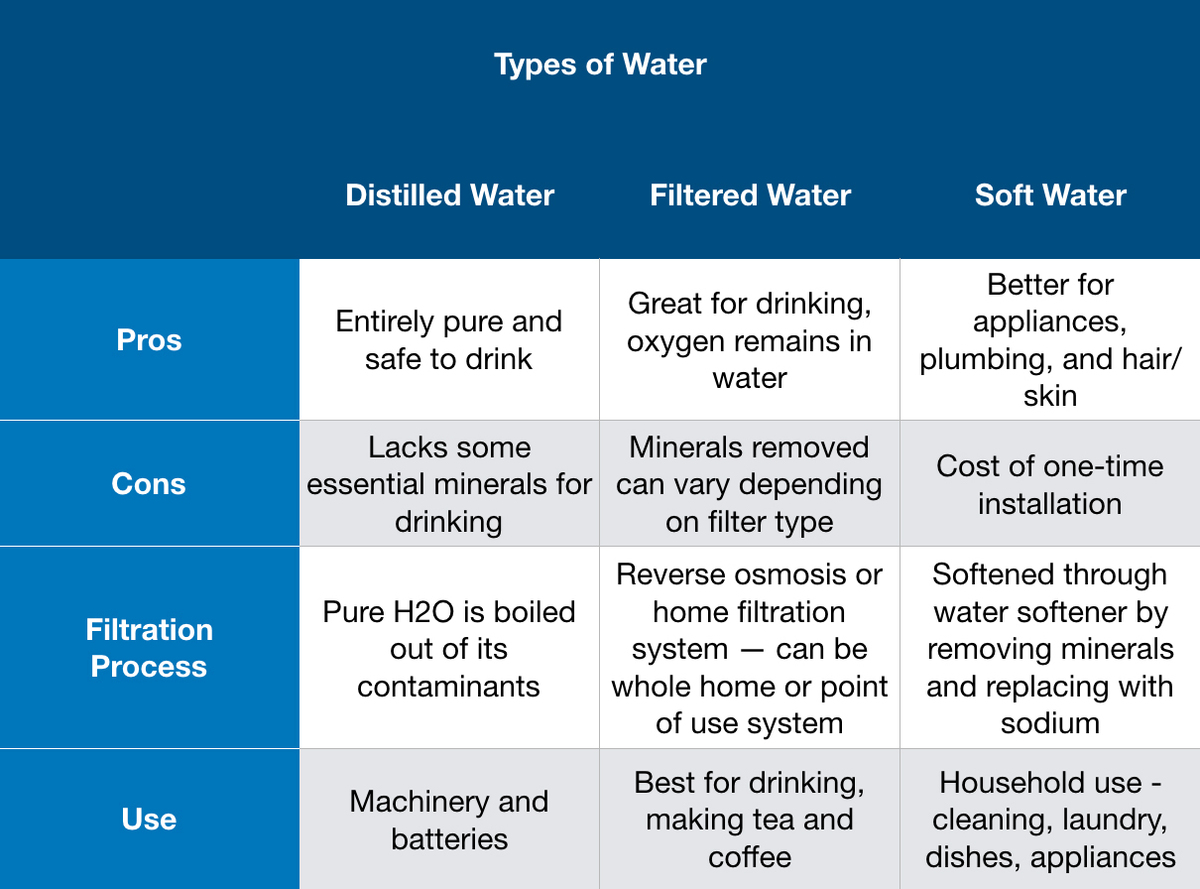 Distilled Water vs Water Softener vs Filtered Water: Detailed
The Great Taste Test: You’ll Taste the Difference (and Maybe Not Like It)
If you’re making coffee or tea, here’s where it gets hilarious. Coffee experts swear that distilled water makes a flat, lifeless cup because it needs those minerals to extract flavor properly. But too many minerals (hard water) also makes bitter coffee. So filtered water hits a Goldilocks zone—it’s the comedy club open-mic night of brewing. One study found that water with 150 ppm calcium makes coffee taste weaker, while water with 50 ppm calcium tastes fruity and bright. Distilled water is 0 ppm, so your morning joe tastes like a wet cardboard envelope.
The Bottom Line (Spoiler: It’s Not One Size Fits All)
Think of distilled water as the laboratory-grade precision tool—perfect for scientific experiments, irons, and CPAPs, but overkill (and overly boring) for drinking. Filtered water is your everyday Swiss Army knife—great for most tasks, but you wouldn’t use it to perform open-heart surgery. So check your appliance manual. If it says “distilled only,” listen to it like it’s your grandmother telling you to wear a coat. If it says “any water is fine,” filtered is probably your best bet for taste and health.
Oh, and one more thing: never drink distilled water exclusively unless you want to leach minerals out of your own bones. Yes, that’s a real thing—hospital patients who drank only distilled water for months developed electrolyte imbalances. So, hydrate, but hydrate wisely. Now go forth and swap filters, not judgment.
