Is Distilled Water The Same As Reverse Osmosis Water

Let’s clear the air (and the water!) about two of the most popular purified waters on the shelf. You’ve seen distilled water for your iron, and reverse osmosis (RO) water at t...
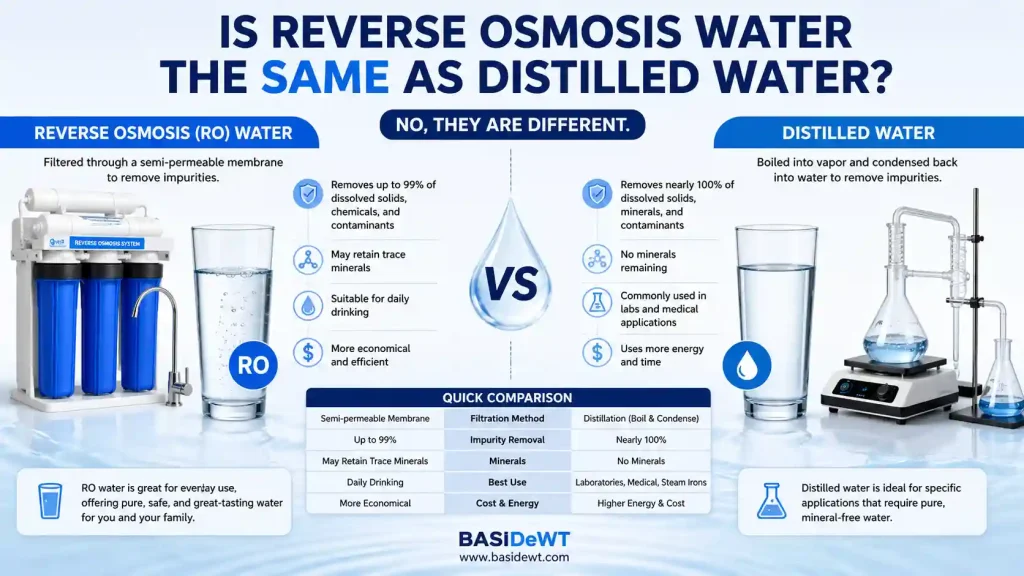
Let’s clear the air (and the water!) about two of the most popular purified waters on the shelf. You’ve seen distilled water for your iron, and reverse osmosis (RO) water at the grocery store or under your sink. Are they the same thing? Spoiler alert: Not exactly, but the difference is way more fun than you’d think!
The Big Idea: Both Are Super Clean, Just Different Paths
Think of distilled water as the ultimate hermit—it boils away from everything, leaving behind all its mineral friends. Then it condenses into pure, lonely H₂O. Reverse osmosis water is more like a super picky bouncer at a club, forcing water through a fancy membrane that kicks out almost all impurities.
Both processes achieve over 99% purity, but they take totally different vacations to get there. Distillation uses heat (steam power!), while RO uses pressure and a very smart filter. And guess what? That tiny difference changes how they taste and what they’re best for.
Must Read
Distillation: The Old-School Steam Party
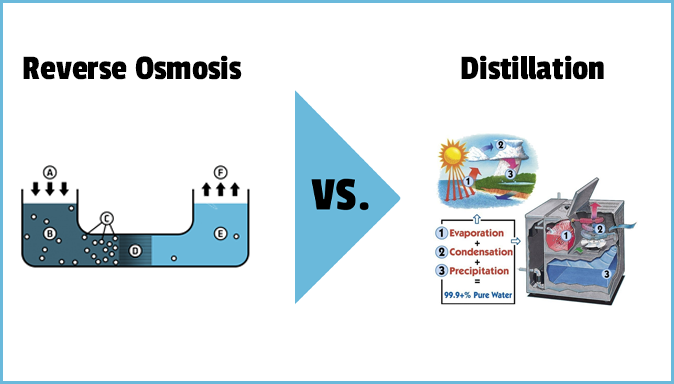
Imagine your water going to a spa, taking a hot steam bath, and then leaving all its “dirt and drama” on the ground. That’s distillation! It boils the water, catches the steam, and lets it cool back into liquid.
This method is incredibly thorough—it removes bacteria, viruses, heavy metals, and even minerals. The downside? It’s a slow, energy-hungry process (you’re boiling water, after all!). And because it’s so pure, it can taste a little flat—like drinking a cloud that forgot to be interesting.
Reverse Osmosis: The High-Tech Ninja
RO water is the cool, modern cousin. It uses a semi-permeable membrane—imagine a sieve with holes so tiny they only let water molecules squeeze through. Everything else (pesticides, chlorine, fluoride, dissolved solids) gets left behind and flushed away.
RO systems are super efficient for daily use—they don’t need heat, so no waiting around. But they do waste a little water (about 2-3 gallons for every gallon you drink) and they don’t remove everything that distillation does, like some volatile organic compounds (VOCs). Still, it’s a total champion for countertop or under-sink setups!
Here’s the fun twist: Distilled water is essentially dead-sterile, while RO water still has a tiny whisper of mineral content. That whisper can make RO taste slightly more alive than distilled—especially if you’re a coffee or tea snob!
So, Which One Should You Choose for Your Life?
Let’s get practical—this is where the fun part begins! If you’re filling a humidifier, a car battery, or a steam iron, distilled water is your best friend. It leaves zero mineral scale, which means your gadgets last forever (and you don’t have to scrub white crud off your iron’s soleplate—amazing, right?).
 home water distillation systems Archives - My Pure Water
But if you’re making cocktails, baby formula, or just sipping all day, RO water wins. It’s tastier, more convenient, and you can get a countertop system for under $100. Plus, you can add a mineral filter to RO systems to reintroduce good-for-you minerals—which you can’t really do with distilled (you’d just be adding them back to pure water).
And get this: Neither type is “better” than tap water for daily hydration if your tap is fine. But if you’re trying to avoid heavy metals, chlorine, or microplastics, both are superhero levels of safety. RO is usually the practical choice for home, while distilled is the go-to for special uses.
A Little Surprise: They’re Not Perfect Twins
Here’s a fun fact to drop at your next dinner party: Distilled water is actually a type of reverse osmosis water? No! The opposite is true—they’re cousins, not siblings. RO water often gets called “distilled” by mistake, but it’s a completely different technology. One uses heat and condensation (steam power!), the other uses pressure and a membrane (sci-fi ninja power!).
But here’s the uplifting part: Both give you a blank canvas. Want to add electrolytes for a post-workout drink? Use RO. Need sterile water for a skincare mist? Use distilled. Your water becomes a fun tool, not just something to gulp.
The Inspiring Part: You’re Now a Water Whisperer
See? Knowing the difference doesn’t make you a boring science nerd—it makes you a joyful explorer of your own hydration! You can now walk into any store or kitchen and smile because you know exactly what you’re buying and why.
Distilled water is your trusty, old-fashioned steam-cleaner. Reverse osmosis water is your modern, versatile daily driver. Neither is better; they’re just different players on the same team of clean water.
So go ahead—grab a jug of each, taste them side-by-side, and laugh at how different they are. Then use the right one for your coffee, your plants, or your next science experiment. You’re not just drinking water anymore—you’re curating a masterpiece. And that, my friend, is pure inspiration.
