High-efficiency Plumbing Solutions For Remote Cabins

Last summer, my buddy Dave spent three days trying to fix a toilet in his off-grid cabin. He ended up using a bucket, a prayer, and a lot of duct tape. Not the kind of weekend...

Last summer, my buddy Dave spent three days trying to fix a toilet in his off-grid cabin. He ended up using a bucket, a prayer, and a lot of duct tape. Not the kind of weekend retreat you dream about, right?
That’s the moment I realized: plumbing in a remote cabin isn’t about luxury—it’s about survival. Get it wrong, and you’re hauling water in five-gallon jugs. Get it right, and your cabin becomes a sanctuary, not a chore.
Why “High-Efficiency” Actually Matters Out Here
In the suburbs, high-efficiency plumbing saves you like twenty bucks a month. Cute. But in a remote cabin, it’s the difference between a functioning home and a muddy disaster. You’re often on a septic system, a well, or rainwater collection—so every drop counts.
Must Read
Think of it this way: your cabin’s water system is like a fragile ecosystem. One leak, one wasteful flush, and you’re either digging a new well or refilling a tank with a gas can. Spoiler: that gets old fast.
High-efficiency isn’t a buzzword here. It’s a lifeline.
The Low-Flow Fixtures That Actually Work
Remember those early low-flow toilets that required two flushes and a stern pep talk? Yeah, those were garbage. Today’s dual-flush toilets with powerful jets can clear a load with just 1.0 gallon per flush (GPF). Compare that to the old 3.5 GPF monsters.
For sinks, go with aerated faucets. They mix air into the water stream, so you get the same pressure but use half the water. Pro tip: test them before you install—some cheap ones sound like a hissing snake.
Showers? A 1.5 GPM showerhead is the sweet spot. It feels like a real shower, not a drizzle on a hostage. Your water heater will thank you, too.
The Real Game-Changer: Greywater Systems
Here’s where you can get a little rebellious with your plumbing. Instead of sending sink and shower water into a septic tank, route it to a greywater system. This stuff is perfect for irrigating non-edible plants around your cabin.
I know—it sounds like something a hippie would rig up in a van. But modern greywater kits are user-friendly and code-compliant in most rural areas. Check your local rules, though. Some counties are sticklers.
You’ll reduce your septic load by up to 40%. That means fewer pump-outs and less chance of a stinky surprise.
Pumps and Pressure: Don’t Skimp Here
If you’re on a well or a rainwater tank, your pump is the heart of the system. A variable-speed pump (like a Grundfos SCALA2) adjusts pressure on demand instead of cycling on and off like a grumpy metronome. It saves energy and extends the pump’s life.
Pair it with a pressure tank—a small one is fine. This combo gives you consistent flow even if your power source is a little solar panel. No more shower temperature surprises when someone turns on the kitchen tap.
And for the love of all that is dry, insulate your pipes. Frozen pipes in a remote cabin are a rite of passage you don’t want. Heat tape and foam insulation are cheaper than a plumber’s emergency visit. Trust me.
Water-Saving Dishwashers? Yes, They Exist for Cabins
You laugh, but I’ve seen people hand-wash dishes for ten minutes straight, using ten gallons of heated water. A compact countertop dishwasher (like a Danby or a SPT) uses about 3 gallons per cycle. And it sanitizes.
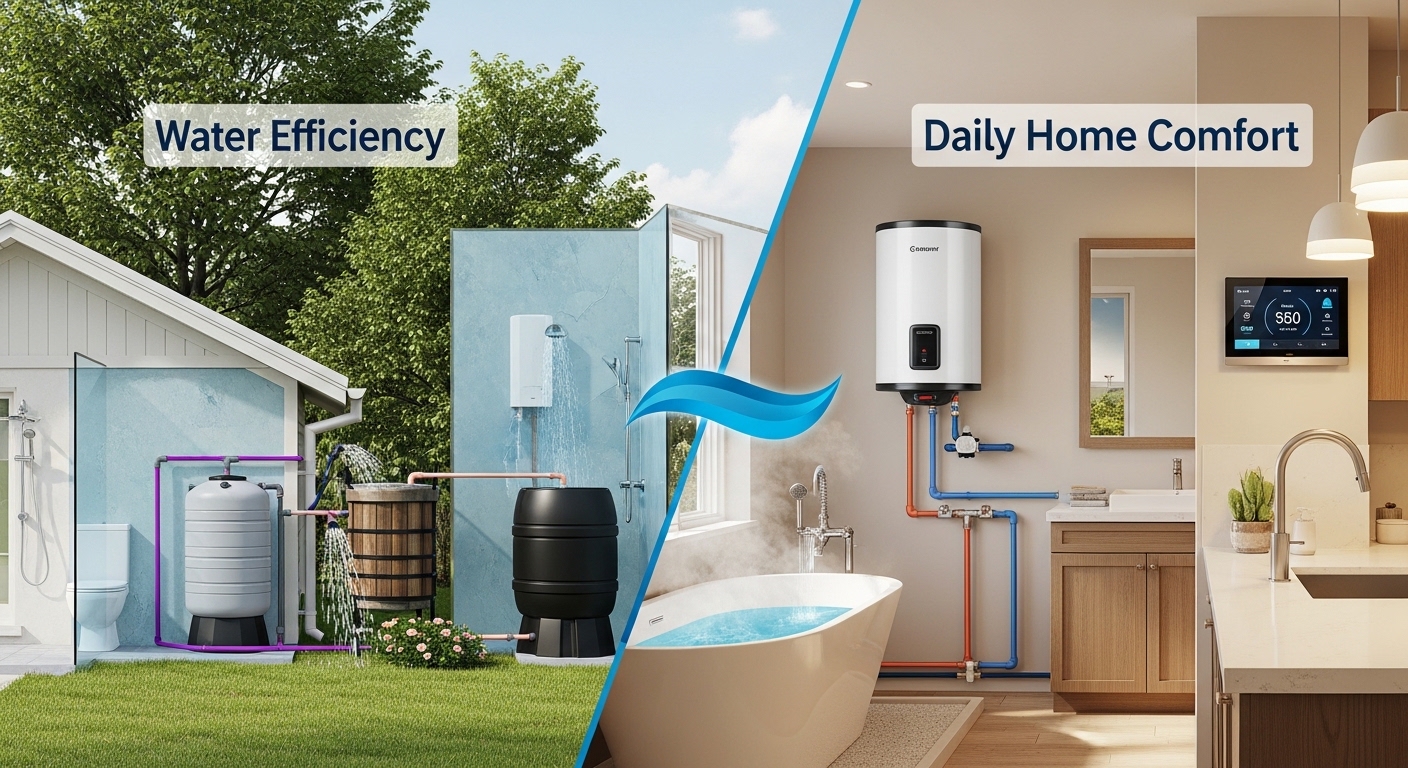 How Modern Residential Plumbing Systems Improve Water Efficiency and
Is it worth the space? If you have solar panels and a decent battery bank, absolutely. Your back and your sanity will thank you after a week of camping-style washing.
No electricity for a machine? Fine. Use a double-basin sink and a sprayer faucet. Rinse one side, soak the other. Low-tech, yes, but still way more efficient than a bucket.
The Silent Hero: Tankless Water Heaters
Standard tank heaters in a cabin are a waste of space and energy. They keep 40 gallons hot 24/7, even when you’re not there. A propane tankless water heater heats water on demand. That’s pure efficiency.
You can get models that run on a single propane tank for months. They’re compact enough to mount on a wall, freeing up floor space for, I dunno, a beer fridge? Priorities, people.
Just make sure you size it right. A unit that only heats 2 GPM will struggle if someone’s showering while you wash pans. Aim for 3.5 GPM for a cabin with two people.
Don’t Forget the Ugly Stuff: Leak Detection
I know, leak detectors are boring. But a slow drip in a remote cabin can drain your water tank in days. Get a smart leak sensor that texts your phone. Some models even shut off the main valve automatically.
They’re cheap, small, and will save you from returning to a flooded floor. And trust me, coming back to a wet cabin after a two-day hike is not the vibe.
Battery life on these things is usually a year. Change the batteries when you change your smoke alarm batteries. Simple.
A Whisper About Composting Toilets
I’ll say it: composting toilets are the ultimate high-efficiency solution for remote cabins. No water, no septic, no freeze-ups. Just peat moss or coconut coir and a little fan. The newer models (like Nature’s Head or Separett) don’t smell if used correctly.
Is it weird? Maybe for the first week. Then you realize you never have to winterize the toilet. No plumber, no frozen pipes, no black water tank. Game changer.
Pair it with a greywater system, and you can live off the grid with a fraction of the water use of a typical house. Your inner survivalist will be thrilled. Your guests might look at you funny, but hey—cabin life is all about trade-offs.
So, go ahead and build that dream cabin. Just put as much thought into your pipes as you do your wood stove. Your future self—enjoying a hot shower with zero anxiety—will thank you. Now go fix that toilet, Dave.
