Difference Between Distilled Water And Drinking Water

You’re standing in the grocery aisle, staring at two rows of identical-looking plastic jugs. One says “Distilled Water,” the other “Drinking Water.” Your brain shorts out. It...
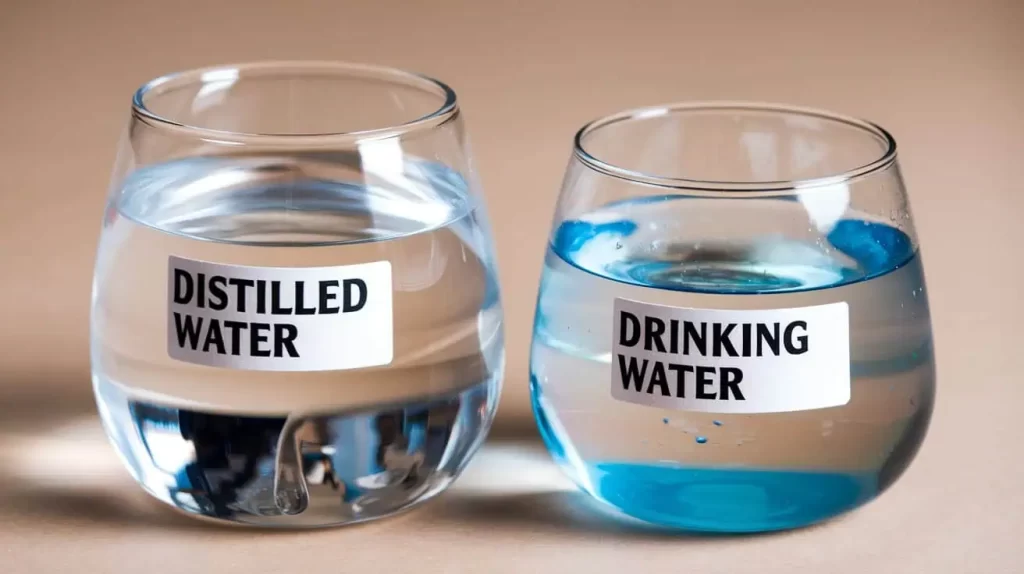
You’re standing in the grocery aisle, staring at two rows of identical-looking plastic jugs. One says “Distilled Water,” the other “Drinking Water.” Your brain shorts out.
It’s a surprisingly modern dilemma. We’ve reached peak hydration anxiety, and suddenly the difference between these two feels like a secret you should have learned in adulting school.
Let’s clear up the confusion. Distilled and drinking water are both safe to drink, but they live in very different worlds.
Must Read
The Purest of the Pure
Distilled water is basically water that went to a spa retreat and came back with no baggage. It’s boiled until it turns to steam, then that steam is condensed back into a liquid.
This process strips away everything—minerals like calcium and magnesium, bacteria, heavy metals, and even trace contaminants. You get the purest H2O molecule money can buy.
Think of it as water’s socially awkward cousin at a party—perfectly nice, but lacking the lively minerals that make conversation interesting.
Where Distilled Water Shines
You know that weird white crust on your coffee maker? That’s mineral buildup, and distilled water prevents it entirely. Your appliances will kiss your feet.
It’s also a star in car batteries, steam irons, and CPAP machines. No minerals means no corrosion. In the lab, scientists use it to avoid messing up experiments.
Fun fact: In Breaking Bad, Walter White used distilled water for his chemistry experiments. It’s that serious.
The Everyday MVP
Drinking water (often called “purified,” “spring,” or “tap” water) is the cool, relatable friend. It’s processed to remove harmful stuff, but it keeps the minerals your body actually needs.
Those trace minerals—magnesium, potassium, calcium—aren’t just filler. They help with muscle function, bone health, and that vague “feeling hydrated” sensation you crave after a workout.
Most municipal tap water is perfectly safe and often contains fluoride for tooth health. Bottled drinking water is just tap water that got a fancy label and a trip through a filter.
Why You Probably Shouldn’t Drink Only Distilled
Here’s the kicker: drinking distilled water exclusively can actually leach minerals from your body. Pure water is a thirsty molecule, so it pulls electrolytes from your cells as it passes through.
It’s like inviting a guest over who drinks all your soda and offers nothing in return. Your kidneys work harder to balance things out.
 How to Fill a Humidifier: Quick Steps
Long-term, this could lead to electrolyte imbalances. Not ideal for your morning run or that afternoon brain fog you’re fighting through.
Cultural Water Philosophy
In Japan, people often boil and cool tap water for tea, embracing its mineral character. Europeans laugh at our bottled-water anxiety—they drink tap water like it’s a birthright.
Meanwhile, the “raw water” trend in Silicon Valley had people collecting unfiltered spring water. That’s a different level of trust in the universe we don’t recommend.
The smartest play? Drink filtered tap water day-to-day, and keep a jug of distilled for your humidifier and morning coffee machine. Balance is the real life hack.
Practical Tips for Real Life
For your morning brew: Use distilled water if you hate descaling. Otherwise, regular filtered water adds subtle flavor minerals that coffee snobs swear by.
For your plants: Distilled water is a godsend for finicky peace lilies and carnivorous plants that hate tap chemicals. Your fern will throw a tiny leaf parade.
For your body: Stick with drinking water for daily hydration. Add a pinch of sea salt to distilled if you’re experimenting with pure water—it mimics the electrolyte profile your cells crave.
Fun fact: The World Health Organization actually cautions against long-term use of demineralized water for drinking. Even the pros want a little mineral kick in their glass.
The Bottom Line
Distilled water is the minimalist’s dream—pure, clean, empty. Drinking water is the pragmatic choice—safe, mineral-rich, and connected to the real world.
Neither is “bad,” but understanding the difference is like knowing when to wear jeans versus sweatpants. Both are comfortable, but one fits a specific occasion.
So next time you’re in that grocery aisle, smile. You now know the secret language of water. And isn’t that a little bit of magic in an otherwise ordinary Tuesday?
Stay hydrated, but stay smart. Your body does the heavy lifting—give it the water that helps, not just the water that exists.
