Water Well Drilling Cost Per Foot East Texas Or Lufkin

Let’s be real for a second: nobody wakes up thinking, “Gee, I wonder how much it costs to drill a water well per foot today.” But if you live in East Texas—or somewhere near L...
Let’s be real for a second: nobody wakes up thinking, “Gee, I wonder how much it costs to drill a water well per foot today.” But if you live in East Texas—or somewhere near Lufkin—you’ve probably thought about it while wrestling with a garden hose that’s more kink than water pressure. That moment when you’re hauling a five-gallon bucket from the spigot to the chicken coop? Yeah, that’s when the idea starts to feel less like a chore and more like a dream.
So, what’s the deal with water well drilling cost per foot in East Texas or Lufkin?
First, let’s bust a myth: you’re not paying for a hole in the ground. You’re paying for freedom. Freedom from water bills, from city restrictions, from that panicked feeling when a summer drought hits and your lawn looks like a sad crunchy carpet. In East Texas, the average cost to drill a well runs somewhere between $30 and $60 per foot. That includes the drilling pipe, casing, and a basic pump setup.
Why the big range? Because the ground here isn’t a boring pancake. You might hit clay, sand, gravel, or that stubborn Cretaceous-era limestone that makes drillers sigh and reach for a second cup of coffee. Think of it like digging for buried treasure, except the treasure is clean drinking water and the shovel is a massive rig that costs more than your first car.
Must Read
Let me paint a picture for you
Imagine your neighbor, Bob, who drilled a well last spring. He paid $45 per foot for a 200-foot well in Lufkin. That’s nine grand. But now Bob waters his vegetable garden all summer without a second thought. His tomatoes are the envy of the block. Meanwhile, you’re still staring at your water bill, wondering why a fifteen-minute shower costs as much as a movie ticket.
Here’s the kicker: in some parts of East Texas, you might only need to drill 80 to 150 feet to hit a solid aquifer. That’s around $3,600 to $9,000 for a well that could serve your home for decades. Compare that to the cumulative cost of city water over ten years—it’s like choosing between buying a good pair of boots or renting the same sneakers over and over until they fall apart.
But wait, there’s more than just the per-foot price
Drillers in East Texas often charge extra for things like a well permit (around $100 to $200), a pressure tank, and sometimes a bacteria test to make sure you’re not sipping dinosaur leftovers. But these are one-time costs. You buy the well once. You buy city water every damn month.
Think about it like baking a cake. The per-foot cost is the flour and sugar—the essentials. The permit, casing, and pump are the eggs and butter. You need them all, but once you have that cake, you don’t have to buy another one every week. You just eat it. With well water, you just use it.
A quick story that’ll make you smile
My cousin Sarah lives near Nacogdoches. She paid $38 per foot for a 180-foot well two years ago. Total cost: about $7,800. Last month, her city-water neighbor got a “summer surcharge” bill for $320 because they watered their hydrangeas. Sarah filled her kiddie pool, washed her truck, and still didn’t hit her well’s limit. Her neighbor now texts her for gardening advice and one day hopes to “join the club.”
The moral? Drilling is like buying a season pass to a water park instead of buying tickets every time you’re thirsty. Except the water park is your own backyard, and the lines are nonexistent.
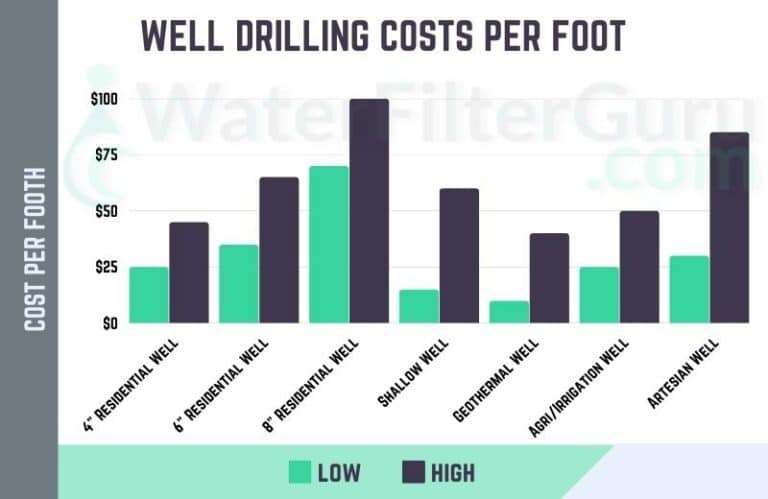 How Much Does a Well Cost? (2024 Well Drilling Cost Guide)
How to actually get a fair deal in East Texas or Lufkin
Don’t just call the first driller you find on Google. Call at least three. Ask them two things: “What’s your per-foot rate,” and “How deep do you usually go around here?” If someone quotes you $70 per foot and says you need 300 feet, that’s $21,000—and that better come with a gold faucet. Most punch lists in our area are between 100 and 250 feet.
Also, ask if they include the casing (the steel pipe that keeps your well from caving in). Some drillers sneak a separate fee for that, like a car salesman charging extra for seatbelts. A good driller will be upfront. A great one will tell you about local water quality—like if you’re near the Carrizo-Wilcox aquifer, which is famous in East Texas for its clean, soft water.
One more thing—don’t get spooked by the word “geology”
You don’t need a degree for this. You just need to know that rocky ground costs more to drill than soft soil. If you’re in the Piney Woods near Lufkin, you’re likely in sandy loam with some clay—cheaper to drill than, say, the rocky hills of Cherokee County. Your driller can give you a rough estimate based on their experience. Trust their stories. They’ve seen it all.
And honestly? The best time to drill is before you actually need the water. If you wait until a drought, drillers get busy and prices creep up. It’s like booking a hotel during a hurricane—you’ll pay double and feel rushed. Drill when the weather is mild and the soil is damp, like in early spring or late fall.
So, should you drill?
If you own your land and plan to stay put, a well is one of the smartest home improvements you can make. It boosts property value, lowers your monthly bills, and gives you the kind of self-sufficiency that feels like a secret superpower. You become the person who can offer a neighbor a glass of cold, crisp water and say, “This came from my ground.”
The water well drilling cost per foot in East Texas or Lufkin isn’t just a number on a spreadsheet. It’s an investment in peace of mind, in lazy Sunday sprinkler runs, and in never having to worry if the city will shut off the water when you need it most. And that, my friend, is worth every penny.
Plus, you can finally stop tripping over that kinked hose.
