Activated Carbon Filter For Industrial Water Treatment

So, you’re curious about activated carbon filters for industrial water treatment? Awesome—grab a coffee (or filtered water, if you’re feeling fancy), and let’s chat. Think of...

So, you’re curious about activated carbon filters for industrial water treatment? Awesome—grab a coffee (or filtered water, if you’re feeling fancy), and let’s chat.
Think of activated carbon as the sponge of the water world—but a really, really ambitious one. It’s like that friend who volunteers to clean up after every party, except it’s obsessed with grabbing nasty chemicals and odors.
What Exactly Is Activated Carbon?
Imagine a regular piece of charcoal, but give it a superpower. You “activate” it by exposing it to high heat or chemicals, creating millions of tiny pores.
Must Read
Those pores are like a microscopic maze. One gram of activated carbon can have a surface area bigger than a football field. That’s a lot of hiding spots for pollutants to get trapped.
In short: it’s carbon on caffeine, ready to grab impurities by the throat.
Why Industries Love This Stuff
Industries deal with water that’s seen some stuff—chemicals, oil, funky smells, even weird tastes. Regular filters just wave and say “good luck.”
Activated carbon is the boss of adsorption. It pulls contaminants out of water through a chemical clinginess, like velcro for bad stuff.
Think of it as a bouncer at a club. Only clean water gets past the velvet rope; everything else gets the boot.
The Dirty Dozen: What It Removes
This filter is a multi-tool. It zaps chlorine, pesticides, industrial solvents, and even some heavy metals.
It’s also amazing at removing volatile organic compounds (VOCs). Those are the smelly, toxic party crashers that make water taste like a chemistry lab.
Oh, and it can handle radon and some pharmaceuticals. Basically, it’s the water world’s version of a superhero janitor.
How Does It Actually Work? (The Simple Version)
Water flows over the carbon, and particles stick to the pores like gum on a hot sidewalk. It’s called adsorption—not absorption, because there’s a difference.
Absorption is like a sponge sucking up water. Adsorption is like a magnet pulling metal flakes to its surface. The carbon doesn’t soak up the gunk; it holds it tight on its surface.
It’s kind of like you trying to stick a Post-it note to a wall. The wall is the carbon, the note is the pollutant. Sticky, right?
Powder, Granular, or Block? Pick Your Fighter
You’ve got options. Powdered activated carbon is like fairy dust—tiny particles that you mix in, then filter out later.
Granular activated carbon (GAC) chills in a big tank. Water trickles through it, like a lazy river through a rock pile.
Block carbon is pressed into a solid log—think of it as a super-dense coffee puck. It’s great for high-pressure systems and really stubborn contaminants.
When Should You Call in the Carbon Crew?
If your water smells like a swimming pool or tastes like a chemical spill, it’s time. Activated carbon is the secret weapon for pre-treatment or final polishing.
It’s also a lifesaver for food and beverage plants. Nobody wants their soda to taste like chlorine or their beer to smell like an old mop. Trust me on that one.
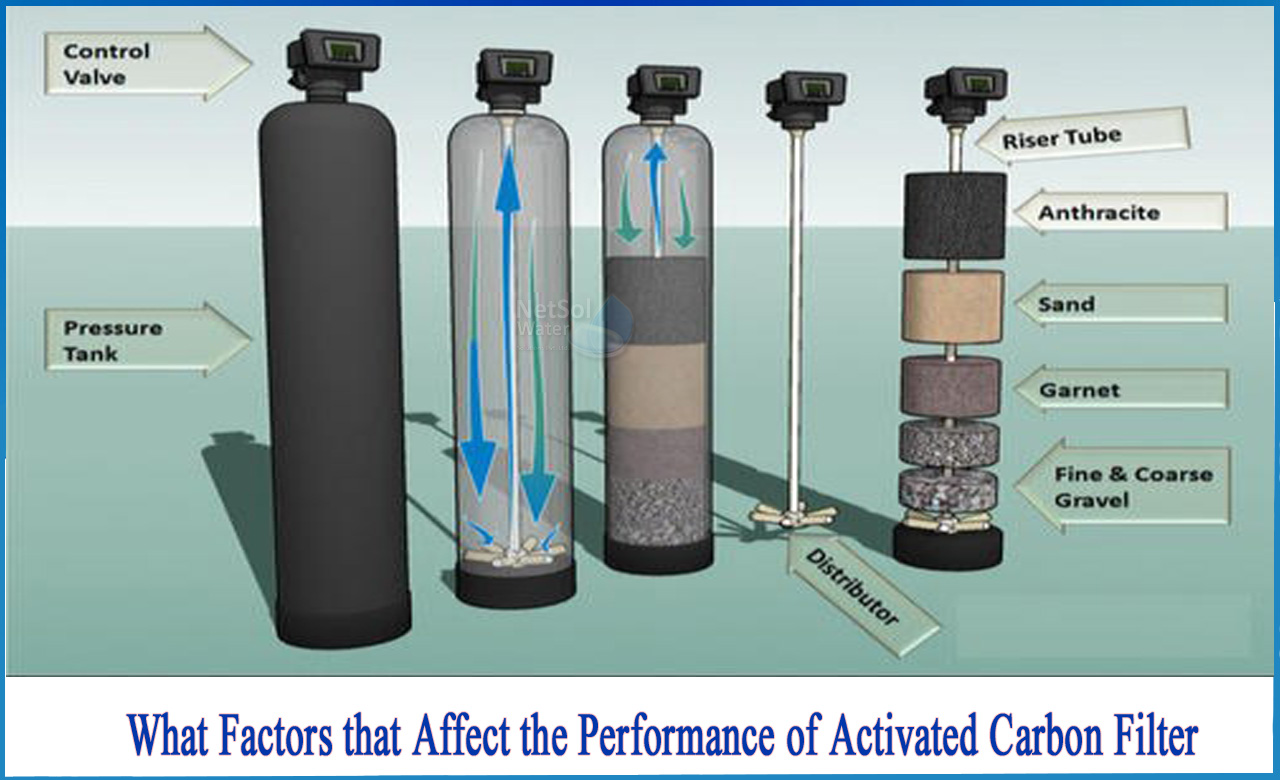 What factors that affect the performance of Activated Carbon Filter
Pharmaceuticals, cosmetics, and even power plants use it. Basically, if water touches a product you use, carbon probably helped keep it clean.
The Not-So-Fun Part: Regeneration and Disposal
Yes, carbon gets tired. After it clings to enough gunk, it needs a refresh or a farewell.
You can regenerate it by heating it up—burning off the trapped nasties. It’s like sending your carbon to a spa, but with less cucumber water and more fire.
Or you can dispose of it, but check local laws. Some pollutants make it hazardous waste. Don’t just toss it in the trash like yesterday’s leftovers.
A Few Jokes to Lighten the Load
Why did the activated carbon go to therapy? Because it had too many attachment issues. (Get it? Adsorption? I’ll show myself out.)
But seriously, this stuff is amazing. It’s been used since ancient times—the Egyptians put charcoal in water to cure tummy troubles.
So next time you see a giant carbon filter, give it a little nod. It’s working hard so you don’t have to.
Choosing the Right System (No Drama)
You don’t need to be a water wizard to pick one. Just ask: what are you removing, and how fast does the water need to flow?
If you’re treating thousands of gallons per hour, you’ll want a big tank with GAC. For smaller streams, a block filter is your bestie.
And always match the carbon to the contaminant. Some carbons are better at grabbing big molecules; others are gentle with small ones. It’s like choosing the right tool to pop a pimple—wrong move, and you’ve got a mess.
Maintenance: Keep It Simple
Check for channeling—that’s when water carves a path through the carbon, leaving the rest untouched. It’s like eroding a canyon in your filter.
Replace the media when you notice pressure drops or a funky taste coming back. Your nose and your flow meter will tell the truth.
Oh, and bacteria can grow on carbon if you let it sit wet and warm. Don’t let your filter become a petri dish. Rinse it occasionally, like you would a sweaty gym towel.
The Uplifting Conclusion (Finally!)
So here’s the happy truth: activated carbon filters are the unsung heroes of industrial water treatment. They quietly scrub the world’s messiest H₂O, helping factories run cleaner and products taste better.
Every sip of soda, every drop of medicine, every bite of food produced with clean water—it all owes a little thanks to those porous little grains. They’re tiny, mighty, and totally underrated.
And you know what? The next time you see a water bottle or a brewery, take a moment to smile. Somewhere, a pile of carbon is working its you-know-what off so that water can be pure again. That’s pretty cool, right?
So go on—pour yourself a glass of filtered water. Cheers to the carbon that makes life a little cleaner, one pore at a time. 😊
