What's The Difference Between Hard Water And Soft Water

So, you’ve probably heard someone at a dinner party or in a hardware store aisle casually drop the terms “hard water” or “soft water.” And you probably nodded along, thinking,...
So, you’ve probably heard someone at a dinner party or in a hardware store aisle casually drop the terms “hard water” or “soft water.” And you probably nodded along, thinking, Isn’t all water just… wet? You’re not wrong, but trust me—this is one of those hidden little dramas playing out in every single sink and shower in America. Let’s break it down without making it feel like a chemistry test.
The Basic Difference: It’s All About the Minerals
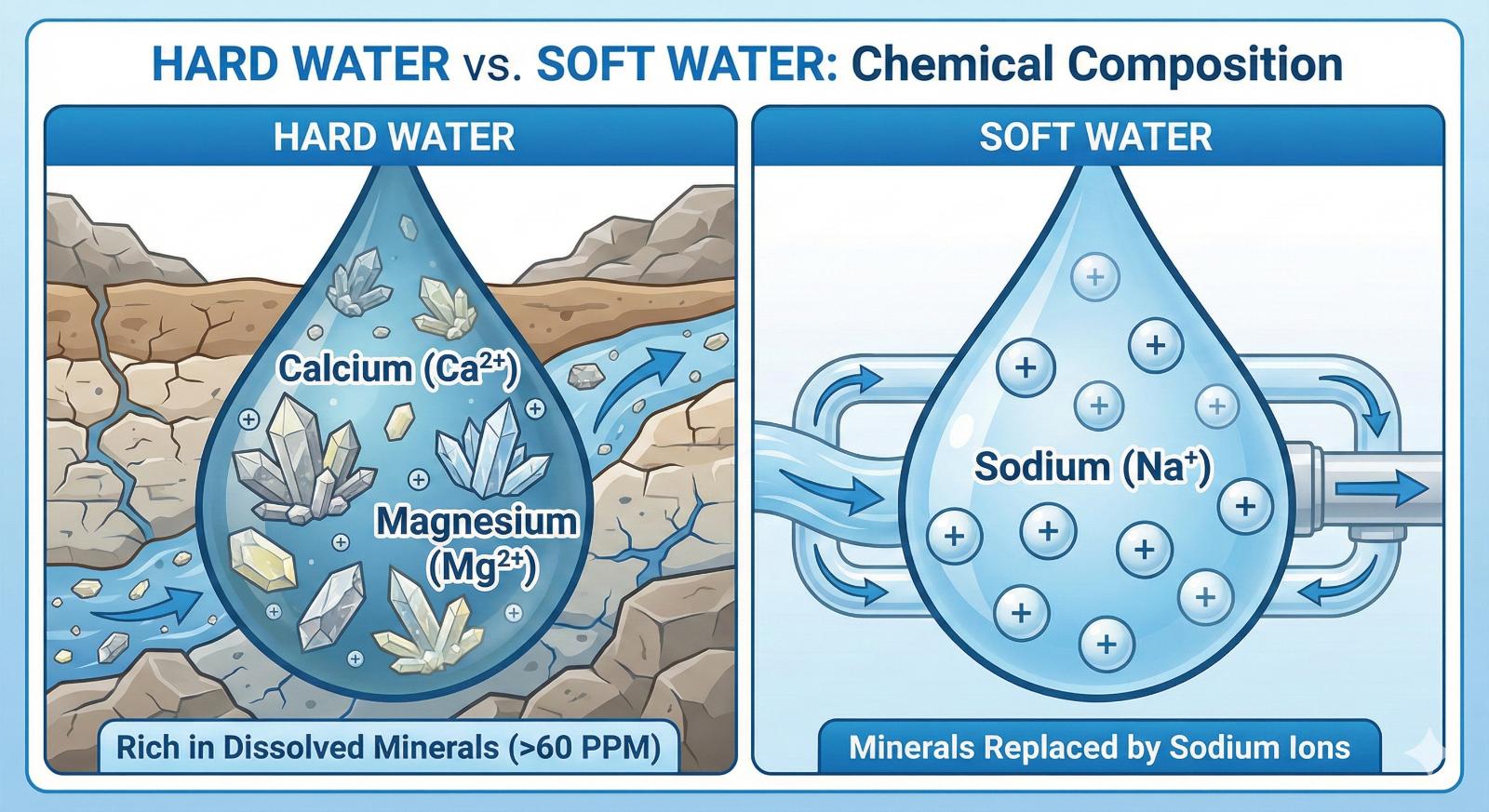
Think of hard water as that overly friendly, slightly aggressive house guest who brings a ton of rocks to your party. Hard water is packed with dissolved minerals, mostly calcium and magnesium. It’s nature’s way of saying, “Hey, I’ve been hanging out with limestone and chalk for a while, and I picked up some souvenirs.”
Soft water, on the other hand, is the chill friend who shows up empty-handed and just wants to hang out. Soft water has had most of those minerals removed (or it never had them in the first place), often through a water softener or because it comes from a different source, like rain. It’s basically water that has been through a spa day.
Must Read
How Hard Water Ruins Your Morning (and Your Faucets)
Ever step out of the shower and feel like you’ve been dipped in a layer of invisible glue? That’s hard water. The minerals react with soap to create that clingy, film-like residue that makes your skin feel tight and your hair look like a stiff, unhappy mop. You’re not dirty, it's just your soap threw a tantrum.
Then there’s the bathroom horror show: white, crusty buildup on your faucet heads and shower doors. That’s “limescale,” the official calling card of hard water. It’s like your plumbing developed a nasty case of dandruff. You can scrub until your arms ache, but that stuff laughs at regular cleaners.
And don’t get me started on dishes. You pull a glass out of the dishwasher, hold it up to the light, and bam—a constellation of white spots staring back at you. Hard water doesn’t rinse cleanly; it leaves behind a mineral deposit that says, “I was here, and I’m proud of it.”
Soft Water: The Luxurious, Squeaky-Clean Side
Switch to soft water, and your shower suddenly feels like you’re at a five-star hotel. The lather is unbelievably rich and foamy—you need half the shampoo you used before. When you rinse off, the water just slides away. Your skin feels slippery-smooth, not tacky. It’s the difference between wearing a wet wool sweater and a silk robe.
Your hair? It stops acting like a frightened cat. It’s softer, shinier, and doesn’t fight back when you brush it. I’m not exaggerating—my sister once visited a friend with a water softener, and she came home convinced she needed to buy a new shampoo brand. Nope. It was just the water.
And here’s a real treat: the dishes come out spotless. Like, actually spotless. You don’t need a special rinse aid. You just open the dishwasher, and every glass sparkles like it’s brand new. It’s the most satisfying feeling, right up there with popping bubble wrap.
The Ugly Truth: Soft Water Isn’t Perfect Either
Okay, let’s be honest. Soft water has a downside that drives some people bonkers: it feels “slippery” or “slimy” when you wash your hands with soap. That sensation is actually the soap working way too well—you can’t seem to rinse it off completely. It’s like trying to grab a wet bar of soap in a dream.
 Difference Between Hard & Soft Water | Explora Madeira
Also, soft water sometimes tastes a bit flat or salty, especially if the softening system uses salt. Some people swear it makes their coffee taste weird. I once drank a cup of soft water coffee at an Airbnb and thought it was decaf. Nope, just really boring water.
And for the gardeners out there: plants generally prefer a little mineral kick. Watering your prized tomatoes with super-soft water can make them sad. It’s the gardening equivalent of feeding them only air and hugs.
The Classic “Test” You’ve Probably Done Without Knowing
Next time you’re at a friend’s house, pay attention to how the soap feels in your hands. If it’s a struggle to get a good lather, and your hands feel like you’ve rubbed them with chalk after drying—that’s hard water. If the soap turns into a frothy mountain instantly, and your hands feel like a dolphin’s belly—that’s soft water.
Another giveaway: check the shower floor for soap scum. Hard water leaves that weird, grayish, slimy film that makes you slip. Soft water? The shower door looks clean even if you skip wiping it for a week. It’s almost spooky.
So, Which One Should You Want?
Honestly, most people prefer soft water for bathing and cleaning. It’s gentler on your pipes, your appliances, and your skin. But if you’re a fan of that gritty, “natural” feel (or you love your wild, crunchy hair), hard water might be your strange, loyal friend.
But here’s the real takeaway: it doesn’t have to be a lifelong commitment. You can get a water softener for your home, or just deal with hard water and buy a good bottle of descaler. The choice is yours. Just know that the next time you feel that weird film on your skin, you’re not alone—you’re just experiencing geology in your shower.
And hey, if nothing else, now you can totally win that conversation at the next dinner party. “Oh, hard water? Yeah, it’s basically the rock-climbing enthusiast of the water world. Soft water? That’s the luxury spa attendant.” You’re welcome.
