How Often Is Hardness Testing Done During Treatment Days

So, you’re lying there in a hospital bed, feeling like a beached whale on a gurney, and a friendly stranger in scrubs strolls in holding what looks like a sci-fi ray gun. “Tim...
So, you’re lying there in a hospital bed, feeling like a beached whale on a gurney, and a friendly stranger in scrubs strolls in holding what looks like a sci-fi ray gun. “Time for hardness testing,” they chirp. Your brain immediately jumps to “Hardness? My willpower? My patience with this jello diet?” Nope. They’re talking about your bones, your teeth, or that curious titanium rod the surgeon installed last Tuesday. But here’s the real question that keeps the sane among us up at night: How often is hardness testing done during treatment days? The answer, my friends, is more often than you’d think—and less often than you’d guess in the most ridiculous ways possible.
The “Everyday” Hardness of Your Bones
Let’s start with the obvious: your skeleton. In a typical osteoporosis clinic, hardness testing (technically bone density scanning) is done once every two years for most patients. That’s right—you get your bones “hard-checked” as often as you change your car’s oil. But if you’re on heavy-duty meds like bisphosphonates, they might poke you every six months just to see if your bones are turning into diamond or crumbling into cheese. Fun fact: The bone-hardness scale goes from “soft as a stale croissant” to “denser than a pretentious art-house film.” Your spine? It’s the middle manager of hardness—trying to stay rigid but secretly terrified of a bad fall.
Teeth: The Tiny Hardness Ninjas
Your dentist doesn’t call it “hardness testing.” They call it a “Drill-and-Deny” (okay, I made that up). But during a treatment day for fillings or crowns, they’re testing enamel hardness every single time they touch a tool to your mouth. That little cold-air blast? That’s a hardness test. The scratchy explorer thing? Also a hardness test. They’re essentially playing a game of “How many pounds of pressure before your molar screams for mercy?” The surprising part? Your dentist doesn’t actually know the exact number until they break out a gadget called a microhardness tester, which looks like a mini hydraulic press for ant eggs. Most dental offices use this only once per treatment day, usually to check if a new crown is hard enough to survive your next late-night tub of ice cream. Spoiler: It usually isn’t. You’ll get a lecture.
Must Read
The Mysterious Metal Menagerie
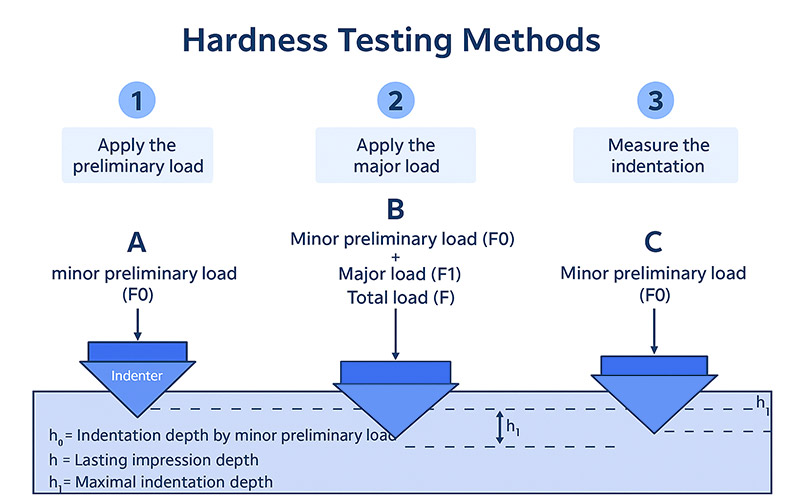
Ah, modern medicine. You’ve got a hip replacement? A knee that clicks like a sad metronome? A plate in your arm from that “insane” skateboard trick you did in your fifties? Orthopedic surgeons are obsessed with hardness testing for these. They’ll test the metal before they put it in your body (like checking the firmness of a raw steak), then after they screw it in (to make sure it didn’t get scared and go soft). During your actual treatment day? They’ll test the hardware’s hardness exactly zero times while you’re unconscious. Why? Because the testing machine is the size of a small fridge and makes a noise like a dying blender. They do it in the lab a week before, using a giant diamond-tipped plunger that would give you nightmares. Fact: The standard test for metal hardness is called the Rockwell test, and I’m pretty sure it was invented by a guy named Rock who was tired of his tools bending. “Rock hard. Rock well. Rock… the test!” That’s how legends are born.
When They Actually Test You Live
Here’s where it gets weird. During dialysis treatment day, the machine does a secret hardness check on your blood—okay, it’s flow resistance, not bone hardness. But your vein walls? They get a softness test called a “fist bump” from the nurse. “Does it feel firm? Squishy? Like a half-deflated balloon animal?” That’s their daily hardness check. For skin treatments like sclerotherapy for varicose veins, the doctor pokes you every five minutes with a needle to see if your vein has gone from “gummy worm” to “firm spaghetti.” It’s basically a live-action version of “Is it cake?” but with your circulatory system.
 Czym jest badanie twardości? Metody, zasady i zastosowania
The Surprising Frequency: An Invisible Orchestra
Ready for the jaw-dropper? The most common hardness test in a hospital happens about 47 times per day per patient—but you never feel it. It’s the pill hardness check. Pharmacists use a machine that looks like a pancake flipper to crush a single sample from every batch of your meds. They’re checking if the pill is hard enough to survive your esophagus but soft enough to dissolve in your stomach. Too hard? You’ll burp up a coffin-shaped object three hours later. Too soft? It turns into paste in the bottle. So yes, your daily blood pressure pill was subjected to a microscopic boxing match that would make a MMA fighter wince. And you? You just swallowed the winner.
The Bottom Line (With a Wink)
So, how often is hardness testing done during treatment days? Every few minutes for your teeth, once or twice a year for your bones, never during your orthopedic surgery (but lots before), and constantly for your pills. The real answer is: whenever someone with a clipboard and a gadget says, “I wonder if that’s tough enough?” Next time you’re in a hospital room, ask the nurse, “What’s the hardness of my left femur today?” They will either laugh, call security, or give you a very detailed answer about the Brinell scale. Either way, you’ll have the best story for your next café date. Just don’t try to measure the hardness of your coffee mug. Trust me on that one.
