Relies On Countercurrent Exchange To Move Ions And Water

Let’s talk about a secret superpower hiding in your body that sounds like a weird magic trick. It’s called countercurrent exchange. Sounds fancy, right? It’s actually a brilli...
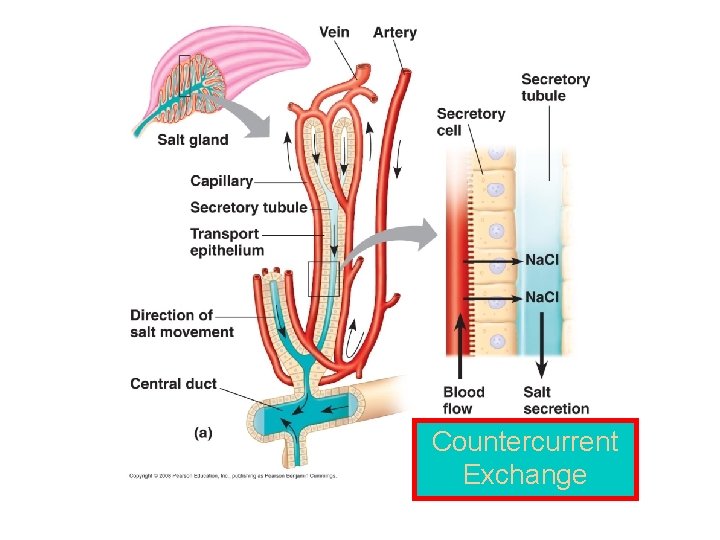
Let’s talk about a secret superpower hiding in your body that sounds like a weird magic trick. It’s called countercurrent exchange. Sounds fancy, right? It’s actually a brilliantly sneaky system that moves ions and water around like a tiny, efficient plumber.
Your Inner Plumbing Hustle
Think about your kidneys. They’re not just bean-shaped filters. They’re master negotiators of water and salt.
Inside them, a loop called the Loop of Henle pulls off the impossible. It uses a countercurrent flow—like two rivers running in opposite directions—to concentrate your urine.
Must Read
Why should you care? Because without this, you’d be peeing every five minutes. You’re welcome, couch potato.
How It Works: A Salty Dance
Imagine two pipes side by side. One carries fluid down. The other carries fluid up. They’re touching.
As the downward pipe moves, it actively pumps out salt (sodium ions). This makes the surrounding tissue super salty. The upward pipe, traveling in the opposite direction, sees that salt and thinks, “Ooh, I’ll grab some.”
This creates a vicious cycle of salt transfer. More salt in the tissue means more water follows it out of the upward pipe. It’s a greedy, beautiful loop.
Fish Gills: The Underwater Barter System
Fish use this trick too, but for a totally different reason. They breathe water, which is full of salt they don’t always want.
In a fish’s gills, countercurrent exchange allows oxygen to hop into the blood efficiently. Blood flows one way; water flows the opposite. Every bit of oxygen is snatched up.
Fun fact: This system is so efficient that fish can extract up to 80-90% of the oxygen from water. Humans? We’d drown in the same water. Show some respect to a goldfish.
Desert Rats: The Ultimate Thrifters
Some animals take countercurrent exchange to legendary levels. The kangaroo rat never drinks water. Ever.
It gets all its moisture from dry seeds. How? Its kidneys have an ultra-long countercurrent loop. That rat reclaims almost every drop of water from its urine.
It pees crystals. Literal solid pee crystals. That’s not a joke. Its urine is that concentrated. Try doing that after a salty snack.
Shark Noses: Smelling Danger (and Lunch)
Sharks have a countercurrent exchange in their noses, and it’s terrifyingly brilliant. Blood flow in their nasal tissue goes opposite to the water flow over their nostrils.
This lets them detect a single drop of blood in an Olympic-sized swimming pool. No, really—one part per million.
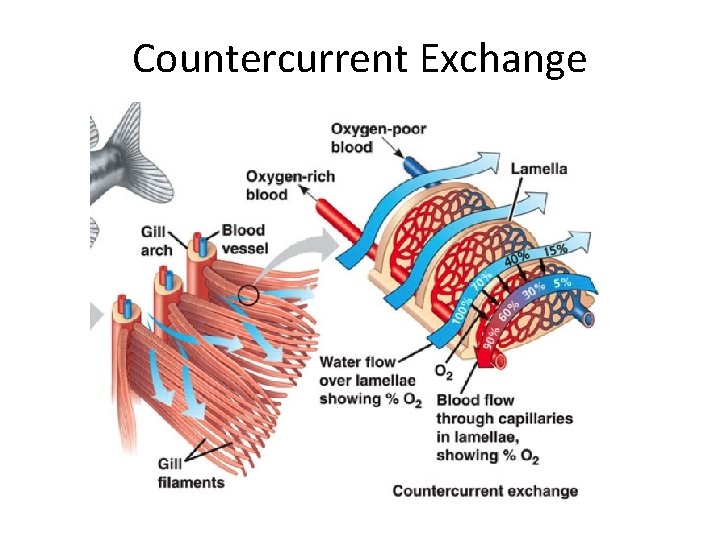 Living in Water challenges Obtaining Oxygen www arkive
So when you cut your finger in the ocean, a shark’s nose is already doing the math. Countercurrent exchange made them the ocean’s ultimate scent-tracker.
Your Brain: Even Your Head Does It
Believe it or not, your brain also uses countercurrent exchange. It’s called the chiarì net (rete mirabile). It’s a mesh of blood vessels in your neck.
Warm blood heading to your brain passes right next to cooler blood coming down. This cools your brain just enough to keep it from frying. It’s like having a tiny radiator in your neck.
Next time you feel smart, thank your countercurrent cooler. Your brain didn’t overheat thinking about pizza.
Why This Is Just Plain Cool
Countercurrent exchange is nature’s way of cheating thermodynamics. It moves ions and water without wasting energy. It’s a biological tax write-off.
It shows up in everything from your gut absorbing nutrients to a penguin’s feet not freezing off. Penguins have countercurrent exchange in their legs. Hot blood flows down, meets cold blood coming up. The feet stay just warm enough, but the penguin doesn’t lose body heat.
So a penguin can stand on ice for hours, eating fish, looking smug. All thanks to a fluid-dynamic party trick.
Funny Side Effects
If countercurrent exchange fails, weird things happen. You get puffy ankles. Your urine becomes watery and sad. Fish get oxygen-starved and float belly-up.
Also, male testicles use a countercurrent loop to keep sperm cool. That’s why they hang outside your body. Nature’s weirdest heat exchanger: the pampiniform plexus. Don’t look it up during lunch.
So next time you drink too much water, remember: your kidneys are frantically running a countercurrent algorithm. They’re the real MVP.
The Bottom Line
Countercurrent exchange is a quiet genius. It’s hidden in your organs, fish faces, and desert rat kidneys. It moves ions and water with surgical precision.
It’s why you don’t pee yourself dry, why sharks find you, and why penguins have warm toes. It’s physics and biology having a secret romance.
And now you know the joke. When someone says “life is just a series of countercurrents,” you can nod and think about your pee. Pretty fun, right?
