Commercial Di Filtration Units For Industrial Applications

So, you want to talk about industrial filtration? I know, I know—sounds super thrilling, right? Like watching paint dry, but with more sludge. Stick with me, because this is a...
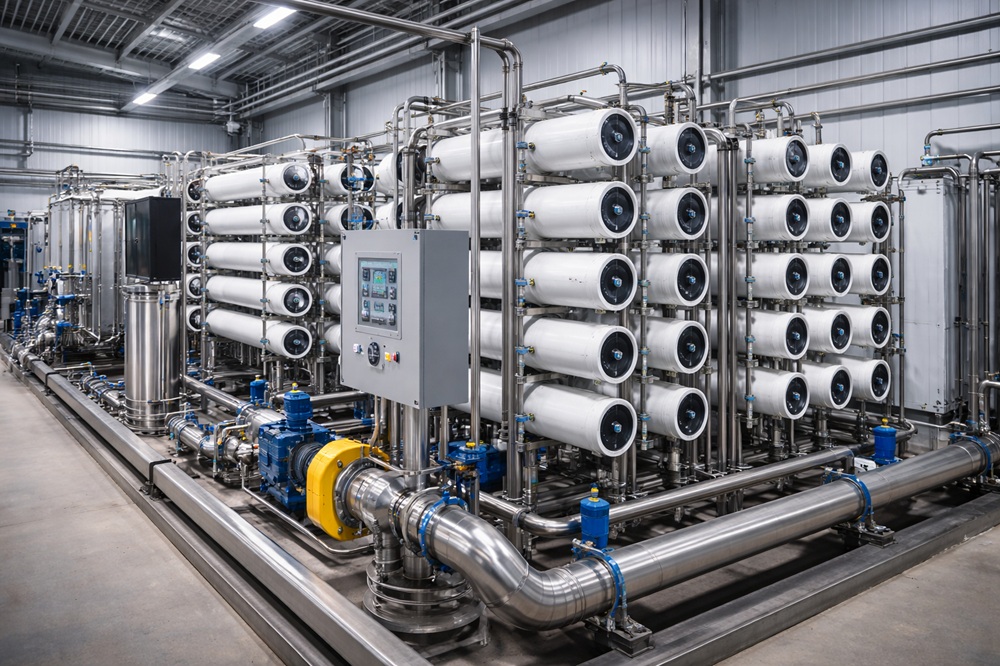
So, you want to talk about industrial filtration? I know, I know—sounds super thrilling, right? Like watching paint dry, but with more sludge. Stick with me, because this is actually the unsung hero of every factory floor.
I’m talking about commercial DI filtration units. That’s deionization, for those of us who don’t speak chemist. Think of them as the bouncers at a very exclusive water club.
Only the purest H2O gets past these guys. Everything else—minerals, salts, random junk—gets kicked to the curb.
Must Read
Why Should You Even Care?
Picture this: you’re running a factory making microchips. Or maybe you’re brewing beer. Or hey, you’re washing thousands of car parts every day.
Now imagine using tap water. Gross, right? That water has calcium, magnesium, and other nasties that ruin your products.
It leaves spots on glassware. It scales up your pipes. It makes your beer taste like a wet sock. Nobody wants that.
DI filtration strips all that nonsense away. It’s like giving your water a spa day, but more industrial and less cucumber slices.
How Do These Things Even Work?
Here’s the short version (no science degree required). DI filters use special charged resins. They grab the bad stuff like a magnet grabbing paperclips.
Positively charged ions (hello, calcium) get swapped for hydrogen. Negatively charged ions (bye, chlorine) get swapped for hydroxide. They combine to form pure, beautiful water.
It’s basically magic, but boring engineers call it “ion exchange.” Whatever, I’m calling it magic.
The Big Players: What’s Out There?
You’ve got options, my friend. And yes, they come in sizes that range from “cute little box” to “we need a forklift for this.”
First up: point-of-use units. These are small, sit right next to your machine, and filter water on demand. Perfect for labs or small-scale stuff.
Then you have central systems. These are the tank-sized behemoths that feed an entire factory. They’re loud, they’re proud, and they need their own floor space.
There are also twin-bed units (one tank for positive ions, one for negative). And mixed-bed units (one tank that does both jobs). The mixed-bed is like the overachiever in class.
Which one do you need? Honestly, it depends on your water volume and how pure you need it. Don’t worry—most vendors will ask obnoxious questions to help you figure it out.
The Real Talk: Maintenance (Ugh)
Let’s be honest. No filter works forever. These units are like pets—they need feeding and cleaning.
Resin beds get exhausted. When that happens, your water gets dirty again. You’ll notice spots on your parts, or your process starts failing.
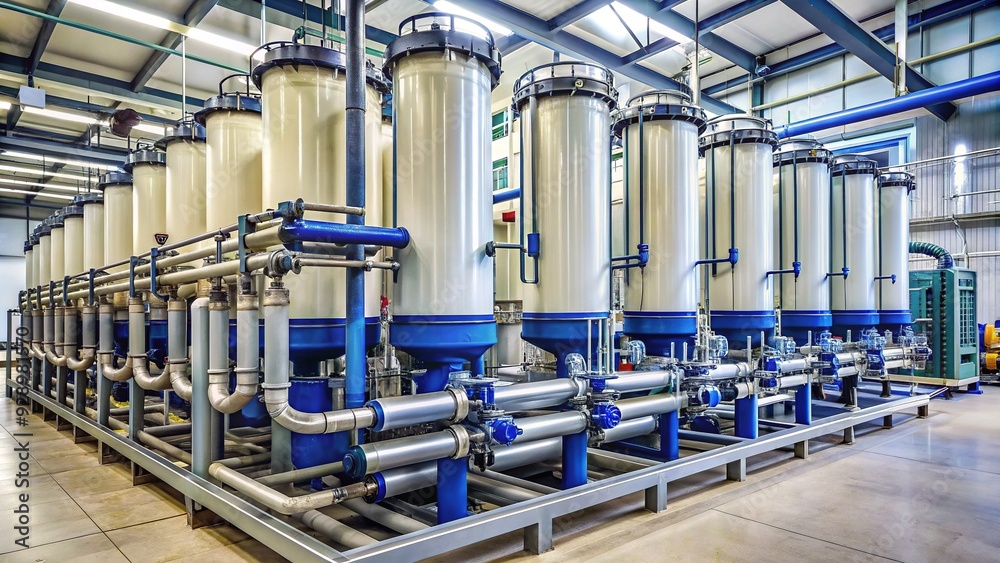 Large industrial filter system with multiple cylindrical units and
You can regenerate the resins with acid and caustic chemicals. Sounds thrilling, right? Or you can just swap out the cartridges if you’re using a smaller unit.
Pro tip: Don’t ignore the warning signs. I once knew a guy who waited too long. His pipes were so scaled up they looked like fossilized arteries. Gross.
Where Do You See These Things in Action?
Everywhere, honestly. Pharmaceutical companies use them for making pills and injections. One speck of dirt? Lawsuit city.
Power plants use them to keep their turbines from rusting. A rusty turbine is a sad, expensive turbine.
Food and beverage use them for everything from soda to canned beans. Ever had flat Coke? Blame bad water.
Even car washes use DI filters. That “spot-free rinse” at the end? Pure DI water magic. Your car thanks them.
Cool. But Are They Expensive?
Okay, full disclosure: they’re not cheap. A good commercial unit can cost anywhere from a few grand to six figures.
But think about the alternative. You’re wasting money on bad products, ruined equipment, and waaay more cleaning chemicals. The ROI is actually solid.
Plus, leasing is a thing now. You can pay monthly and let someone else worry about the resin replacing. That’s basically my dream relationship with a machine.
The Silly Stuff No One Tells You
DI water is incredibly thirsty. It’s so pure it wants to absorb stuff from the air. If you leave it in an open bucket, it’ll start grabbing CO2 and become acidic.
Also, don’t drink it. Seriously. I know it looks clean, but it can leach minerals from your body. It’s technically dead water. Weird, right?
And here’s a funny one: DI water doesn’t conduct electricity well. Pure water? Zap-free. But the second it picks up dirt? Watch out. That’s why factories use it for cleaning electronics safely.
So Should You Buy One?
If your water quality matters (and it does), then yes. Absolutely. It’s like buying insurance for your product quality.
Start small if you’re nervous. Rent a unit for a month. See if your widgets stop looking like they have water spots from a clown’s tear.
And when you get that first batch of perfect, pure water? You’ll feel like a wizard. A very industrial, slightly sweaty wizard. But still a wizard.
