What's The Difference Between Distilled Water And Purified

Okay, let’s settle this once and for all. You’re standing in the water aisle at the grocery store, staring at two nearly identical jugs. One says Distilled, the other says Pur...
Okay, let’s settle this once and for all. You’re standing in the water aisle at the grocery store, staring at two nearly identical jugs. One says Distilled, the other says Purified. What gives? Are they the same? Are they playing a trick on you? Grab your imaginary coffee, because we’re about to geek out on water—and I promise it’s more fun than it sounds.
The short, watery answer
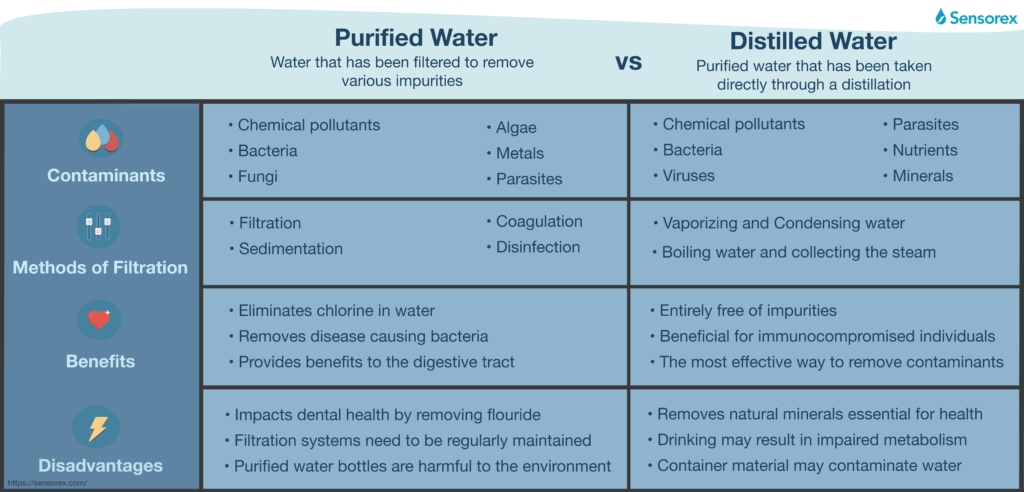
Here’s the one-liner: Distilled water is a type of purified water, but not all purified water is distilled. Think of it like squares and rectangles. All squares are rectangles, but not all rectangles are squares. Distilled is the overachiever that went through a fancy steam party.
Purified water, on the other hand, is the whole umbrella term. It means the water has been physically treated to remove impurities. Distillation is just one way to get that done—like using a sledgehammer to crack a nut.
Must Read
So, how does distillation actually work?
Distillation is basically a science experiment you’d do in your kitchen, if your kitchen had a boiling kettle and a cold pipe. You boil the water into steam, then condense that steam back into liquid. The impurities—minerals, bacteria, lead—get left behind because they can’t turn into steam as easily.
What you get is water that’s almost too clean. It’s like the white T-shirt of water: pure, boring, and it leaves no staining behind. That’s why people use it in steam irons and car batteries—no mineral deposits to gum up the works.
But wait, isn't it just plain water?
Yes and no. Distilled water is so stripped down that it lacks minerals like calcium and magnesium. Some folks say it tastes flat, like the water’s given up on life. Others love it for coffee machines—no scale buildup, ever. It’s the ultimate zero-commitment water.
But here’s the kicker: if you only drink distilled water, you might miss out on essential minerals. In moderation? Totally fine. It won’t suck the calcium out of your bones, despite what your great-aunt Linda might warn on Facebook.
What about purified water?
Purified water is the broad church. It includes water cleaned by reverse osmosis, carbon filtration, deionization, or—yep—distillation. The goal is the same: get rid of 99% of the bad stuff. But purified water usually retains some minerals for taste, unless the label says otherwise.
Reverse osmosis, for instance, pushes water through a semipermeable membrane. It’s like a bouncer at a club, letting only H₂O molecules through while kicking out chlorine, pesticides, and that weird swampy taste. Result? Water that’s clean but still has a bit of character—like a well-groomed friend who still laughs too loud.
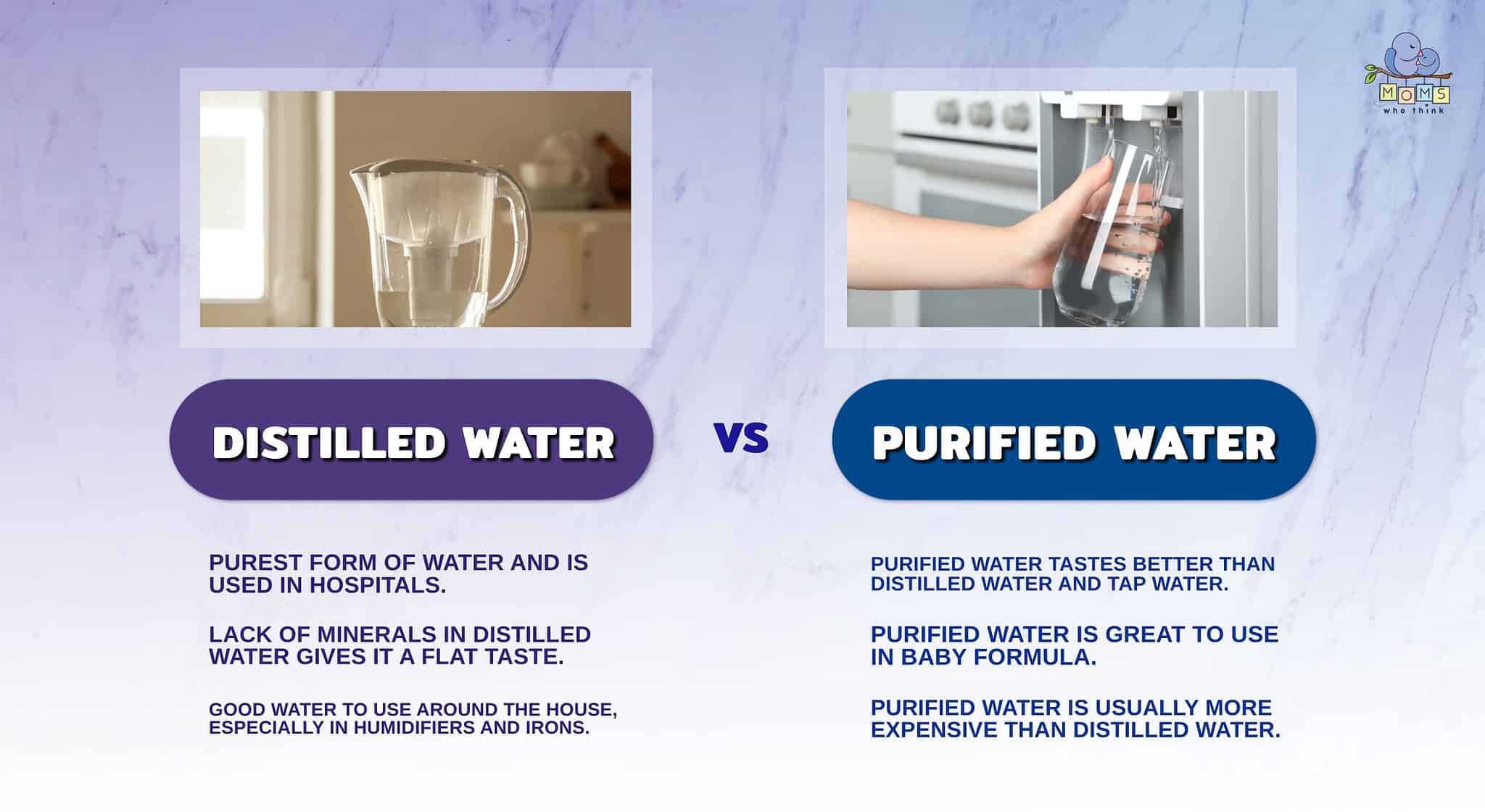 Distilled vs. Purified Water: 4 Differences & Health Benefits
Honesty break: Is one safer than the other?
Let’s be real—if you’re buying bottled water from a reputable brand, both are extremely safe. Distilled water is sterile, sure. But so is purified water that’s gone through UV treatment or ozonation. They both kill bacteria and viruses. It’s like comparing a perfect 10 with a 9.9—who cares?
The real difference is intended use. Distilled water is for your CPAP machine, laboratory experiments, or that vintage fish tank. Purified water is for drinking, cooking, and making your boyfriend’s iced tea taste less like chlorine. Pick your poison—or rather, pick your lack of poison.
Can you taste the difference?
Probably not, unless you’re a professional water sommelier (yes, that’s a real job, and no, I can’t afford one). Distilled water often tastes flatter because it has no dissolved minerals. Purified water, especially from reverse osmosis, can have a slightly more rounded mouthfeel—like it’s been to a spa and done yoga.
But honestly? In a blind taste test with coffee, many people can’t tell. The joke’s on us: we’re paying $2 for something we could get from a tap. But hey, convenience tastes pretty good too.
The verdict: Which one should you buy?
If you’re filling a humidifier, a steam iron, or a medical device—go distilled. No white dust, no mineral crust. Your appliance will thank you. If you’re just drinking water and want something clean but not boring—go purified. It’s the Goldilocks of waters: just right.
And if you’re still confused? Grab whichever jug is cheaper. Both are miles better than the mystery liquid from a garden hose. (Please don’t drink from the hose—we’ve talked about this.)
So next time you’re in that aisle, remember: distilled is the stripped-down minimalist; purified is the well-rounded extrovert. Both are clean. Both are fine. And both are probably better than whatever you’ve got in that old Brita filter from 2019. You’re welcome.
