What's The Difference Between Deionized Water And Distilled Water

Let’s talk about water. Not the boring kind in your tap. We’re diving into the fancy stuff: deionized versus distilled. It’s a battle of purity. One is a rebel; the other is a...
Let’s talk about water. Not the boring kind in your tap. We’re diving into the fancy stuff: deionized versus distilled. It’s a battle of purity. One is a rebel; the other is a perfectionist.
Distilled Water: The Old-School Purist
Distilled water is the grandparent of clean water. It’s made by boiling water until it turns to steam. Then it’s cooled back into liquid. That’s it—a simple, hot process.
Think of it like stealing the soul of the water. All the minerals, salts, and nasty stuff get left behind in the pot. What you get is pure H₂O. No germs, no heavy metals. Just wet.
Must Read
Fun fact: Distilled water tastes flat. Why? Because removing minerals like calcium and magnesium kills the flavor. Your tongue notices. It’s like eating a candy without the sugar.
Deionized Water: The Chemistry Nerd
Deionized water is different. It doesn’t boil anything. Instead, it uses magic—okay, resin beads—to yank out charged particles. Ions are atoms with a positive or negative charge. Deionization rips them out like a bouncer tossing rowdy guests.
This water is aggressive. It’s so ion-hungry that it will snatch minerals from your pipes or skin. That’s why you never drink it straight. It’s less a beverage and more a chemical weapon for labs.
Fun fact: Deionized water can conduct electricity poorly—until it grabs ions. Then it becomes a lightning rod. That’s why scientists handle it with care. It’s a moody diva.
So, What’s the Real Difference?
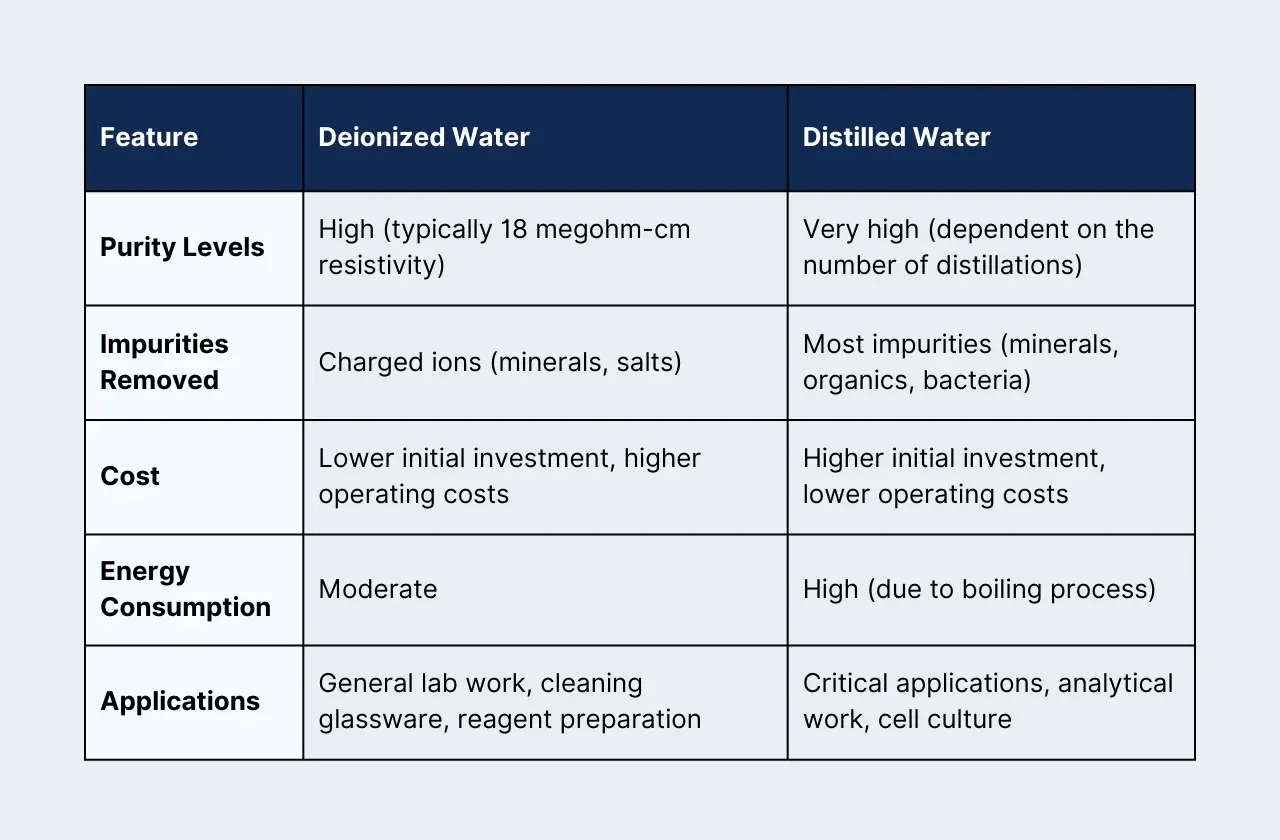
Distilled water is purified by heat. Deionized is purified by attraction. Both remove contaminants, but they target different stuff. Distillation catches everything that can’t survive boiling. Deionization catches ions—salts, metals, and minerals.
Here’s the kicker: Deionized water isn’t sterile. Because it doesn’t boil, bacteria can still lurk. Distilled water? It’s usually sterile. Boiling kills almost everything. So, if you need germ-free, go distilled.
But deionized water is ultrapure for chemistry. It’s the cleanest water you can make, with a resistance so high it’s like a glass wall. Distilled water is clean, but deionized is obsessive.
Quirky Facts to Impress Your Friends
Did you know distilled water can leach lead from old pipes? It’s so hungry for minerals it’ll strip them out of your plumbing. That’s why you don’t store it in metal containers. It’s a thirsty ghost.
Deionized water is used in car batteries. Regular tap water has minerals that ruin the battery. Deionized water keeps the chemistry perfect. Your car’s heartbeat runs on this stuff.
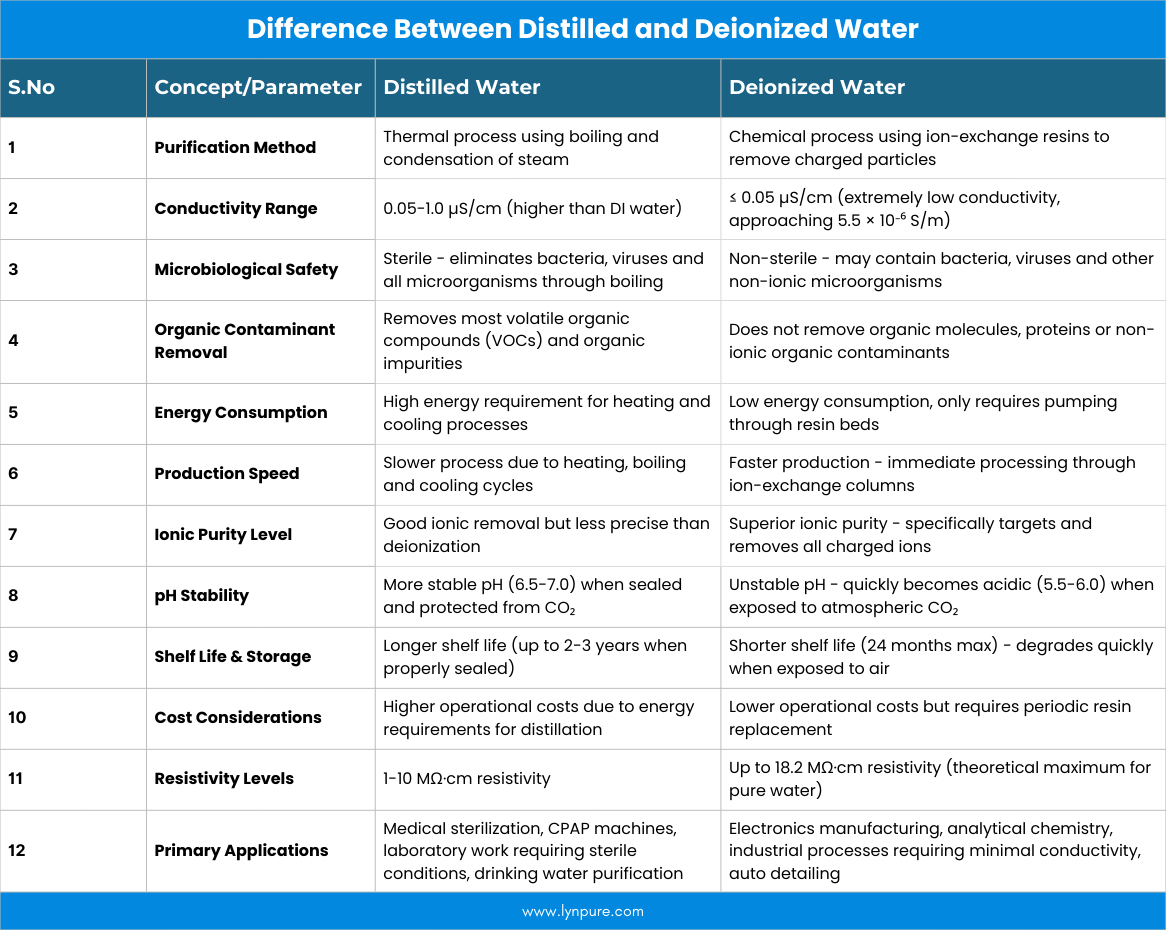 Distilled Water vs Deionized Water | Key Differences
Here’s a weird one: Fish hate distilled water. It’s too pure. Fish need minerals to breathe. Put a goldfish in a tank of distilled water, and it’s like putting you on a diet of air. Not fun.
Which One Should You Use?
For drinking? Neither is great. Distilled tastes flat, and deionized can harm your teeth. Stick to filtered tap water. But for steam irons, use distilled to avoid mineral buildup. For aquariums, use deionized (then add minerals back).
For science experiments? Go deionized. It’s the purest you can get without a lab. For making coffee? Distilled makes a cleaner cup. But don’t expect mega flavor—you need some minerals for taste.
And here’s the ultimate flex: Lab-grade deionized water costs more than gasoline. A gallon can run $2–$5. That’s because making it requires fancy resin beds and lots of energy. It’s bougie water.
Why This Topic is Fun
It’s about obsession with purity. Humans love to make things cleaner than nature intended. We’re like Goldilocks, but with a chemistry set. Distilled is the slow cooker; deionized is the pressure cooker.
Plus, it’s a reminder that even simple things—like water—have hidden personalities. One is shy, one is aggressive. Both are trying their best. And they’ll never meet in your glass.
So, next time you grab a bottle labeled “pure water,” check the fine print. Is it distilled or deionized? You’re now in on the secret. Use your knowledge wisely. And maybe don’t put a fish in it.
A Final, Silly Thought
If water could talk, distilled would whisper, “I’ve been through fire for you.” Deionized would shout, “I’ll take anything with a charge!” Which one speaks to your soul? Probably neither—because they’re both too pure to care.
Now go forth and be a water snob. You’ve earned it.
