Evaluate The Water Treatment Company Kinetico On Softener Salt Types

Let’s be real for a second: nobody wakes up thinking about water softener salt. You’re probably more worried about getting the kids to school on time or figuring out what’s fo...
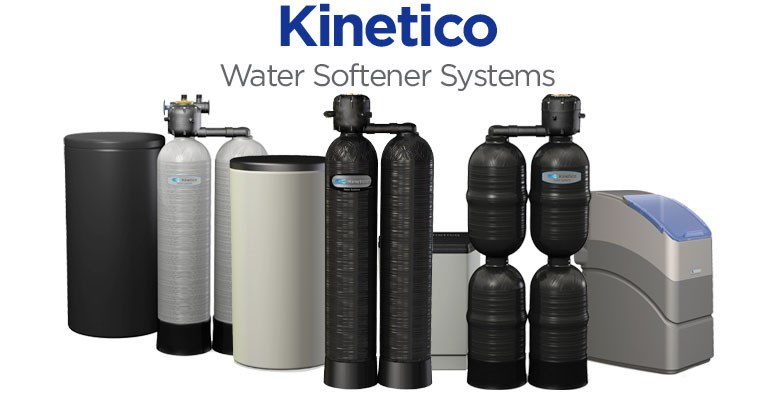
Let’s be real for a second: nobody wakes up thinking about water softener salt. You’re probably more worried about getting the kids to school on time or figuring out what’s for dinner. But if you own a Kinetico system—or you’re thinking about getting one—the type of salt you use matters more than you’d think. It’s like choosing between regular gas and premium for your car. Sure, both will get you moving, but one keeps your engine purring.
Kinetico is a big name in water treatment, and for good reason. Their systems are built to last, and they do a fantastic job of kicking hard water minerals to the curb. But even the best system needs the right fuel. That fuel is salt, and picking the wrong kind can mean extra maintenance, gunk buildup, or a system that works harder than it should. Let’s break it down like we’re chatting over coffee.
Salt Pellets vs. Salt Crystals: The Showdown
You’ve probably seen two main types at the store: those neat, round pellets and the messy-looking rock salt crystals. The pellets look more like little hockey pucks, while the crystals look like something you’d throw on an icy driveway. For Kinetico systems, pellets are almost always the better bet. They’re cleaner and dissolve more evenly.
Must Read
Rock salt is cheaper—I get it. But here’s the catch: it often contains insoluble dirt and sediment. That gunk can collect at the bottom of your brine tank, forming a sludge layer called “mush.” Over time, mush can clog your system and make it less efficient. You’ll end up fiddling with it more often, which is the opposite of easy-going.
Think of it like this: rock salt is the potato chip you grab at a gas station—it’s fine in a pinch, but you don’t want it as a daily habit. Pellets are the home-baked cookie: reliable, consistent, and they leave less mess.
What About Solar Salt?
You might also see solar salt, which is made by evaporating seawater. It’s usually sold in small, flaky crystals or compressed pellets. Solar salt is generally pure and works well with Kinetico, but it can be a bit dusty. If you use it, just be sure to clean your brine tank every year or two.
The key thing is to avoid salt with high levels of iron or additives. Some cheap salts have rust-colored stains or binding agents that can mess with your system’s delicate valves. Kinetico’s manual usually recommends a high-purity evaporated salt—look for something with at least 99.5% purity. That number is your best friend.
Why You Should Care (It’s Not Just About the Salt)
Here’s a little story: My neighbor Dave bought a used Kinetico system and grabbed the cheapest rock salt from the hardware store. Six months later, his brine tank looked like a science experiment gone wrong—a thick, gooey layer of sludge and salt bridged together like concrete. He had to chisel it out with a broom handle. Meanwhile, my own system with pellet salt hummed along without a peep.
Using the right salt isn’t just about being fancy; it’s about saving your sanity. A clogged system means you run out of soft water faster, which means your shower feels scratchy and your dishes get spots. Nobody wants that. Plus, Kinetico systems are built to be low-maintenance, so why sabotage that with bad salt?
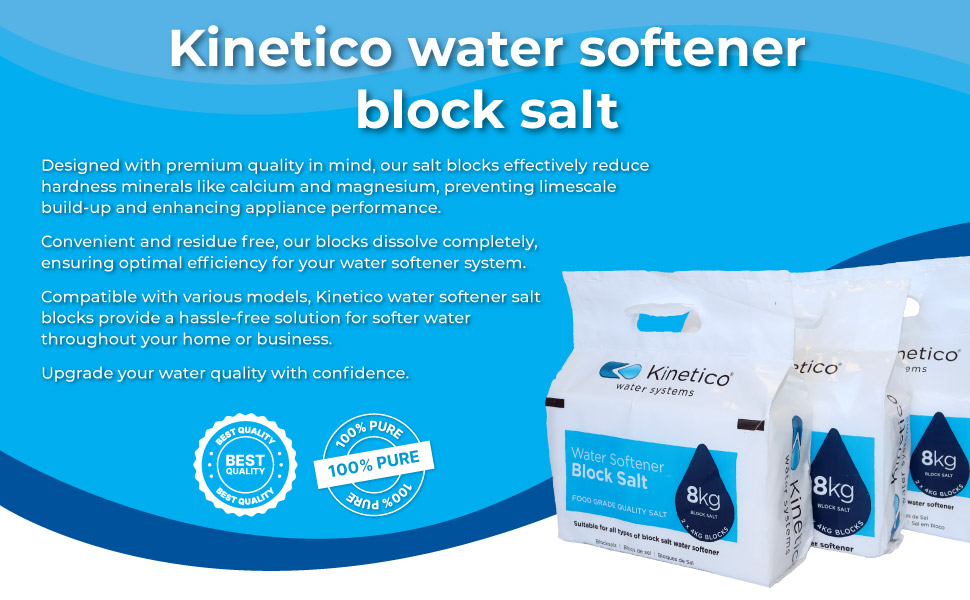 KINETICO Block Salt - 6 bags of 2 blocks of salt each (12 blocks
Imagine you’ve got a high-end coffee maker. You wouldn’t dump muddy water into it, right? The same goes for your Kinetico. Good salt keeps the resin beads inside your tank happy, so they keep trapping the calcium and magnesium that make your water hard. Happy beads = soft water for your morning coffee, your laundry, and your skin.
A Quick Salt Shopping List
When you’re at the store, look for the words “evaporated” or “high-purity” on the bag. Brands like Morton’s Clean and Protect or Diamond Crystal’s pelleted salt are popular and safe bets. Avoid anything that says “rock salt” or “solar salt with rust inhibitor.”
Also, check the bag for a label that says it’s NSF-certified. That’s a quality stamp that means the salt meets health and safety standards. It’s like the Good Housekeeping seal for your water system.
One more tip: don’t overfill your brine tank. Leave a few inches of space at the top so the salt can dissolve properly and the system can regenerate smoothly. Overstuffing is like cramming too many clothes into a washing machine—it’ll work, but not well.
The Bottom Line (No Pressure)
Look, Kinetico makes some of the best water softeners out there. They’re designed to be robust and efficient, but they need a little TLC in the form of good salt. You don’t have to be a water expert to get this right—just remember: pellets over rocks, purity over price, and clean over cloggy.
Your system will thank you by lasting longer and giving you that silky, spot-free water we all secretly love. And hey, you’ll save yourself from an afternoon of chipping sludge out of a tank with a broom handle—trust me, Dave will tell you it’s not worth it. So next time you’re at the store, grab the good stuff. Your future self (and your coffee maker) will thank you.
Now go enjoy that soft water—you earned it.
