Best Deionized Water Systems For Large-scale Manufacturing Northern Ohio

Let’s be real: when you’re running a massive manufacturing plant in Northern Ohio, you’re not worried about whether your tap water tastes funny. You’re worried about whether t...
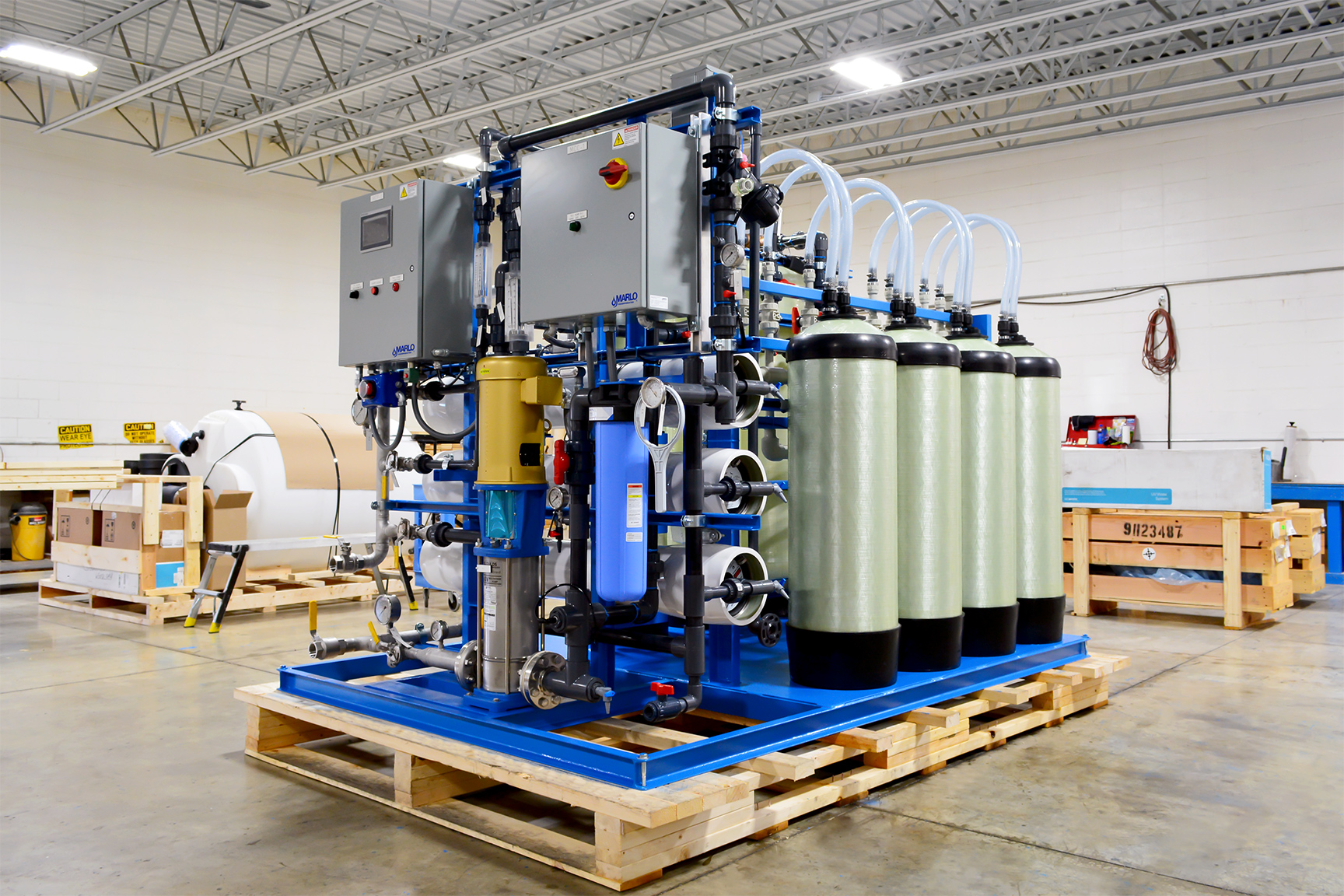
Let’s be real: when you’re running a massive manufacturing plant in Northern Ohio, you’re not worried about whether your tap water tastes funny. You’re worried about whether that “funny taste” is about to cost you $50,000 in ruined product. Welcome to the wild, slightly shocking world of industrial deionized water systems. Yes, we’re talking about the unsung hero of factories: the machine that makes water so pure it’s basically angry at any impurity.
Why Your Factory Needs Water That’s “Too Clean” For Humans
Here’s a surprising fact: pure deionized water is actually terrible to drink. It’s so aggressive at grabbing minerals that it’ll leach calcium right out of your teeth. But for making microchips, pharmaceuticals, or even your neighbor’s car parts, it’s liquid gold. In Northern Ohio, we have some of the hardest water in the Midwest—stuff that leaves crusty mineral deposits on your coffee mug faster than you can blink. Your manufacturing line doesn’t need that crust; it needs water that’s been spiritually and chemically cleansed.
Pro tip: If you see your machinist using bottled water to rinse a part, you’ve already lost the battle. You need a system that turns Lake Erie water into something that would make a chemist weep with joy—or at least with safety specs on.
Must Read
The Heavyweights: A Few “Systems” That Won’t Quit
Let’s start with the reverse osmosis (RO) and electrodeionization (EDI) combo. Imagine a bouncer at a club who checks every single molecule at the door. RO shoves water through a membrane so tight that only H₂O gets through. Then EDI zaps the stragglers with electricity, laughing as the last ions float away. These systems are for plants that need 18.2 megohm-cm purity—which is basically the celebrity status of water purity. Examples? Pure Aqua and Evoqua make tank-like units that run for years while you just pay the electric bill. They are the “Honda Accord” of deionization: boringly reliable, which is exactly what you want at 3 AM on a Thursday.
Then you have the mixed-bed resin systems. These are the old-school, gnarly workhorses that use specially charged beads to grab every stray calcium and magnesium ion. Think of them like a thousand tiny Pac-Men eating your hard water. For large-scale use, ResinTech offers massive vessels that you can regenerate on-site—meaning you don’t have to buy new beads every week, just flush them with acid and lye like some kind of mad scientist. Sure, it’s messy. But it handles high flow rates (like, hose down an entire foundry flow rates) without breaking a sweat.
Don’t forget reverse osmosis alone for medium-scale jobs. If your manufacturing just needs water that won’t spot your steel, a skid-mounted RO from Applied Membranes will do the trick. It’s the “set it and forget it” option—until the winter freezes your pipes, of course. That’s a joke. Mostly.
The Surprising Secret: Your Water’s Temperature Matters More Than You Think
Here’s a plot twist: cold water produces better deionized water. In Northern Ohio, where winter comes for six months? You actually get an advantage. Your system will produce 15% more purified water in January than in July. So while you’re shoveling your driveway, your deionizer is working like a champ. The flip side: summer heat can drop performance, so you might need a chiller. Yes, a chiller for your water treatment plant. Welcome to manufacturing, where even the water needs air conditioning.
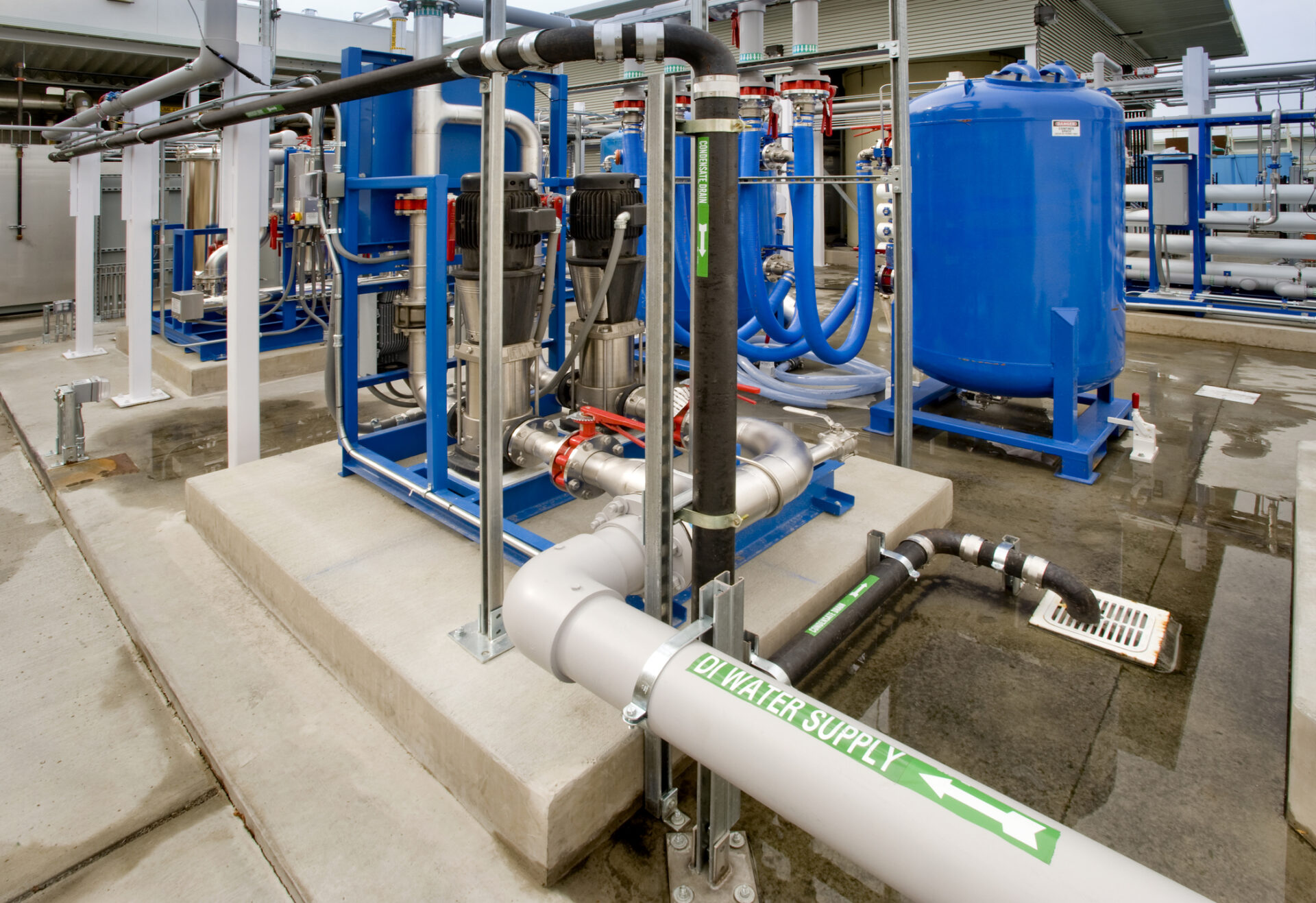 Expert Commercial Deionization In Cleveland & Northern Ohio
Another wild fact: a single gallon of deionized water can cost you five to ten cents in chemicals and electricity. That doesn’t sound like much until you realize you’re using 10,000 gallons a day. That’s $500 to $1,000 daily just for water. Suddenly, picking the right system feels like a life-or-death budget meeting, doesn’t it?
Northern Ohio Specifics: The Salt, The Cold, The “Lake Erie Funk”
Let’s talk about our water. Lake Erie is chock-full of chlorides from road salt and seasonal algae. Your system needs to be built for that. A standard residential unit will choke and die within weeks. For large-scale operations, you want systems with pre-filters that can handle 500+ ppm of dissolved solids. Culligan Industrial and Suez (now Veolia) offer local service in Cleveland, Toledo, and Akron that actually answers the phone—which is rarer than a clean spot on your red iron ore dust.
Also, don’t forget freeze protection. In January, your outdoor DI tanks can turn into ice cubes. Ask for heated enclosures or indoor placement. Unless you want to explain to your boss why the $100,000 purification system is now a giant popsicle.
The Verdict? Pick One That Doesn’t Make You Cry
So what’s the best? If you need consistent 18 megohm-cm water for electronics or pharma, go with a RO+EDI from Evoqua or Pure Aqua. If you’re washing car parts and just need to avoid spots, a heavy-duty mixed bed from ResinTech will work. And if you’re a masochist who loves troubleshooting, you can always buy used equipment and pray the previous owner didn’t abuse it.
Remember: deionized water is like a grumpy introvert—it doesn’t want to touch anything, especially your pipes. So always use plastic or stainless steel for your distribution lines. And for the love of all that is holy, test your water weekly. Because the moment you stop testing is the moment a mineral ion throws a party in your product. Good luck, Ohio. You’ll need it, a sense of humor, and a really big sump pump.
