Top Reverse Osmosis Systems For Semiconductor Production Ultrapure Water

Okay, friend, let’s talk about something geeky but vital. We’re diving into the world of ultrapure water for making semiconductors. Sounds boring? Trust me, it’s not. Think of...

Okay, friend, let’s talk about something geeky but vital. We’re diving into the world of ultrapure water for making semiconductors. Sounds boring? Trust me, it’s not.
Think of it this way: your fancy smartphone? It was bathed in water cleaner than anything you’ll ever drink. We’re talking water so pure it’s basically a science experiment.
Semiconductors are finicky little things. A single speck of dust or a stray mineral ion can ruin a whole batch of chips. That’s why we need Reverse Osmosis systems that are basically superheroes for water.
Must Read
So, grab your coffee. Let’s chat about the top reverse osmosis systems keeping the chip industry squeaky clean. I’ll even throw in some playful exaggeration, because why not?
Why Does Ultrapure Water Matter So Much?
Imagine trying to paint a masterpiece on a grain of rice. That’s what making a microchip is like. Now imagine someone sneezes on your rice. Disaster, right?
A single calcium ion landing on a wafer can cause a short circuit. Your phone would become a paperweight. So, ultrapure water is the unsung hero of the tech world.
We’re measuring purity in parts per trillion. That’s like finding one drop of dye in an Olympic swimming pool. Crazy, I know.
The Big Players: Evoqua
Let’s start with a heavy hitter: Evoqua. They’re like the old pros of water treatment. Their systems are built like tanks, literally.
They use a combination of reverse osmosis and electrodeionization. It’s a one-two punch that leaves water with almost zero ions. I’m talking about conductivity so low it makes a diamond look conductive.
Their Vantage line is a favorite for big fabs. But fair warning: these systems are not cheap. You’ll need a budget the size of a small country.
Veolia: The French Revolution in Water
Next up, Veolia. They’re a global giant, but they also know how to play small. Their systems are modular and scalable, perfect for startups or massive plants.
Their secret sauce is intelligent monitoring. It’s like having a water sommelier who never sleeps. The system adjusts itself based on real-time conditions. Smart, right?
Their Orion series is known for being energy efficient. Your electric bill will thank you. Plus, they use fewer chemicals, so Mother Nature gives a thumbs-up.
MECO: Designed for the Harsh Stuff
MECO started in the marine industry. Think ships and oil rigs. That means their systems are tough, rugged, and reliable.
They bring that same grit to semiconductors. Their reverse osmosis membranes are built to handle fluctuating feed water quality. Even if your tap water is weird, MECO can handle it.
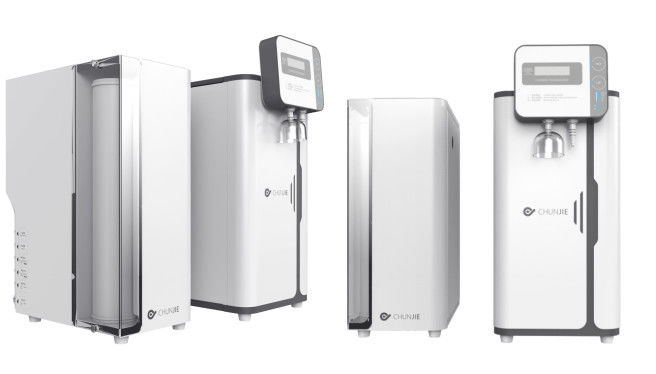 Semiconductor Laboratory Ultrapure Water Commercial Reverse Osmosis
Their Ultrapure series includes fancy features like double-pass RO. It’s like washing your hands twice. But for water. And it works beautifully.
What About the Consumables?
Let’s be real: the system is only half the story. You need the right membranes, filters, and resins. It’s like owning a sports car—you still need good tires.
Dow Filmtec membranes are the gold standard for reverse osmosis. They’re the Toyota Camry of membranes: boring but bulletproof. You can’t go wrong.
For ultrafiltration, Pall and Asahi Kasei make excellent modules. They catch particles down to 0.01 microns. That’s smaller than a virus. Ew, but also awesome.
How to Choose Your System?
First, ask yourself: how much water do you need? A lab might need 100 liters a day. A fab might need millions of liters. Don’t overbuy unless you want to swim in it.
Second, check your feed water. If it’s full of silica or hardness, you’ll need a pre-treatment system. Think of it as a bouncer for your RO system. Only clean water gets in.
Third, think about maintenance. Some systems are plug-and-play. Others require a full-time technician. Be honest about your skills. I once broke a faucet. Don’t be like me.
A Funny Reality Check
Here’s the thing: even with the best RO system, you still need to polish the water. That means using UV light and ion exchange resins. It’s a whole team effort.
And guess what? That water is dangerous to drink. It’s so pure it will leach minerals from your body. Yes, you read that right. Do not drink the ultrapure water. Stick to your coffee.
So, the top systems—Evoqua, Veolia, MECO—they all have fans. But the best one for you is the one that fits your fab’s personality. Are you a big spender? Go Evoqua. Feeling French? Veolia. Need brute strength? MECO.
Final Thoughts (Over Another Sip)
Remember, ultrapure water isn’t magic. It’s science with a lot of pressure and some very fancy filters. But it’s the invisible ingredient that makes your gadgets work.
So next time you binge-watch Netflix on your tablet, thank a reverse osmosis system. And maybe send it a little mental “thank you.” It deserves it.
Now, go drink some regular tap water. It’s perfectly fine. Probably.
