What Is The Difference Between Distilled And Reverse Osmosis Water

Let’s talk water. Not the boring tap stuff. We’re diving into the fancy-pants world of distilled and reverse osmosis water. They sound like science lab experiments. They kind...
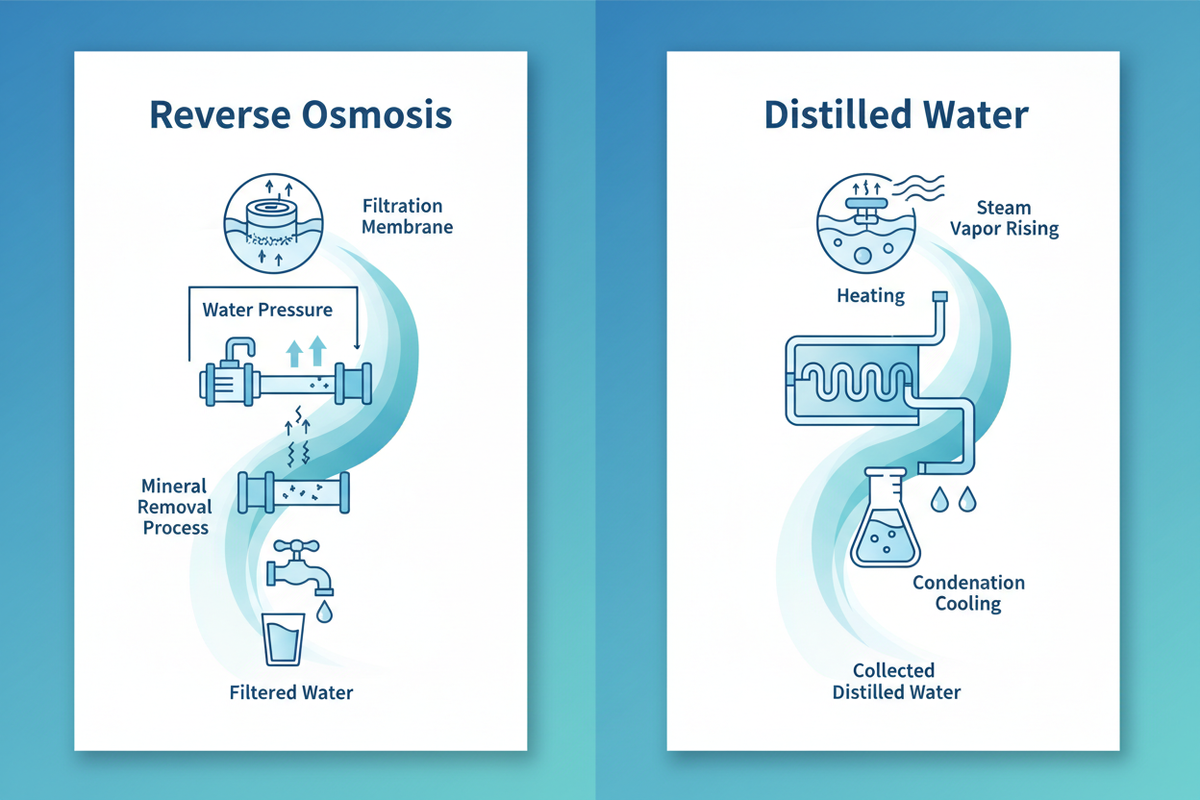
Let’s talk water. Not the boring tap stuff. We’re diving into the fancy-pants world of distilled and reverse osmosis water.
They sound like science lab experiments. They kind of are. But don’t worry—no goggles required.
The Great Purification Showdown
Think of these two as rival chefs in a contest to make the purest glass of water. They both remove the gunk. But they use completely different recipes.
Must Read
One uses steam power. The other uses extreme pressure. It’s water drama at its finest.
Distilled Water: The Boiling Badass
Distilled water is the old-school champion. You heat water until it turns into steam. Then you collect the steam and let it cool back down.
That steam leaves all the nasty stuff behind. Minerals? Gone. Bacteria? Dead. Even your weird kitchen smells? Evaporated away.
Fun fact: Distilled water is so pure it can suck minerals out of metal pipes. That’s right—it’s hungry for your plumbing. Drink it long-term, and it might even leach minerals from your body. That’s some next-level thirst.
But here’s the quirky detail: Distilled water tastes flat. Like nothing. Many people say it tastes like “sad rain.” It’s because all the calcium and magnesium that give water that crisp bite are gone.
Reverse Osmosis Water: The Squeeze Machine
Reverse osmosis is the high-tech, modern marvel. It uses a fancy semipermeable membrane. Imagine a super-fine net that only lets tiny water molecules through.
You apply massive pressure. It pushes water through that net. Everything bigger than a water molecule—salts, lead, pesticides, even viruses—gets stuck on the outside. It’s like a bouncer at a club, but for particles.
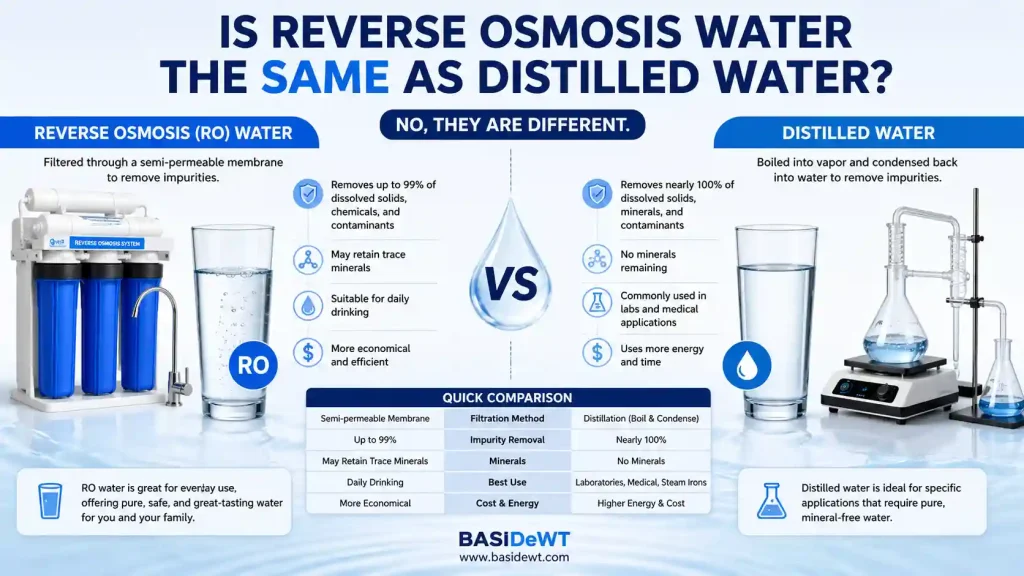 Is Reverse Osmosis Water the Same as Distilled Water? - Basidewt-Best
The result? Water that’s 95-99% pure. But here’s the punchline: It also wastes a ton of water. For every gallon you get, about 2-4 gallons go down the drain. That’s your water bill crying.
Reverse osmosis water still has a tiny bit of mineral flavor. Not much. But it’s slightly more exciting than distilled’s sad rain.
The Big Difference (In Plain English)
Distilled water is like a boil-and-condense party. Reverse osmosis is a push-through-a-filter rave. Both leave your water almost naked of impurities.
But they remove different stuff. Distillation kills microbes and removes heavy metals. Reverse osmosis is better at removing chemicals like chlorine and fluoride.
Which one wins? It depends on your paranoia level. If you’re scared of everything, go distilled. If you want a balance, go reverse osmosis. Neither is perfect.
Quirky Facts to Impress Your Friends
Distilled water is actually used in car batteries. Why? Because the minerals in tap water can ruin the battery’s magic chemistry. Your car drinks the same stuff you could drink. Weird, right?
Reverse osmosis is what astronauts use on the International Space Station. They literally turn their pee into drinking water. Yes—astronaut pee water is purified by reverse osmosis. That’s why it’s also called “sweat and tears” recycling. Classy.
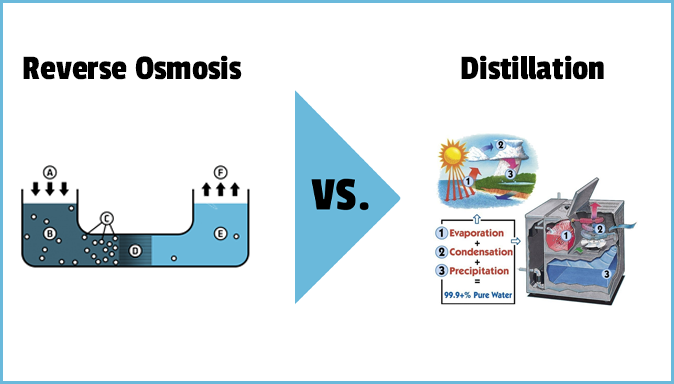 Reverse Osmosis Versus Distillation Archives - My Pure Water
Both distilled and RO water are too aggressive for fish in an aquarium. They suck out all the good minerals. Fish hate it. So if you have a goldfish, don’t serve either. It will give your fish depression.
Should You Drink Them?
Short answer: Yes, but maybe not forever. Your body needs trace minerals like magnesium and potassium. Drinking only hyper-pure water might mess with your electrolyte balance.
Many people add a pinch of sea salt or a mineral drop to their RO water. That’s like giving your water a personality injection. Suddenly, it’s not flat anymore.
Or mix it up. Drink distilled sometimes. Drink RO other times. Drink tap water when you’re brave. Your kidneys will sort it all out. They’re underappreciated heroes.
The Final Sip
Distilled is dramatic. It uses fire and steam. Reverse osmosis is secretive. It uses pressure and membranes. Both are overachievers.
But here’s the fun truth: Most people can’t tell the difference in a blind taste test. They just like the sound of “purified water.” It sounds fancy. It sounds expensive.
It is. But hey, you now know the nerdy details. You can explain it over a glass of either one. Just don’t let your friend’s goldfish overhear.
Stay curious. Stay hydrated. And if your water ever tastes like nothing, just add a little lemon. That’s how you beat the system.
