What Is The Difference Between Distilled Water And Deionised Water

Ever stood in the grocery aisle, staring at a bottle of distilled water and another labeled deionised, feeling a bit like you’ve stumbled into a secret chemistry club? You’re...
Ever stood in the grocery aisle, staring at a bottle of distilled water and another labeled deionised, feeling a bit like you’ve stumbled into a secret chemistry club? You’re not alone. These two types of water sound incredibly similar, but they’re actually born from totally different processes. Let’s break it down in the chillest way possible, shall we?
First, What Do They Even Have in Common?
Both distilled and deionised water are purified—meaning they’ve been stripped of the minerals, salts, and ions that make tap water taste like… well, tap water. Think of tap water as a busy city, full of characters like calcium, magnesium, and chlorine. Distilled and deionised water are the quiet, empty countryside. But how they get that quiet is where the magic—and the differences—happen.
Distilled Water: The Old School Steam Sauna
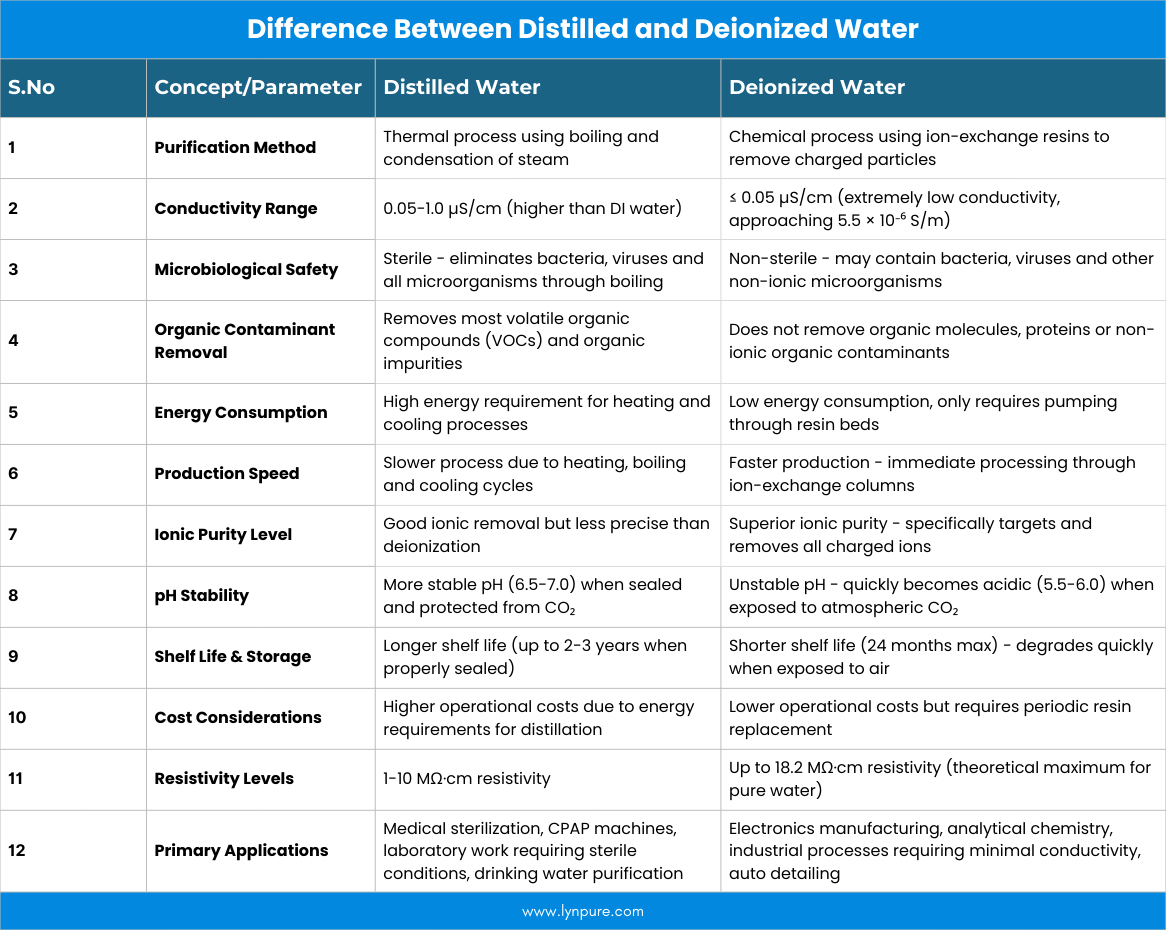
Distillation is like giving water a spa day. You boil the water until it turns into steam, then you collect that steam and let it condense back into liquid. The impurities—minerals, bacteria, even heavy metals—are left behind in the boiling pot. It’s basically nature’s shortcut: you’re copying the rain cycle, but in a pot on your stove. Cool, right?
Must Read
The result is water that’s extremely pure, but it’s a bit lazy. Because it’s been boiled, it’s also flat and tasteless, like a conversation with no energy. Have you ever had a sip? It feels like drinking nothing—which is exactly the point for things like steam irons or car batteries.
Deionised Water: The Ion Magnet Trick
Now, deionised water is the brainy cousin. Instead of boiling, it uses special resins that act like magnets to yank out all the charged particles (ions) in the water. Think of it as a bouncer at a club who only lets neutral molecules in—positive and negative ions are kicked out. This is a faster process and doesn’t remove uncharged things like bacteria or viruses, unless you filter them first.
Deionised water is a bit more aggressive than distilled. Because it’s so hungry for ions, it can actually pull metals out of your pipes if you leave it sitting too long. It’s like the teenager who’s always hungry—it will snack on your plumbing if you’re not careful.
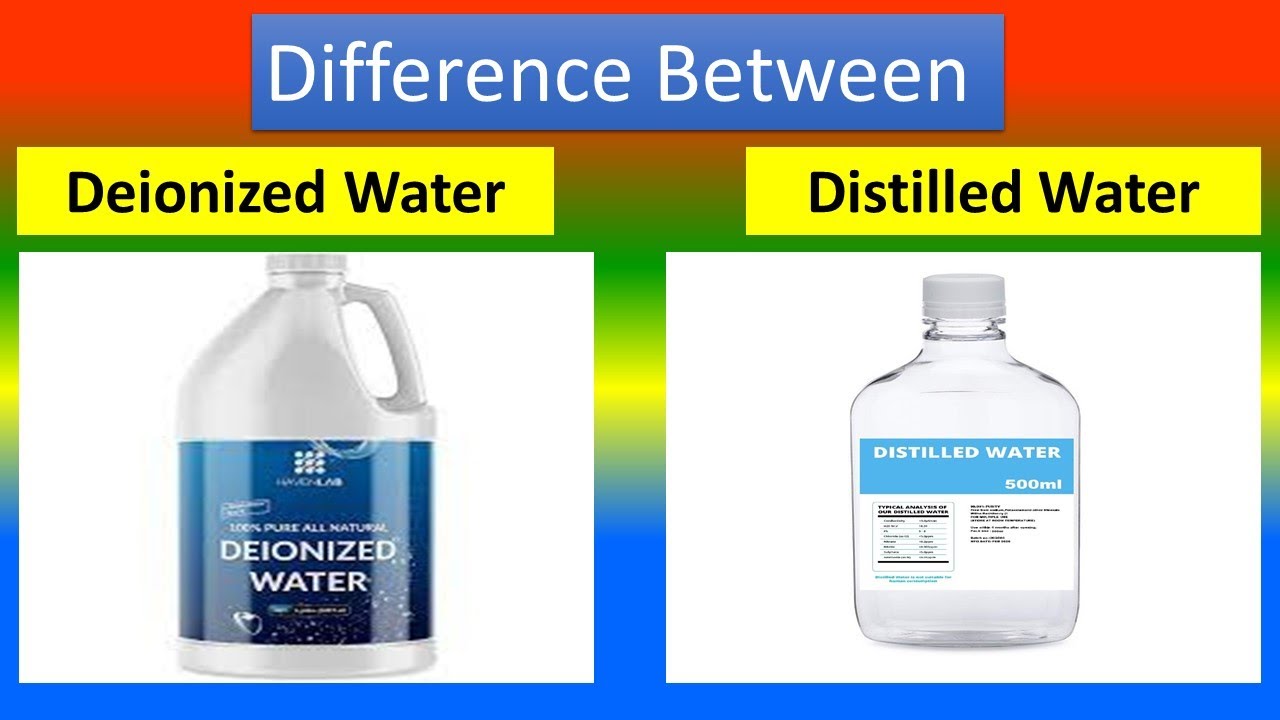 Distilled Water Vs. Deionized Water: What’S The Difference? – JFFA
So, Which One Is “Better”?
That’s like asking if a skateboard is better than a bicycle—it depends on where you’re going. Distilled water is your go-to for medical uses, baby formulas, and CPAP machines, because it’s sterile from the boiling. Deionised water is the superstar in laboratories and industrial settings, where scientists need to measure tiny amounts of chemicals without background noise. Can you imagine a lab experiment messing up because of a stray calcium ion? No thanks.
The Fun Comparison: A Bubble Bath vs. A Robot Vacuum
If we had to get silly, distillation is like taking a long, relaxing bubble bath. You’re boiling away stress (and impurities), and the result is pure, soft, and a bit sleepy. Deionisation is more like a robot vacuum: fast, efficient, and it uses magnets (or in this case, resins) to suck up the mess. One is cozy, the other is techy. Both get the job done, but they vibe differently.
Here’s a twist: distilled water is not always deionised, and deionised water is not always distilled. You can have super pure water that’s been both (distilled then deionised), but that’s like wearing a belt and suspenders—overkill for most of us. For your morning coffee, tap water is just fine, thank you very much.
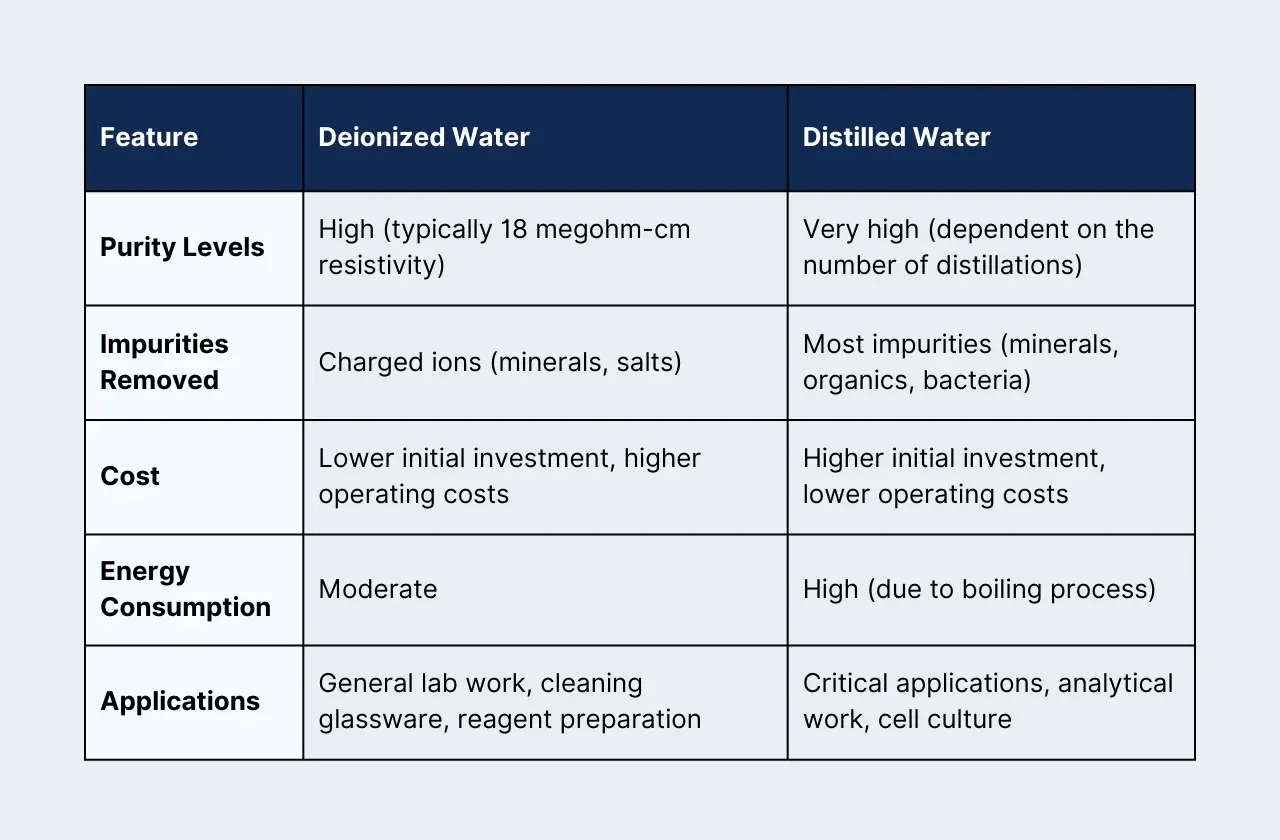 Is Deionized Water The Same As Distilled Water?
Should You Drink Them?
Technically, yes, both are safe to drink. But honestly? They taste boring. Our bodies actually need those minerals in tap water to stay chill and healthy. Drinking only distilled or deionised water over a long time can even leach minerals from your body. So while it’s cool for science experiments and your iron, stick to the fancy spring water for your hydration game. Unless you’re into drinking the equivalent of a blank stare.
The Takeaway: It’s All About Context
Next time you see those blue bottles, you’ll know the real story. Distilled water is the old-school steam treatment—slow, gentle, and sterile. Deionised water is the modern ion-wrangler—fast, precise, and a little bit greedy. Neither is “better,” just different tools for different jobs. And hey, isn’t it neat that we can make water so pure it has a personality? Who knew H2O could be this interesting?
Now go forth and impress your friends with your water wisdom at the next party. Or don’t—you might get stuck in a conversation about ions. Totally your call.
