What Is Difference Between Purified Water And Distilled Water

So, you’re standing in the water aisle at the grocery store, staring at a wall of plastic bottles like you’re trying to solve a cryptic crossword. Purified? Distilled? Spring?...
So, you’re standing in the water aisle at the grocery store, staring at a wall of plastic bottles like you’re trying to solve a cryptic crossword. Purified? Distilled? Spring? Alkaline? It’s enough to make you want to just drink from the garden hose and call it a day. But don’t worry—I’m here to explain the difference without putting you to sleep. Grab a glass of tap water (we’ll judge it later) and let’s dive in.
The short version: purified is the overachieving cousin, distilled is the drama queen.
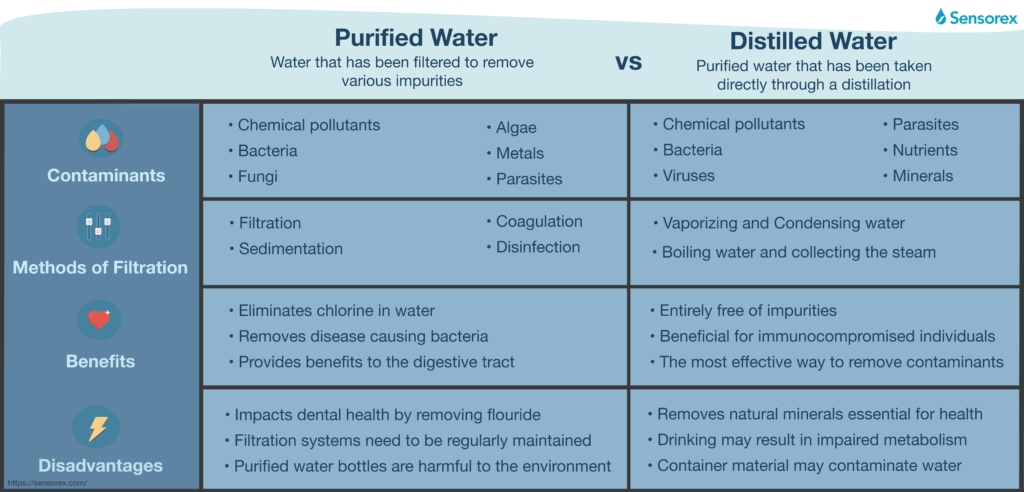
Both purified and distilled waters start their lives as regular old tap or groundwater. But they get kicked through different processing hoops to become “better.” Think of it like this: purified water is sent to a fancy spa where it gets filtered, zapped, and scrubbed clean. Distilled water? It’s sent to a rocket ship boil-off chamber where it literally evaporates into steam, then condenses back into liquid. It’s the water equivalent of a rebirthing ceremony.
Here’s the big difference: purified water undergoes multiple processes—reverse osmosis, carbon filtration, UV light, and sometimes ion exchange—to remove about 99.9% of contaminants. Distilled water uses only one method: boiling the water into steam and collecting the vapor. The steam leaves behind all the heavy metals, minerals, and bacteria, like a bad breakup. But it also strips away everything—including the good stuff like calcium and magnesium.
Must Read
Fun fact: Distilled water is so pure it’s basically aggressively neutral.
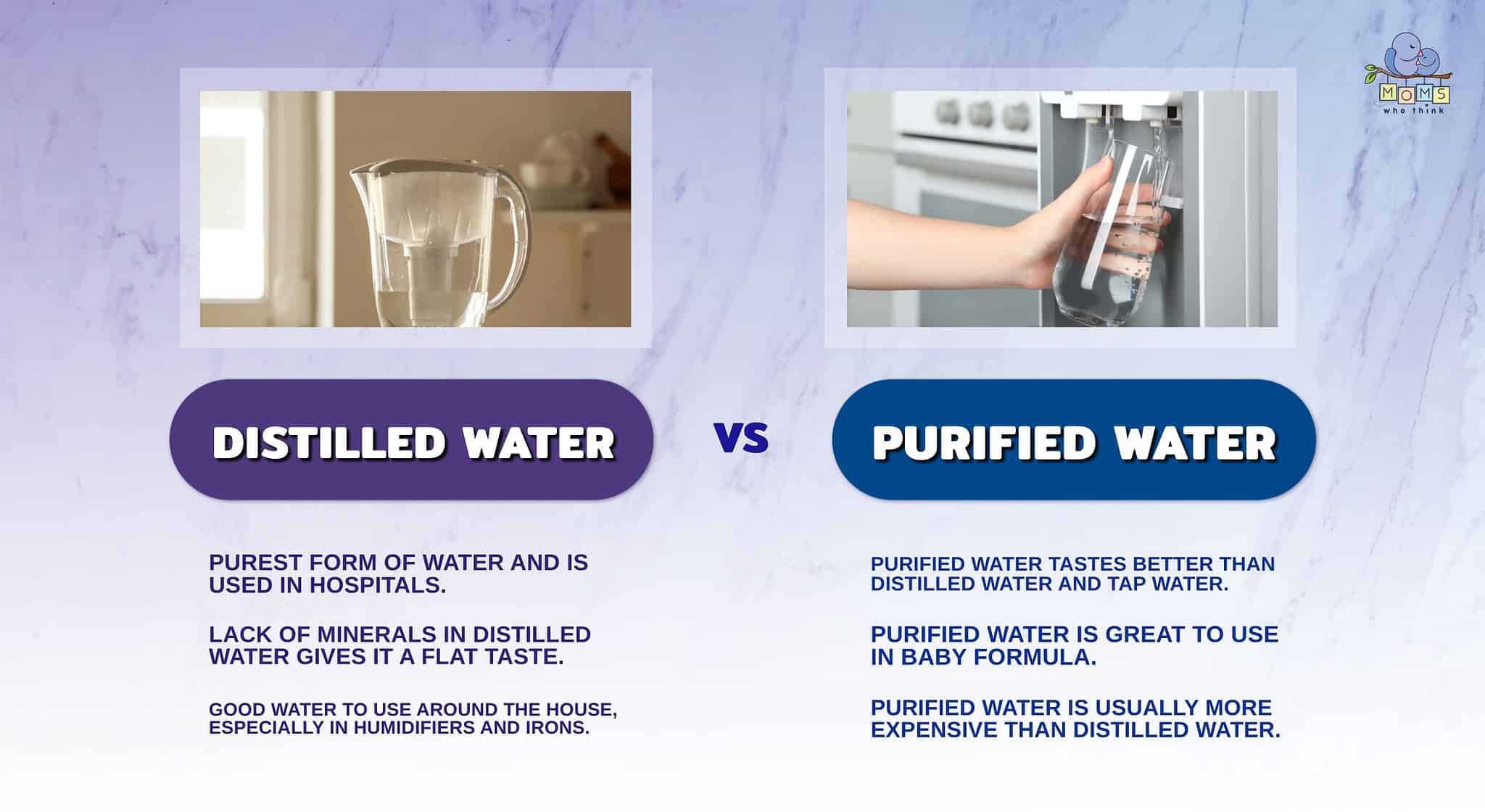
If purified water is a polite person who removed the dirt from their shoes, distilled water is that friend who shows up to a party and refuses to touch anything because “it might have impurities.” Distilled water is 99.9% pure H₂O, which sounds great until you realize it has the personality of a wet paper towel. It tastes flat because there are no minerals to give it any zip. Seriously, drinking distilled water is like eating unflavored gelatin—technically edible, but why?
But here’s the twist purified water, on the other hand, often retains a small amount of trace minerals because the processes are more targeted. That’s why it tastes like, well, water instead of a chemistry experiment. Most bottled “drinking water” you buy is actually purified, not distilled. Check the label—if it says “purified by reverse osmosis,” you’re basically drinking water that went through a microscopic colander.
 Distilled vs. Purified Water: 4 Differences & Health Benefits
Let’s talk about what they’re actually used for, because nobody is sipping distilled water for fun.
Distilled water is the star of the appliance world. You use it in steam irons, CPAP machines, car batteries, and lab experiments because it won’t leave mineral deposits. It’s also what astronauts drink on the International Space Station—yes, they recycle their own urine via distillation. (Fun fact: the water you drink from a filtered bottle is probably cleaner than the water the astronauts are recycling, but don’t tell them that.) Purified water, meanwhile, is for everyday drinking, making coffee, and not accidentally ruining your expensive espresso machine with mineral buildup.
But here’s a surprising fact: distillation doesn’t remove all contaminants. Some pesticides and volatile organic compounds (VOCs) have boiling points close to water, meaning they can sneak into the steam and re-contaminate the final product. Think of it like trying to kick a bad habit—sometimes the same stuff you wanted to leave behind follows you into the vapor. Purified water, because it uses multiple methods (like carbon filtering for VOCs), catches those slippery bastards.
The health debate: do you actually need to worry about this?
Unless you’re a scientist or a car battery, probably not. Tap water in most developed countries is already heavily regulated and safe. The difference between purified and distilled is mostly about taste and application. If you drink only distilled water for a month, you might actually leach minerals from your body—exactly like how a dry sponge sucks up water. It’s not dangerous in small amounts, but you’ll miss the calcium that makes your coffee taste less like a tombstone.
 Distilled vs. Purified Water: What’s the Difference? – Waterdrop Europe
Purified water is your everyday champion. Distilled water is the specialist you call when you need to clean a wound or fill a humidifier. If you see distilled water on sale for drinking, just remember: it’s the water equivalent of a bald tire—useful, but not for cruising down the highway of life.
The ultimate verdict (and a joke to seal the deal)
So, what’s the takeaway? Purified water is like a good Tinder bio—filtered, slightly enhanced, and pleasant to interact with. Distilled water is like a monk who has renounced all worldly pleasures—pure, but also a total buzzkill. If you want to impress your friends at a party, casually mention that “distilled water is actually less conductive to electricity because it lacks ions.” They’ll nod thoughtfully while you silently realize you’ve become that person. But hey, knowledge is power—and now you know exactly what to grab the next time you’re staring at that wall of water.
Just don’t drink distilled water to “detox.” Your liver does that job already, and it’s free. Cheers.
