What Is The Difference Between Distilled Water And Pure Water

Picture this: I’m at a friend’s house, helping her water her prized orchid collection. She reaches for a jug labeled “distilled water,” and I grab a bottle marked “pure spring...
Picture this: I’m at a friend’s house, helping her water her prized orchid collection. She reaches for a jug labeled “distilled water,” and I grab a bottle marked “pure spring water.” She shoots me a look that could curdle milk. “Are you trying to kill my plants?” she hisses. I froze, suddenly wondering if I’d committed botanical treason.
That moment made me realize something: the terms “distilled water” and “pure water” get thrown around like confetti, but nobody really knows what they mean. Spoiler alert: they’re not the same thing, and confusing them can lead to some hilariously bad decisions (like, say, ruining a fancy orchid). Let’s break it down, shall we?
What Even Is “Pure Water”?
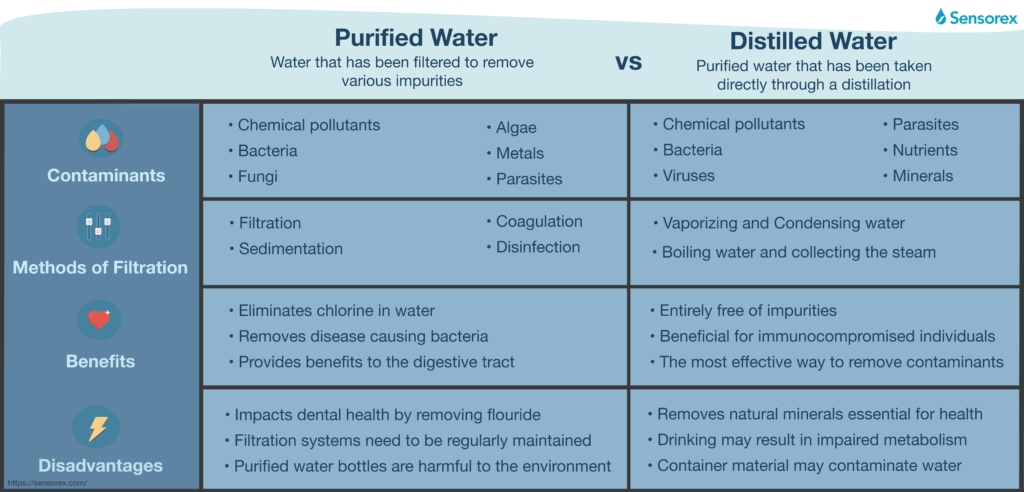
Here’s where things get sneaky. “Pure water” sounds official, right? But in the real world, it’s a marketing term tossed around by bottle companies to make you feel virtuous. Technically, pure water is H₂O with nothing else—no minerals, no salts, no bacteria. But you’d never find that in nature.
Must Read
Good luck getting “ultra-pure” water without a lab. The stuff you buy as “pure” is usually just filtered tap water that still has a few dissolved minerals. Irony alert: that “pure” bottle you’re sipping? It likely has calcium and magnesium in it. Not exactly “pure” in the chemistry sense, but hey, it tastes better.
Distilled Water: The Drama Queen of Water
Distilled water, on the other hand, goes through a dramatic process—literally. You boil water until it turns to steam, then cool that steam back into liquid. This strips away almost everything: minerals, bacteria, even some pollutants. It’s the water equivalent of a celebrity going into rehab: intense, expensive, and leaving nothing behind.
The result? Water that’s 99.9% pure H₂O. No calcium, no fluoride, no nothing. That’s why hospitals use it for sterilizing equipment, and why car batteries love it—minerals would cause corrosion. But here’s the kicker: distilled water tastes flat and boring. You know that weird, lifeless hollowness? That’s purity in action.
 Is There A Difference Between Purified Water And Distilled Water at
So, What’s the Real Difference? (Grab Your Lab Coat)
The core difference is mineral content. Pure water (as sold in stores) still has trace minerals. Distilled water has been stripped of them. Think of it this way: pure water is like a clean apartment that still has a welcome mat; distilled water is a sterile clean room with no dust, no furniture, no soul.
Here’s a side comment just for you: if you drink distilled water long-term, you might actually miss out on essential minerals. Your body isn’t a fan of total deprivation. That’s why survival guides warn against relying on it exclusively—it’s like eating only plain rice forever. Fine for a day, miserable for a lifetime.
The “Which One Should I Use?” Cheat Sheet
Let’s make this practical. Use distilled water for: ironing (no mineral stains), CPAP machines (keeps them clean), aquariums (for sensitive fish like discus), and any chemistry experiment where you need a blank slate. For plants? Most plants dislike distilled water because they want those trace minerals—your orchid friend was right to be angry.
Stick with pure bottled water for drinking, cooking, and watering your houseplants. Unless you’re a lab scientist or have a vintage car, you really don’t need distilled water. And please, don’t be that person who forces astronauts-level purity on a cactus. It won’t thank you.
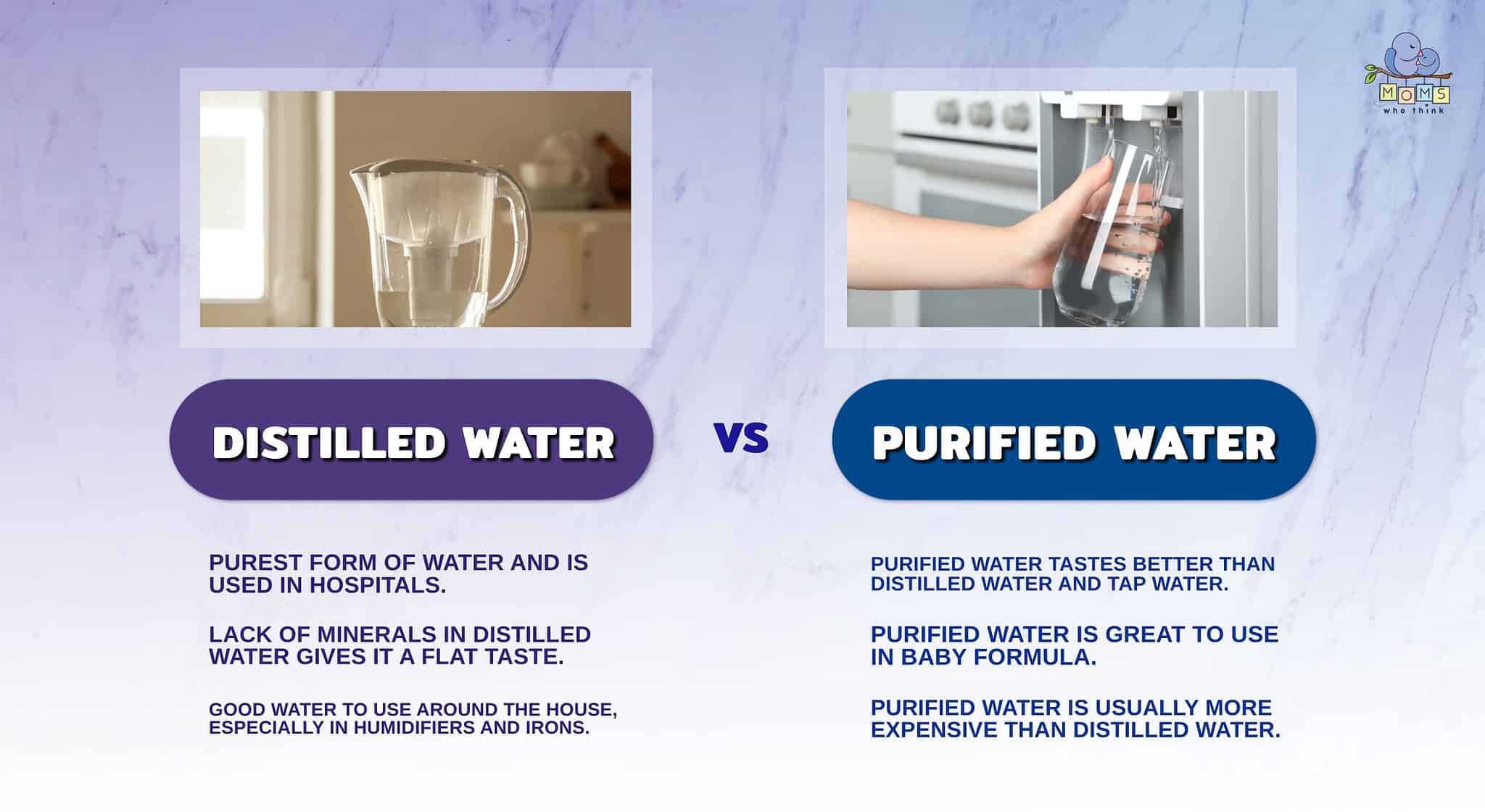 Distilled vs. Purified Water: 4 Differences & Health Benefits
The Sneaky Role of “Purified Water”
Oh, and let’s not forget the third musketeer: purified water. This is a catch-all term for water that’s been treated (filtered, ozonated, or distilled). In fact, distilled water is a type of purified water. See? Even the industry can’t keep its labels straight. It’s like calling a square a “rectangle with extra attitude.”
So next time you’re in the grocery aisle, don’t be tricked by fancy labeling. “Pure” doesn’t mean “mineral-free,” and “distilled” doesn’t mean “drinkable for daily hydration.” Read the fine print. Then do what I do: buy the cheapest filtered water and save the distilled stuff for your car battery.
A Final, Slightly Ironic Note
Here’s the universe’s joke: absolutely pure water (the kind in labs) is so aggressive it can leach minerals from your teeth. Yes, pure water wants to steal your enamel. That’s why dentists recommend it only for occasional use. So, remember: sometimes “pure” is too much of a good thing. And “distilled” is just water that’s been on a very intense juice cleanse.
Now, go drink something that won’t hurt your orchid—or your dignity. Cheers.
