Does Ultraviolet Treatment Remove Turbidity From Water

You know that moment when you pour yourself a glass of tap water, and it looks like a tiny, murky river after a storm? It’s not quite swamp juice, but it’s definitely not the...

You know that moment when you pour yourself a glass of tap water, and it looks like a tiny, murky river after a storm? It’s not quite swamp juice, but it’s definitely not the crystal-clear stuff you were hoping for. That cloudy appearance, my friend, is turbidity, and it’s basically the water’s way of saying, “Hey, I’ve got some invisible house guests.” We’re talking tiny particles—think microscopic dirt, silt, or even bits of decaying leaves—just floating around, having a pool party in your drinking glass.
Now, enter the hero of our story: ultraviolet (UV) treatment. It sounds high-tech, like something a sci-fi character would use to zap alien microbes. And honestly? It kind of does. UV treatment uses a special light to nuke bacteria, viruses, and other nasty microorganisms, leaving them so scrambled they can’t reproduce or make you sick. It’s like giving every waterborne germ a one-way ticket to the “I’m done” zone, no chemicals needed, no weird aftertaste. But here’s the kicker: does this light show actually clear up that cloudy water? Or is it just a fancy flashlight in a glass of mud?
The short, disappointing, and slightly funny answer is: nope, not one bit. Picture this: you’ve got a glass of cloudy water, and you shine a bright UV lamp into it. What happens? The light goes in, but the cloudiness—those tiny particles—scatter it like confetti at a parade. The water stays murky, and the UV light can’t reach the hidden germs behind the dirt. It’s like trying to sunbathe in a foggy forest; the sun is there, but the trees and mist block the rays. UV treatment is a champion at killing microbes, but it’s blind as a bat when it comes to physical particles that cause turbidity.
Must Read
Think of it this way: UV treatment is the bodyguard for your water’s health, not the maid service for its looks. If your water is a little cloudy, the UV light might still kill the bugs that are on the surface of those particles, but the ones hiding deep inside? They get a free pass. You can’t expect a space laser to also vacuum the floor. This is why water treatment pros always say: get the clarity right first, then zap the bad guys. Otherwise, you’re just polishing a turd—or, in this case, a murky glass of grit.
So, what actually removes turbidity?
You need the old-school crew: filtration and settling. This is where your water gets a reality check. First, you let the water sit still in a tank, and the heavy particles—like lazy couch potatoes—drift to the bottom. This is called sedimentation. Then, you run the water through a filter—think of it as a fine-mesh net that catches the stuff you don’t want. Sand filters, cartridge filters, or even a simple cloth can grab those tiny specks that make water look like weak tea. Only after this step does the water become clear enough for UV to do its magic.
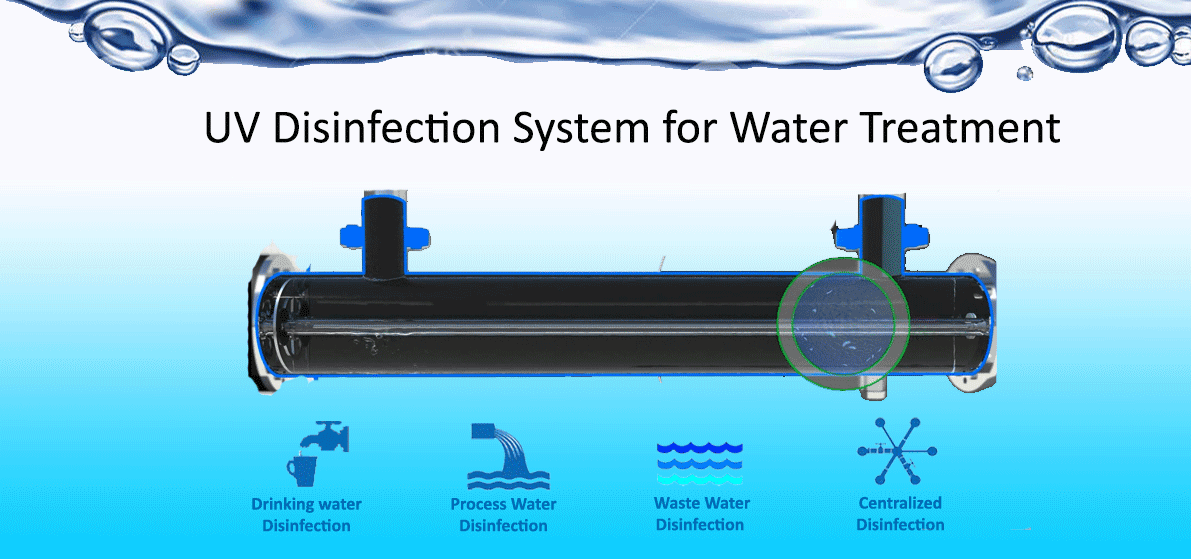 What Is Uv Treatment Of Water at Madison Calder blog
I remember visiting a friend’s cabin by a lake. Their water was straight from the lake, and it looked like someone had stirred in a handful of dirt. My friend bragged about their new UV system. “Just shine the light, and we’re good!” he said. I watched him pour a glass—it was still brown as root beer. He shrugged, drank it, and said, “Tastes fine.” But I couldn’t help wonder: what was hiding in that murk that the light missed? It’s like putting a clean shirt over a muddy body—you’re not actually clean.
The real-world lesson
For most of us at home, UV treatment is great for city water that’s already clear but might have a hidden bacteria issue—like after a pipe repair. But if your water comes out looking like it’s been mud-wrestling, don’t rely on UV alone. You’ll need a pre-filter. A good rule of thumb: if you can see your hand through a glass of water, UV can help. If it’s cloudy, your hand looks like a ghost, and the water resembles weak coffee, then you need a filter first. It’s like trying to read a book in a smoky room—you need to clear the air before you can read the words.
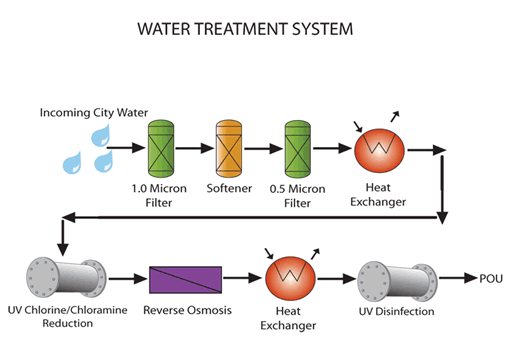 Titan Advantec Malaysia: Products - Ultraviolet (UV), TOC Sterilizer
In the end, UV treatment is a brilliant tool, but it’s not a miracle worker for appearance. It’s the silent guardian of your water’s safety, not the glitter fairy who makes everything sparkle. So next time you see cloudy water, don’t just wave a UV wand at it. Give it a good filtering, let it settle, and then let the UV light do its head-shot on any remaining germs. Your water will be both clear and clean—and you’ll feel like a water-treatment wizard who actually knows what they’re doing.
And hey, if all else fails, just buy a bottle of spring water and call it a day. Sometimes the easiest solution is the one that makes you smile—and doesn’t involve pretending your tap water is a bubbling mountain stream.
