What Is Difference Between Seltzer Water And Club Soda

The Fizz Factor: What’s Actually in Your Glass? You’re at a bar, ordering a vodka soda. The bartender asks, “Seltzer or club soda?” You freeze. It’s the same thing, right? Wro...
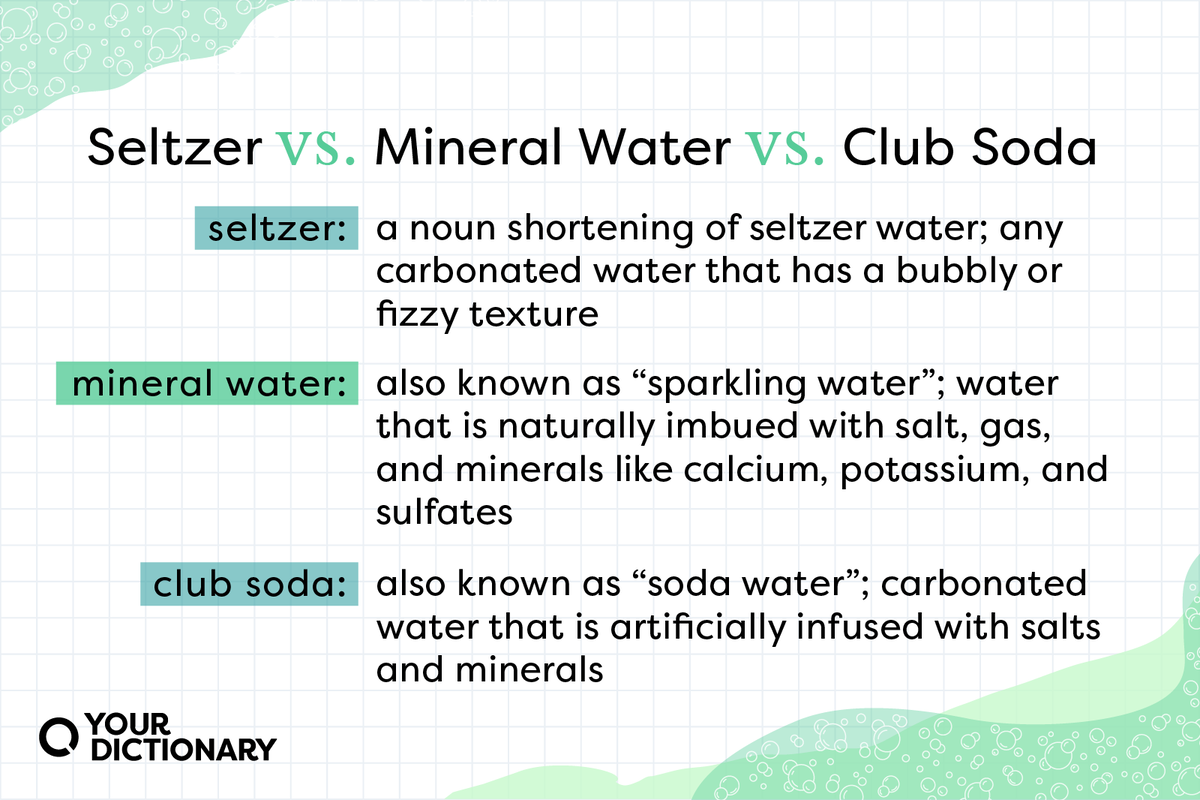
The Fizz Factor: What’s Actually in Your Glass?
You’re at a bar, ordering a vodka soda. The bartender asks, “Seltzer or club soda?” You freeze. It’s the same thing, right? Wrong. This is the quiet class divide of the beverage world, and getting it right changes your drink—and your vibe.
Let’s clear the air. Both are carbonated water, but their origin stories are totally different. Seltzer is just water with injected carbon dioxide (CO2). That’s it. Club soda starts with the same base, then gets a boost of minerals like potassium bicarbonate, sodium citrate, or table salt.
So why does this matter? Because those tiny minerals give club soda a smoother, rounder mouthfeel. Seltzer hits your tongue with sharp, clean bubbles. Club soda feels a little more like… sophisticated tap water.
Must Read
The Taste Test: Sharp vs. Silky
If you’re a seltzer purist, you love that crisp, biting acidity. It’s why topo chico fans are so passionate—it’s extra fizzy, almost aggressive. Club soda fans argue that the mineral finish makes drinks taste more “complete.”
Try this at home: pour a glass of each, side by side. Seltzer will taste like nothing but carbonation. Club soda will have a faint, salty-mineral note—like a whisper of sea breeze.
For a cocktail, use club soda. The salts actually help blend flavors, especially in a gin and tonic or a highball. Seltzer is best when you want a neutral bubble—like in a whiskey soda, where the booze should shine alone.
A Fun Cultural Side Note
Ever noticed that seltzer is everywhere in New York delis, while club soda lives in fancy hotel minibars? That’s not an accident. Seltzer’s name comes from the German town Niederselters, which originally tapped natural mineral springs. Club soda was a 19th-century marketing invention, bottled for gentlemen’s clubs.
Today, the line is blurring. LaCroix and its fruity cousins are technically seltzer, but they’re sold as “sparkling water.” Meanwhile, generic grocery store brands often mix both terms. It’s a glorious, fizzy chaos.
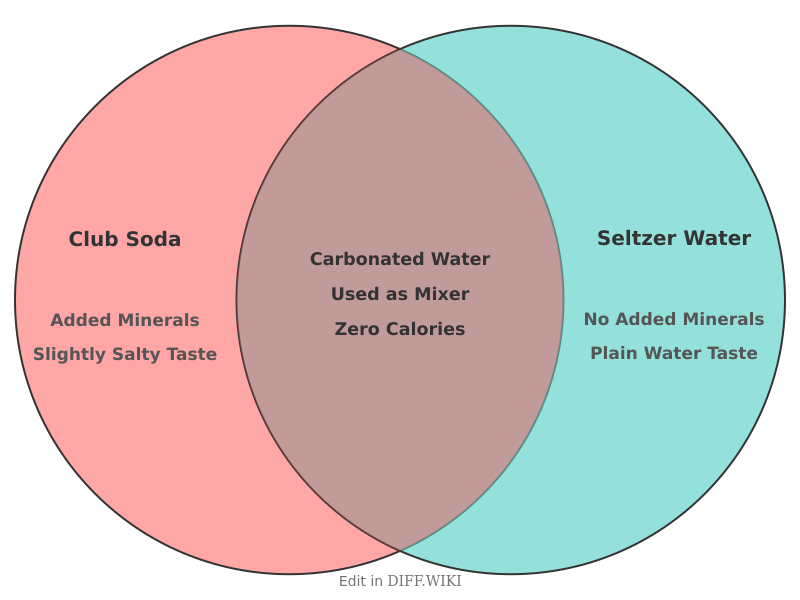 Differences between Club Soda and Seltzer Water - diff.wiki
Bubbles, Bubbles Everywhere: Tonic, Soda, and Sparkling
Before you get overwhelmed, let’s name the whole family. Tonic water is sweetened with sugar and has bitter quinine—it’s a completely different beast. Sparkling mineral water (like Perrier or San Pellegrino) is naturally carbonated from a spring, with its own unique mineral profile.
Club soda and seltzer are the plain-Jane cousins. But here’s the practical tip: if a recipe calls for “soda water,” use club soda. Most bartenders do. If you’re hydrating, seltzer is better because it’s lower in sodium.
Check the label: a can of club soda can have 50-100 mg of sodium. Seltzer usually has zero. For those watching salt intake, seltzer wins. For a cocktail that needs “depth,” club soda wins.
Real-Life Hacks: How to Use Each Like a Pro
Make your own soda stream at home? Use cold tap water—chilled water absorbs CO2 better than room temp. Fill the bottle, chill it, then carbonate. The result is pure seltzer. If you want club soda, add a tiny pinch of baking soda and salt after carbonating.
For a mocktail that impresses, try this: club soda + muddled mint + lime + a splash of elderflower syrup. The minerals in the club soda make the syrup feel richer. Using seltzer here would taste “hollow.”
Hangover prevention? Club soda. The sodium and potassium help replenish electrolytes better than plain water. That’s why old-school bars always serve club soda as a mixer—it’s literally rehydrating you while you drink.
 Club Soda Vs. Seltzer Water: What’S The Difference? – BGHUDW
Cultural Quirks You Didn’t Know
In Japan, “soda” often means lemon-lime fizzy drink, not plain soda water. In the UK, “soda water” is almost always club soda. Meanwhile, in Mexico, agua mineral is usually naturally carbonated like a stronger Topo Chico.
The most expensive seltzer in the world? That would be Bling H2O, which costs around $30 a bottle. It’s still just carbonated water, but it comes in a glittery glass bottle. Rich people, man.
And here’s a trivia bomb: during Prohibition, club soda was marketed as “nonalcoholic champagne.” People drank it in speakeasies to look like they were sipping hooch. The bubbles were a decoy for law enforcement.
The Final Sip: What This Means for Your Daily Life
At the end of the day, the difference between seltzer and club soda is a pinch of salt. But that pinch changes your experience—from a sharp, honest sparkle to a comfortable, rounded hug in a glass.
Think about it: choosing between them is like choosing between a crisp white t-shirt (seltzer) and a soft cashmere sweater (club soda). Both are basics. Both serve a purpose. One just feels a little more deliberate.
So next time you reach for a fizzy water, pause. Are you in the mood for pure, unapologetic fizz? Or do you want something that whispers “I have my life together”? Pick accordingly. And enjoy the bubbles—they’re proof that even the simplest choices can be wonderfully, deliciously nuanced.
