How To Determine What Size Water Softener You Need

Let’s talk about water softeners. Yes, really. They're not just for fancy basements or grandma’s house. If you’ve got crusty faucets or dry skin, it’s time to get serious. But...
Let’s talk about water softeners. Yes, really. They're not just for fancy basements or grandma’s house.
If you’ve got crusty faucets or dry skin, it’s time to get serious. But here’s the kicker: buying the wrong size is a total disaster.
Too small, and your softener works overtime. It’s like a hamster on a wheel—exhausted and useless. Too big, and you’re flushing money down the drain.
Must Read
So, let’s crack the code. Fun fact: water softeners aren’t one-size-fits-all. They’re more like a tailored suit for your pipes.
Step 1: Know Your Water’s “Hardness” (It’s Not a Personality Trait)
First, test your water hardness. It’s measured in grains per gallon (GPG). Don’t guess—get a test kit or call your city.
Hard water can hit 10 GPG or higher. That’s like washing with rocks. A friend of mine had water so hard it left soap scum that looked like modern art.
If you live in a place like Arizona or the Midwest, brace yourself. The water there is basically liquid limestone.
Step 2: Count the People (and Their Weird Habits)
How many humans shower in your house? Every body adds to the demand. A family of four uses way more water than a solo artist.
Here’s the quirky math: each person uses about 80 gallons per day. That includes showers, dishes, and flushing. Don’t forget the pets—dogs count too (they drink, they get baths).
But wait—do you have a teenager? Teenagers are water black holes. A single teen shower can last 45 minutes. Factor that in or your softener will cry.
Step 3: Multiply Like a 5th Grader
Now, do some simple math. Take your hardness (GPG) and multiply it by your daily water use (gallons). That gives you your daily “grains to remove.”
Example: 10 GPG x 320 gallons (family of four) = 3,200 grains per day. Easy, right? But don’t stop there—you need a buffer for crazy weeks (like holidays or a “laundry day” marathon).
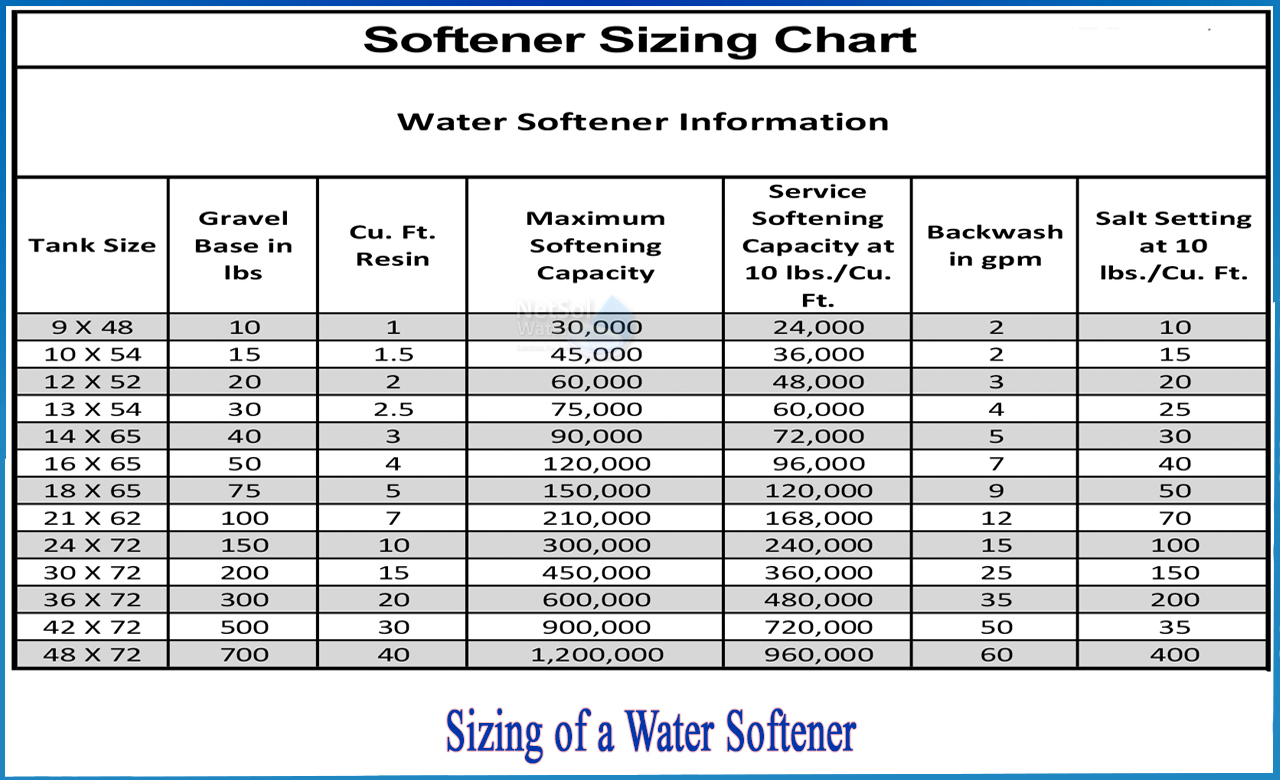 Water Softener Tank Sizes The Best Small Water Softener Guide {Updated
Add 20% to that number. Because life happens—unexpected guests, a fill-the-pool Saturday, or a toddler who discovers the hose.
Step 4: Choose the Right Capacity (The Fun Part)
Water softeners are rated by “grain capacity.” That’s how many grains they can remove before regenerating (cleaning themselves). A common size is 32,000 grains.
But here’s a sneaky truth: bigger isn’t better. A massive unit will regenerate less often, which sounds great—until you realize it wastes salt and water.
You want a sweet spot. For a family of four with hard water (10 GPG), a 32,000-grain unit works. For two people, a 24,000-grain model might be perfect.
Step 5: Don’t Forget “Flow Rate” (It’s Not a Dance Move)
Your house has a flow rate—how fast water moves through pipes. If you have a big soaking tub or a sprinkler system, you need a softener that can keep up.
Check your water meter or time how long it takes to fill a 5-gallon bucket. A softener with a low flow rate will choke if you try to shower while washing dishes. Chaos.
Quirky fact: some softeners are so slow they’ll make your washing machine hiss in protest. Don’t be that person.
Step 6: Measure for Physical Fit (Tape Measure Time)
You wouldn’t buy a fridge without checking the doorway, right? Same with softeners. They’re bulky beasts—often the size of a small trash can.
Measure your space: height, width, depth. And consider where the brine tank goes (it holds salt). Don’t forget door clearance. One guy bought a unit that didn’t fit in his basement stairwell. He named it “The Monument.”
Pro tip: leave a few inches for airflow. Softeners need to breathe, just like you after a big meal.
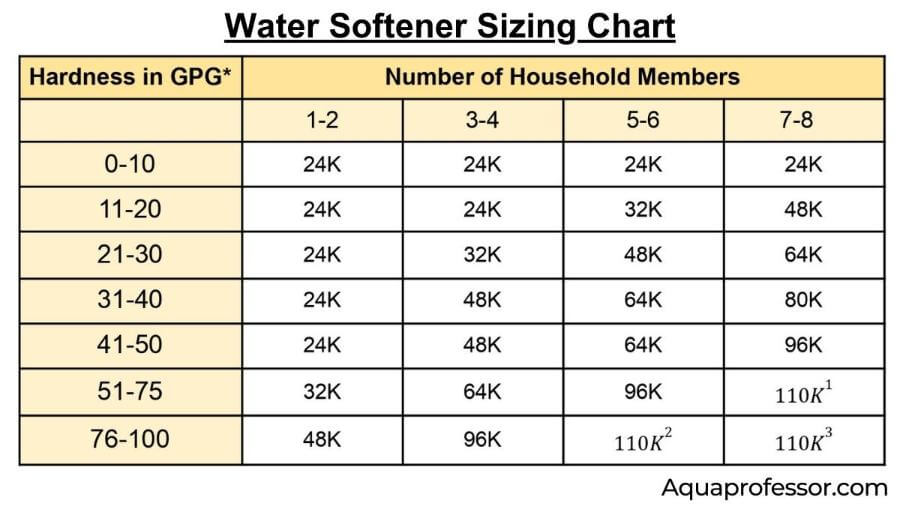 Water Softener Grain Size Calculator at Jaclyn Glenn blog
Step 7: The “One More Thing” Factor
Do you have a well? Well water often has iron. Iron acts like hardness, but worse—it stains sinks orange and smells like a gym sock.
Add 5 GPG to your hardness number for every 1 mg/L of iron. Seriously. Iron is the diva of the water world. It demands extra attention.
Also, if you have a water filter, softeners play nice with them. But check the manual—mixing systems is like introducing cats to dogs.
Why This is Actually Fun (We Promise)
Water softeners are a puzzle. You’re a detective solving the case of the cloudy glasses. That’s empowering.
Plus, you’ll save money. A right-sized softener reduces soap use by 50% and extends appliance life. Your dishwasher will thank you with silent, sparkly respect.
And let’s be real: nothing beats the feeling of a silky shower. It’s like washing in bottled happiness. Your skin will glow like a vampire in moonlight.
Final Cheat Sheet (No Judgement)
Here’s a quick rule of thumb: 1-2 people with average hardness = 24,000 grains. 3-4 people = 32,000 to 40,000 grains. 5+ people or very hard water = 48,000 or more.
But always calculate your own numbers. Don’t trust a stranger’s “guesstimate.” (Especially from a guy named “Tank” at the hardware store.)
So grab a test kit. Do the math. Measure your basement. You’re now a water softener sizing ninja. Go forth and soften with confidence—your skin, your pipes, and your wallet will thank you.
P.S. If you mess up, don’t panic. You can always regenerate more often. But start smart, not sorry.
