How Much Is A Whole House Reverse Osmosis System

So, you’ve decided to stop drinking water that tastes like your neighbor’s swimming pool. Or maybe you’re tired of your ice cubes looking like tiny, foggy ghosts. You’ve heard...

So, you’ve decided to stop drinking water that tastes like your neighbor’s swimming pool. Or maybe you’re tired of your ice cubes looking like tiny, foggy ghosts. You’ve heard about whole house reverse osmosis systems, and now you’re wondering: how much is this magic water machine going to cost me? Buckle up, because the answer is less like a casual latte and more like a used sedan with a funky smell.
The Short Answer: It’s Not Cheap (But Your Kidneys Will Thank You)
A whole house reverse osmosis system will typically set you back between $2,500 and $9,000 for the equipment alone. Yes, you read that right. That’s more than a top-of-the-line espresso machine, but it won’t make you hyperactive—it just makes your water aggressively pure.
But wait! That price is just the naked system. You’ll also need installation, which can add another $500 to $2,000, depending on how much your plumber hates you and your basement’s pipe configuration. If your plumber has to crawl through spider webs, expect to pay more.
Must Read
Why So Darn Much? It’s Basically a Water Lab
Imagine a miniature chemistry set attached to your water main. A whole house RO system doesn’t just filter; it uses a semi-permeable membrane to kick out everything—dissolved minerals, lead, chlorine, and even that weird taste from your garden hose. Think of it as water on a strict diet.
Here’s the hilarious kicker: a whole house system is fifteen times more expensive than a simple under-sink RO unit (which costs around $150 to $600). But the under-sink version is like a bouncer at a club—it only guards one tap. The whole house version is like having a secret service detail for every faucet, toilet, and showerhead in your home.
The Hidden Costs That Sneak Up on You
Don’t get too comfy with that $4,000 quote. These systems are thirsty monsters. For every gallon of purified water they produce, they send two to four gallons down the drain as “brine.” That’s like ordering a water bottle and paying for a fire hydrant to run in the background.
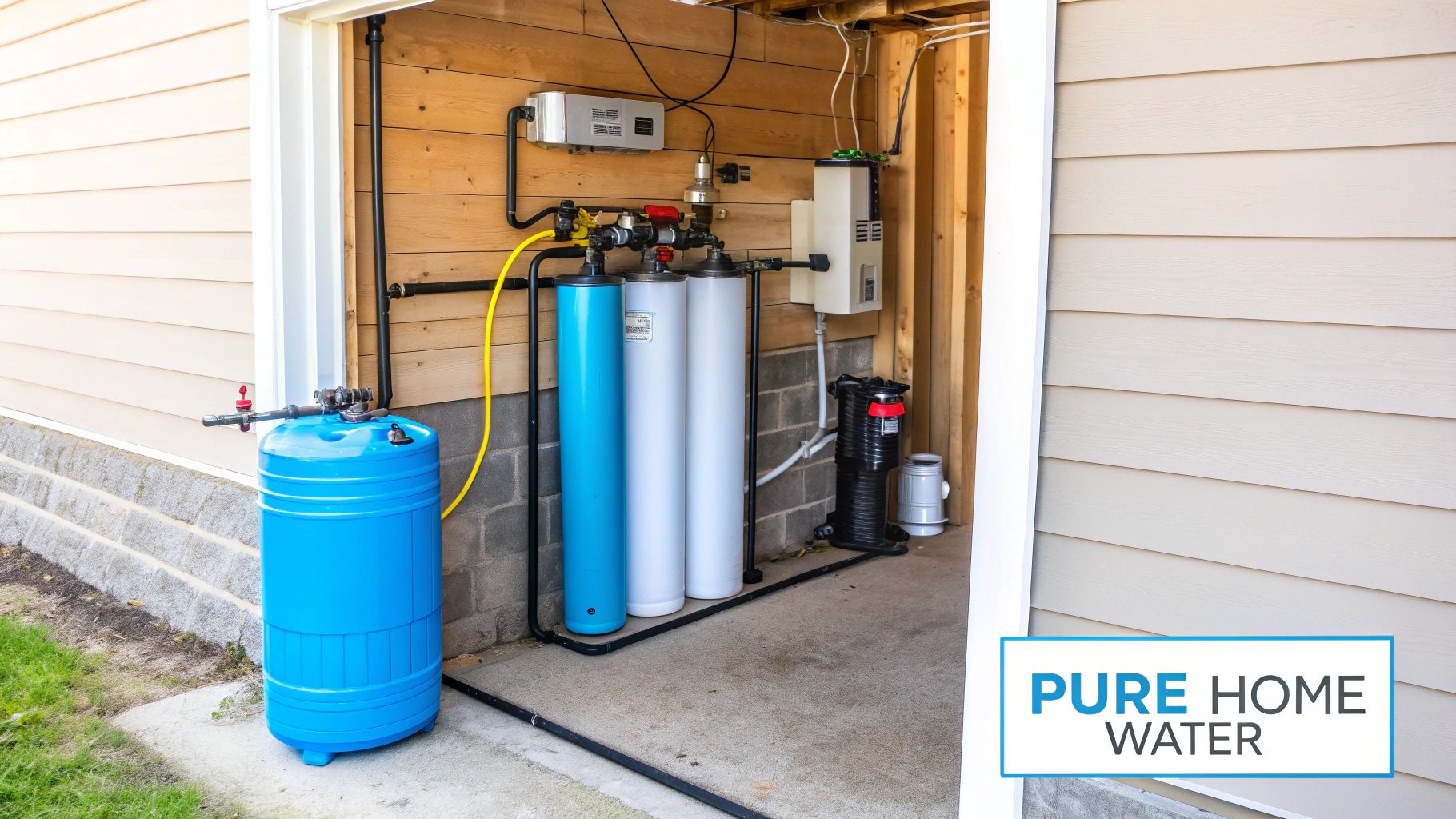 Your Guide to a Whole House Reverse osmosis System
Also, the filter replacements are where the real fun begins. You’ll need to swap out pre-filters, carbon filters, and the membrane every 6 to 24 months. Those replacement packs cost anywhere from $150 to $400 per year. Multiply that by the life of the system (about 10-15 years), and you’ve effectively bought a small island for your water.
But Wait—The Surprising Fact That Will Make You Laugh (or Cry)
Did you know that a whole house RO system can double your water bill? Not because you’re drinking more water, but because of all that wasted back-flush water. In some homes, the total water usage jumps by 300%. That means your water meter will spin faster than a washing machine on high spin.
And yet, people still buy these systems. Why? Because when you wash your face in RO water, your pores feel like they’ve been cleansed by angels. And your coffee—oh, your coffee will taste so smooth it’ll make your barista jealous. It’s a trade-off: your wallet cries, but your taste buds throw a party.
So, How Much Should You Really Budget?
If you’re serious, plan for $3,500 to $10,000 installed, plus annual maintenance of about $200. That’s the price of a decent vacation or a used jet ski that doesn’t work. But you can’t drink a jet ski, can you? (Please don’t try.)
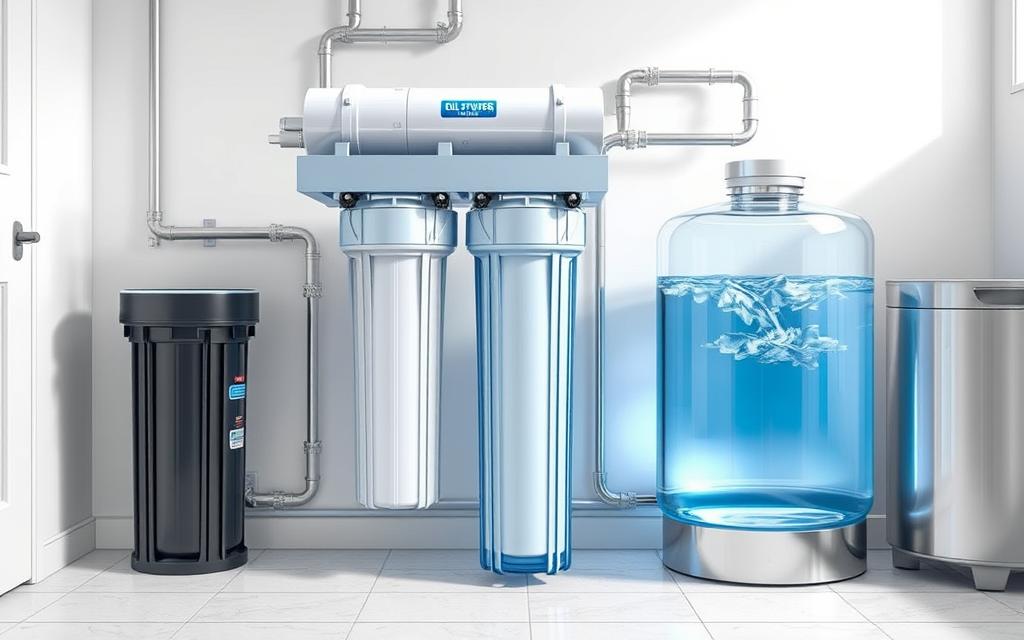 Best Whole House Reverse Osmosis Water Filter Guide
For the budget-conscious, consider a “point-of-entry” carbon filter instead. It’s much cheaper (under $1,000) and still removes chlorine and sediment. It won’t strip out the minerals like RO does, but your water won’t taste like a municipal puddle either. It’s the economy class of water filtration.
Final Sip of Reality
Here’s the truth: A whole house RO system is a luxury item, not a necessity. It’s the water equivalent of a lash lift or a gold-plated toilet brush. If you have hard water, lead pipes, or a compulsive need for crystal-clear ice, go for it. If you just want to stop smelling chlorine in the shower, a $30 shower filter will do the trick.
But if you do buy one, prepare for guests to ask, “Why does your water taste like… nothing?” And you can answer, “Because it’s been emotionally and chemically purified.” Then charge them for a glass. At that price, you’ll need to recoup your investment.
In short: how much is a whole house RO system? Enough to make your wallet faint, your plumber smile, and your water so clean it’s practically a philosophy. Worth it? Only if you believe that every sip of water should be a tiny, expensive miracle.
