How To Clean Hard Water Deposits From Dishwasher

So, the other morning I pulled open my dishwasher, expecting that satisfying steam-blast and the gleam of clean plates. Instead, I was greeted by the haunting sight of spotted...
So, the other morning I pulled open my dishwasher, expecting that satisfying steam-blast and the gleam of clean plates. Instead, I was greeted by the haunting sight of spotted glasses and a white, chalky film clinging to everything like a ghost of dinners past. My coffee mug looked like it had a terminal case of dandruff. Yikes.
That’s the moment you realize you’re not just fighting last night’s lasagna—you’re battling hard water. Those mineral deposits (calcium and magnesium, if you want to get scientific) are basically the dishwashing equivalent of a stubborn hangover. They show up uninvited, leave a mess, and they’re surprisingly tough to kick out.
But don’t panic. I’m here to walk you through the grime-fighting ritual, step by step. And no, you don’t need a chemistry degree or a pricey bottle of magic goo. You just need a few tricks and a little bit of elbow grease (and maybe some vinegar).
Must Read
The Great Vinegar Rinse
First up: the classic white vinegar trick. It’s cheap, it’s acidic, and it’s the unsung hero of hard water warfare. Pour about two cups of white vinegar into a dishwasher-safe bowl or a tall cup, then place it upright on the top rack. (Yes, upright—unless you want a vinegar tsunami flooding your machine.)
Run a hot water cycle on the longest setting, but skip the detergent. The vinegar steam will gently dissolve the mineral crust and deodorize your machine. It smells like a pickle factory for a bit, but that fades fast. Do this once a month, and your dishwasher will thank you by not coating your wine glasses in a fog of shame.
When Vinegar Isn’t Enough…
Sometimes, your dishwasher is so caked that vinegar feels like a polite suggestion. Enter citric acid, the heavyweight champion. You can buy it in powder form online or at the grocery store (often near canning supplies). Sprinkle about one to two tablespoons directly into the detergent compartment, then run a hot cycle.
This stuff is aggressive in the best way. It chews through lime scale like Pac-Man on a sugar rush. But a heads-up: don’t mix citric acid with bleach—that combo creates toxic chlorine gas. We’re cleaning, not performing a chemistry experiment gone wrong, okay?
 Clean Your Dishwasher & Remove Hard Water Deposits - Mom 4 Real
If you’re feeling extra brave, you can read the manual first (yawn, I know). Some manufacturers warn against citric acid if your dishwasher has certain rubber seals. Better safe than replacing a door gasket because you wanted shiny glasses.
Clean the Filter—Yes, That Filter
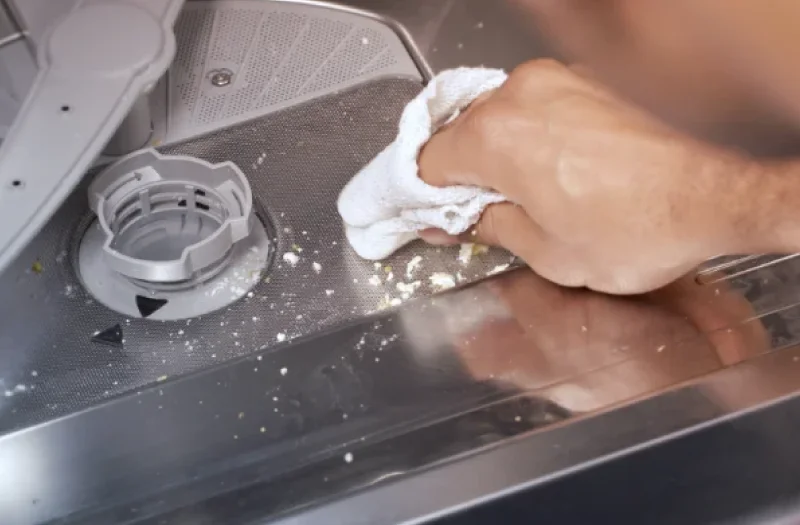
Let’s get real: the filter is where hard water deposits hide like a gremlin in the basement. Pop open the bottom of your dishwasher and pull out the cylindrical mesh filter. It’s probably crunchy with mineral sludge and leftover food bits. Gross, but we’re here to fix it.
Rinse it under hot water while scrubbing with an old toothbrush. If you see white crust stuck on the plastic, soak the filter in a bowl of vinegar for 20 minutes. Then scrub again. That filter is the bouncer at the club—if it’s clogged, nothing gets clean, and your party gets ruined.
The Spray Arm Tango
Your dishwasher’s spray arms (those spinning plastic wands) also collect deposits. Unsnap them (usually they pop off with a gentle twist) and check the little holes. Use a paperclip or a toothpick to poke out any hardened gunk. I know, it’s weirdly satisfying.
Rinse the arms under the tap, then reattach. If they don’t spin freely, your water pressure is screwed, and your plates will stay dirty. Fun fact: a blocked spray arm can also make your dishwasher louder, so you might actually notice the silence after cleaning it.
 Remove Hard Water Deposits Dishwasher at Marisa Randolph blog
Prevention: Laugh in the Face of Hard Water
After you’ve done the deep clean, you want to keep those deposits from coming back. This is where rinse aid becomes your best friend. Fill that little compartment (the one you always ignore) with a branded rinse aid or plain white vinegar. It helps water sheet off dishes, preventing spots and scale.
Also, check your dishwasher’s water softener setting. Some models have a built-in softener that you need to regenerate with salt. Yeah, it’s an extra chore, but it’s cheaper than replacing your machine in two years because the heating element got calcified.
And for the love of brunch, don’t use too much detergent. That sounds counterintuitive, but excess suds can trap minerals and make deposits worse. Follow the packet directions—even if you feel like you’re being frugal.
A Final Relatable Reality Check
Look, cleaning your dishwasher is like flossing: nobody enjoys it, but your future self will high-five you. The first time you run a cycle after this cleanse, open the door and feel the smug satisfaction of clear glasses and a sparkly interior. You’ll wonder why you put it off so long.
If your machine still looks like a limestone cave after all this, you might need a professional descaling service. But 90% of the time, vinegar, citric acid, and a toothbrush will do the trick. So go ahead—pour that vinegar, poke those holes, and reclaim your dishwasher from the mineral overlords. Your coffee mug deserves better than dandruff.
