What Is The Average Cost To Have A Well Drilled

So, you’ve been thinking about getting a well drilled. Maybe you’re tired of that sky-high water bill, or you just want to water your garden without feeling guilty. It’s a big...
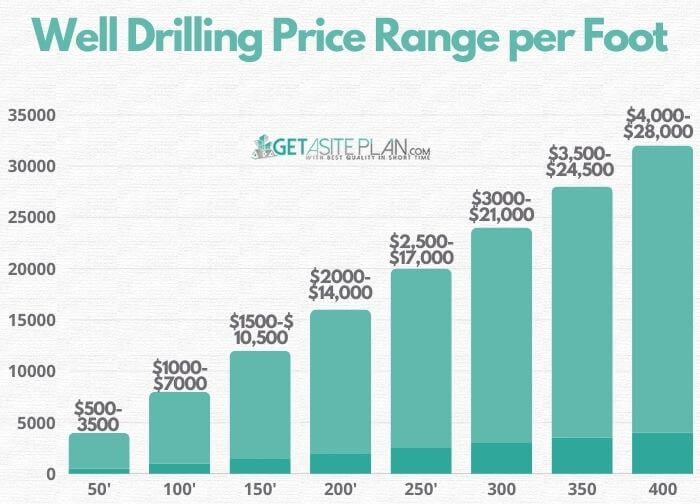
So, you’ve been thinking about getting a well drilled. Maybe you’re tired of that sky-high water bill, or you just want to water your garden without feeling guilty. It’s a big decision, and the first question is almost always the same: “What’s this going to cost me?” Let’s break it down like we’re chatting over coffee, not reading a contractor’s quote.
First, the honest truth: there’s no single answer. The cost to have a well drilled can swing wildly, like a kid on a playground swing. But generally, you’re looking at something between $3,500 and $15,000 for a complete, working system. That’s a wide range, I know, but it all depends on where you live and how deep you have to go to find water.
Think of it like buying a pizza. A basic cheese pizza might cost $10, but if you want extra toppings, gluten-free crust, and delivery to the top of a hill, you’ll pay more. Drilling a well is the same: depth is your main “topping” that drives up the price.
Must Read
The Big Three Things That Set Your Price
Let’s talk about the biggest cost drivers. First up: depth and geology. If you live in an area with soft, sandy soil, the drill might hit water at 50 feet. That’s a cheap, fast job—maybe $3,000 to $5,000 total.
But if you’re on a rocky hillside like my cousin Jim, the drill might need to punch through granite for 300 feet. Jim’s well cost him nearly $12,000 because each foot of drilling costs more when you’re fighting rock. It’s like trying to dig a hole in your driveway with a spoon—expensive and slow.
Second big factor: the well casing and pump. The casing is a steel or PVC pipe that keeps your well from collapsing. A deeper well needs more casing, and that adds up fast. Then you need a pump strong enough to push water up from that depth—a deeper well needs a beefier pump, which costs extra.
Finally, there’s location and permitting. Drilling in a remote area? The crew might charge a travel fee. Plus, nearly every county requires a permit (usually $100 to $500), and you might need a water test. It’s like adding a delivery fee to your pizza order—annoying, but necessary.
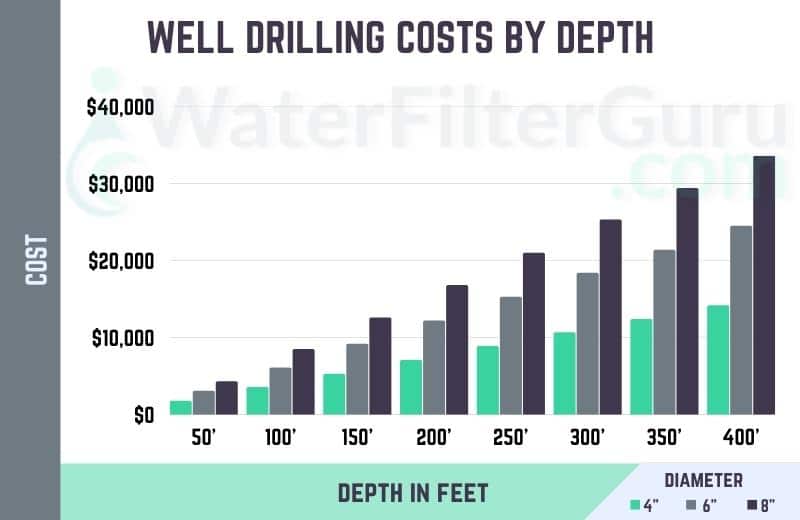 How Much Does a Well Cost? (2024 Well Drilling Cost Guide)
But Wait—What Do You Actually Get for Your Money?
Here’s the fun part: a well isn’t just a hole in the ground. It’s a whole water factory in your backyard. For that price, you usually get the drilling, the casing, a pump, a pressure tank, and basic plumbing to your house. That’s your own private water supply—no more monthly bills for municipal water.
Imagine never worrying about a drought ban on watering your tomatoes. Or filling up a kiddie pool for the kids on a hot day without watching the meter spin. My neighbor Sarah did this, and now she laughs every time she sees a “water conservation” notice—she’s got her own aquifer.
And here’s a little story: My friend Dave bought a house with an old well that was dug in the 1950s. The well was only 30 feet deep and barely worked. He paid $8,000 to drill a new 200-foot well. Now his lawn is the greenest on the block, and he uses a hose to wash his car like he’s a billionaire.
The Hidden Joy of Free Water (Sort Of)
Yes, the upfront cost stings. But remember: after you pay that $8,000 or $12,000, your “water bill” becomes just the electricity to run the pump—maybe $20 a month. Compare that to a typical city bill of $60 to $100. Over ten years, you save thousands. It’s like buying a lifetime pass to a water park, except the water park is your kitchen sink.
 2025 Well Drilling Costs | Average Water Well Installation Cost
You also add value to your home. Real estate agents love to brag about a well because it means lower living costs. If you ever sell, that well could add $5,000 to $10,000 to your asking price. So it’s not just an expense—it’s an investment in your property and your peace of mind.
One Warning: Don’t Skip the Research
Before you call a driller, talk to neighbors. Ask them: “How deep is your well? What did you pay?” They’ll usually tell you the truth, plus a few horror stories about bad water pressure. Also, get at least three quotes from licensed drillers. The cheapest guy might use a rusty drill rig—and you don’t want that.
And here’s a smile-worthy tip: always ask about dry holes. If the driller hits nothing but dust, do you still have to pay? Most contracts charge you per foot anyway—so a dry hole could cost you half the price for nothing. Reputable drillers will guarantee water or give you a discount on a second attempt. Read the fine print like it’s a treasure map.
In the end, drilling a well is a leap of faith—and a chunk of cash. But if you love your garden, hate water bills, or just want to feel like a pioneer in your own backyard, it’s worth every penny. Just imagine sipping coffee from a glass of water that you pulled from the earth. That’s pretty cool, right?
So, grab a pencil, call a few drillers, and start dreaming about that endless water supply. Your wallet (and your lawn) will thank you later.
