How To Test Water Quality At Home Without A Kit

So you want to know what’s really in your glass of water, huh? Maybe it tastes a little funny, or you’re just curious about the stuff you drink every day. The good news? You d...

So you want to know what’s really in your glass of water, huh? Maybe it tastes a little funny, or you’re just curious about the stuff you drink every day. The good news? You don’t need a fancy lab kit to get started—you already have everything you need in your kitchen.
The Magic of a Clear Glass
Grab your cleanest drinking glass and fill it up from the tap. Hold it up to the light and give it a good, honest look. What you’re hunting for is turbidity—those tiny floating specks or haziness that shouldn't be there. This is your first, simplest test, and it’s almost meditative.
See anything? Little white flecks might just be harmless mineral bits, but a persistent cloudiness could mean sediment or even tiny organisms. If your water looks crystal clear, give yourself a little pat on the back—that’s a great start. For fun, do the same test with a glass of bottled or filtered water and compare; you might be surprised at what you’ve been missing.
Must Read
Sniff and Sip Like a Pro
Your nose is a surprisingly accurate water-testing tool. Fill a glass about halfway, give it a swirl, and take a deep sniff. Any smell? A strong chlorine odor usually means the local treatment plant is doing its job, but it can be a bit much. A rotten-egg smell? That’s often hydrogen sulfide gas from decaying organic matter in your pipes—yuck.
Now for the taste test—but only if the smell passed inspection! Take a tiny sip and let it roll over your tongue. A metallic taste might point to iron or copper from old pipes. A musty, earthy flavor could be algae-related compounds. Don’t worry, you’re not becoming a sommelier—you’re just getting to know your own tap water on a whole new level.
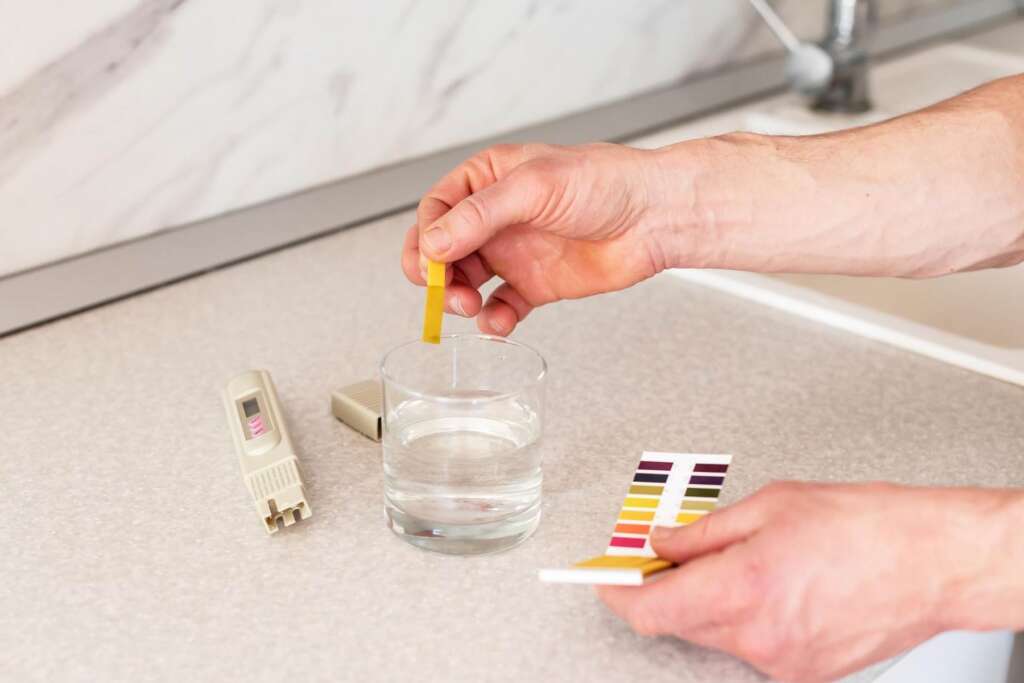 Free Water Quality Testing For Homes & Businesses
The Shake Test for Hard Water
Here’s a fun one that feels like a kitchen science experiment. Fill a clean, clear bottle about one-third full with tap water, add a few drops of liquid soap (not detergent), and put the cap on tight. Shake it for about ten seconds like you’re making a tiny smoothie. Now look: if the suds are big, foamy, and plentiful, your water is relatively soft. If the bubbles are small, wispy, and disappear fast, you’ve got hard water—full of calcium and magnesium.
Hard water isn’t dangerous, but it can leave spots on dishes and dry out your skin. Knowing this helps you decide if you want a simple filter or a water softener down the line. Plus, it’s a great trick to show your friends at dinner—who said water testing couldn’t be a party trick?
Check Your Pipes (and Wait for It)
Fill a glass with hot water from your tap and another with cold. Let them both sit for a full five minutes. Now check the color and sediment settled at the bottom. Hot water usually leaches more metals from pipes, so if that glass looks rusty or has grit, you’ve got a clue about your plumbing’s condition. This test also reveals if you need to let the tap run before using water for drinking or cooking; you might just save yourself from drinking a little pipe dust.
 how to test water quality at home without a kit - Olympian Water
The Boiling Test for Total Dissolved Solids
Boil a cup of tap water in a clean, white ceramic mug until it’s completely gone. Let the mug cool, then look at the bottom. A thin white powder isn’t a big deal—that’s mostly harmless minerals. A thick, crusty layer that’s hard to wipe off? That’s a sign of high total dissolved solids (TDS), which affects taste and scale buildup in your kettle. This simple trick gives you a visual report card on your water’s mineral load—no degree required.
Why This Matters (And Why It’s Fun)
Testing water this way turns a boring chore into a little adventure. You become the detective of your own kitchen, discovering hidden stories about where your water comes from and how it travels to you. Plus, it’s empowering: you don’t need expensive gear to listen to your water and make smart choices about filters or routines.
So go ahead—grab a glass, shake some soap, and sniff like you’re the world’s most relaxed scientist. You might just find that your tap water is a lot more interesting (and lovable) than you ever imagined. And if you want to dig deeper, there’s a whole world of pH strips, test tablets, and community water reports waiting for you—because curiosity is the best test kit of all. Cheers to your newfound water wisdom!
